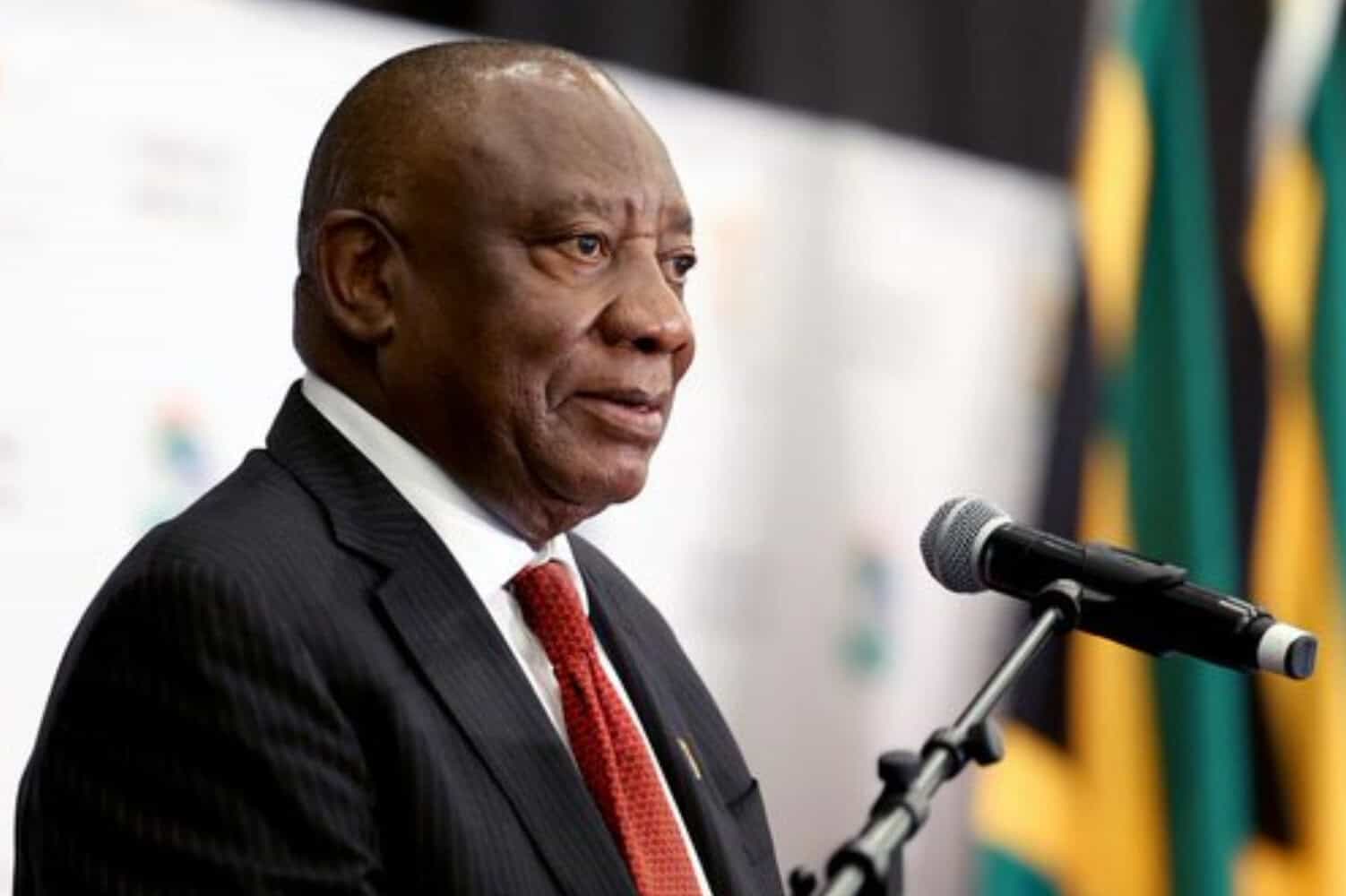
Water will be the defining test of local government in the months and years to come, President Cyril Ramaphosa has warned.
Ramaphosa on Thursday addressed the Presidential Coordinating Council (PCC) on issues hindering service delivery in municipalities across the country.
The PCC is the president’s strategic forum aimed at bringing together the three spheres of government to solve governance shortcomings.
Ramaphosa singled out the country’s water crisis as a priority, but stressed it was an opportunity to streamline coordination between national, provincial and municipal bodies.
“We need to be aligned around a shared purpose and disciplined execution. The water crisis puts that mandate to the test,” said Ramaphosa.
‘Accountability and transparency’
The gathering in Johannesburg included mayors, municipal managers, premiers and officials from the finance, water and cooperative governance departments.
Ramaphosa noted that the tiered structure of government was designed to ensure that power and responsibility was not centralised, but able to adapt to the country’s diversity.
He explained that funding shortages had created infrastructure failures and that municipalities had lost their capacity to deal with the backlog.
“It is because there are no deep skills. The current system is too complex and fragmented, with even small and under resourced municipalities expected to take on many responsibilities.
“As a consequence of these systemic problems, together with government instability, many municipalities have weak financial management and institutional capability, poor revenue collection and insufficient accountability.
He stressed the need to “professionalise the public service” and equip government officials to effectively serve South Africans.
“Appointments must be made on merit. There must be accountability and transparency. We must build up the skills and capabilities of everyone who works in local government.
“We must focus on training and upskilling and train the people who work in our local government sphere. It must almost be like lifelong training because it is through that that skills are enhanced and upskilled,” said Ramaphosa.
Legislative frameworks
Achieving this would be done through the white paper on municipal government, of which a review was undertaken in May 2025.
Other interventions include the National Water Resource Infrastructure Agency Act and the reinstatement of the Blue, Green and No Drop Reports that went unpublished between 2014 and 2023.
Ramaphosa summarised the actions needed as a return to accountability, financial integrity, consequence management and the return of technical and professional capability.
“The National Water Crisis Committee provides the means of coordination. The National Water Action Plan provides the roadmap.
“What this meeting must provide is the political commitment across all three spheres to make both of them work. We should leave here today with firm commitments, responsibilities and timelines,” Ramaphosa concluded.
Small municipalities left out
The president also mentioned a R100 billion rewards programme for municipalities to incentivise governance performance.
However, the programme will only focus on eight metropolitan municipalities, not the more remote, yet valuable, municipalities.
Mangaung in the Free State was the first metropolitan municipality to be placed under administration, with the province’s municipalities ranking among the worst performing in the country.
Tamarin Breedt, Freedom Front Plus’ representative in the National Council of Provinces, highlighted the ineffectiveness of the incentive programme.
“The majority of the Free State, however, is rural and consists of local municipalities that also have extreme service delivery challenges because of the breakdown of infrastructure.
“These smaller, in budget, municipalities are vast in size. Due to the distances that have to be travelled, the cost of maintaining infrastructure is usually high.
“An incentive grant would have allowed municipalities, where money is their only hurdle, to improve their infrastructure and deliver reliable services,” Breedt previously told The Citizen.