The Central Bank of Nigeria (CBN), on Tuesday, decided to leave the Monetary Policy Rate (MPR), the benchmark interest rate, unchanged at 26.5 per cent, as well as the standing facilities corridor around MPR at +50/-450 basis points.
CBN also left the Cash Reserve Requirement (CRR) for Deposit Money Banks (DMBs) unchanged at 45 per cent, merchant banks at 16 per cent, and 75 per cent for non-TSA public sector deposits.
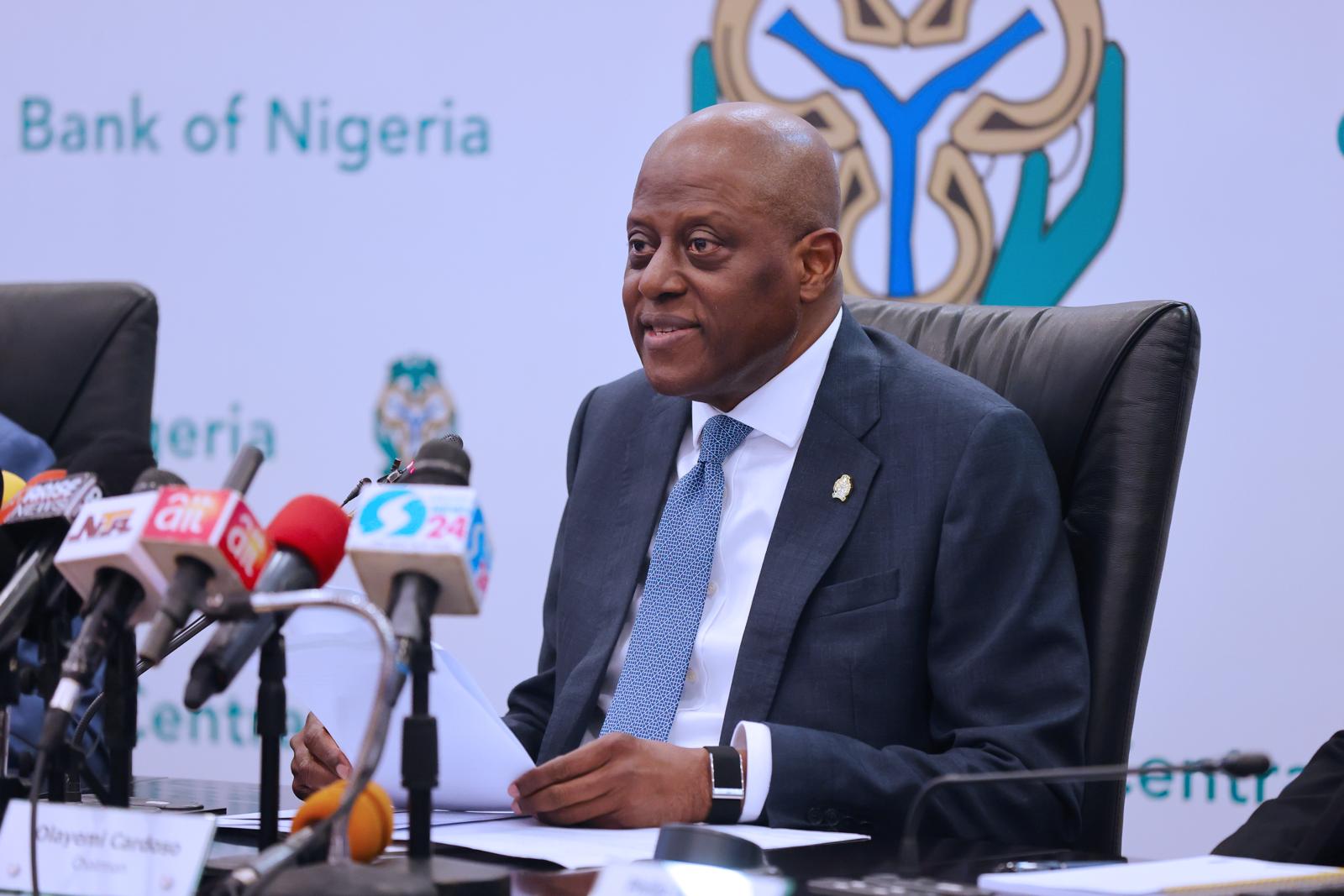
Speaking at the end of the two- day meeting of the Monetary Policy Committee (MPC) in Abuja, CBN Governor, Mr. Olayemi Cardoso, said the decision to maintain the current policy stance followed a thorough assessment of the balance of risks.
Cardoso said although headline inflation moderated marginally in June 2026, global uncertainties had heightened due mainly to the renewed hostilities in the Middle East.
He said, “In view of the evolving developments, maintaining a cautious monetary policy stance remains appropriate.”
The central bank governor highlighted the recent resurgence of hostilities in the Middle East with particular attention to its spill-over effects on global energy prices and the potential pass-through to domestic inflation.
Nonetheless, he stated that available evidence indicated that the Nigerian economy had remained largely resilient to the external shocks, reflecting the gains from prior reforms implemented by the fiscal and monetary authorities.
Cardoso stated that maintaining the current monetary policy stance will provide an opportunity to closely monitor incoming data and assess the trajectory of inflation to guide future policy decisions.
According to him, “The MPC acknowledged the federal government’s renewed commitment to strengthening policy coordination, with particular emphasis on the ongoing collaboration with the monetary authority which has helped to moderate the impact of the Middle East crisis on the domestic economy.”
He stressed that the committee recognised that greater alignment between fiscal and monetary policies would enhance policy effectiveness and support the achievement of overall macroeconomic objectives.
To further strengthen macroeconomic fundamentals, the apex bank also underscored the potential benefits of Executive Order 9.
The CBN also commended government’s renewed efforts to improve crude oil production and encouraged relevant agencies to strengthen the implementation of reforms to maximise the potentials in other sectors, including solid minerals, to complement government earnings.
MPC further welcomed the positive outcome of the banking sector recapitalisation exercise, acknowledging the improvement in the resilience of the banking system as reflected in key prudential and financial soundness indicators.
MPC urged the central bank to sustain effective surveillance to preserve financial sector soundness and mitigate potential risks to financial stability.
The committee observed that headline inflation (year-on-year) eased marginally to 15.91 per cent in June 2026, from 15.93 per cent in May 2026, ending the three consecutive months of uptick in price levels.
Cardoso, who read the committee’s communique, stressed that the decline resulted from a decrease in the non-food component, which offset the increase in food inflation.
Food inflation rose to 17.52 per cent in June 2026, from 16.96 per cent in May 2026, reflecting supply constraints.
However, core inflation moderated to 15.92 per cent in June 2026, from 16.82 per cent in May 2026, largely on the back of exchange rate stability.
Similarly, the 12-month average inflation rate sustained its decline to 17.63 per cent in June 2026, from 18.36 per cent in May 2026, marking the sixth month of consecutive moderation and reflecting a slower pace of price increases over the medium term.
Cardoso said gross external reserves rose to $52.52 billion as of July 17, 2026, from $50.47 billion as at end-May 2026, mainly as a result of receipts from crude oil-related taxes and third-party inflows. He said this was sufficient to finance about 11 months of imports of goods and services, surpassing the international benchmark of three months cover.
Cardoso also projected inflation to moderate further in the medium term on the back of continued stability in the foreign exchange market, lagged effect of previous monetary policy tightening and improved food supply conditions as the harvest season approached.
According to him, “Risks to global inflation remain on the upside, driven mainly by the increasing prices of crude oil and other commodities. Inflationary pressures are likely to be further amplified by supply chain disruptions and climate-related shocks inhibiting food production.
“Additionally, exchange rate volatility and fiscal constraints pose upside risks to inflation in most emerging and developing economies.”
Cardoso added, “The key risk to the outlook, however, remains the severe and prolonged escalation of the Middle East conflict.
“In the light of these considerations, the committee reaffirmed its commitment to preserve price and financial system stability and remains prepared to take appropriate policy measures, guided by evolving macroeconomic conditions.”
However, answering questions from journalists, the central bank governor admitted that unexpected global shocks disrupted the apex bank’s earlier projection of returning inflation to a single-digit trajectory by early 2027, but maintained that monetary tightening was yielding results as headline inflation continued to moderate.
He said Nigeria had recorded 11 consecutive months of disinflation before fresh external shocks altered the inflation outlook, stressing that the central bank remains fully committed to restoring price stability.
Cardoso said, “From every indication, we were expecting that by early 2027 we would be where we want to be in terms of inflation and firmly on track for single digits.”
He said the renewed inflationary pressures were largely driven by unforeseen developments outside the control of policymakers.
Cardoso said, “These were shocks that were not anticipated and have gone on much longer than could have been expected. It is not something we can wish away. It is something we have to deal with.”
Cardoso said the moderation in headline inflation, though gradual, showed that the monetary measures implemented by the apex bank were beginning to produce results.
He also stressed that closer coordination between fiscal and monetary authorities had become even more critical in tackling persistent structural rigidities fuelling inflation.
“We will do what we need to do to contain rising inflation and bring it to the single-digit level we have spoken about. We continue to stand by that,” he added.
The CBN governor also defended the bank’s exchange rate reforms, insisting that the country would continue operating a transparent, market-driven foreign exchange system based on a willing buyer-willing seller framework.
He said the central bank would not target a predetermined exchange rate, stating that the value of the naira would continue to reflect prevailing market fundamentals, including oil earnings, non-oil exports, foreign direct investment and domestic productivity.
Cardoso said the foreign exchange market had become significantly more transparent and liquid, with daily turnover exceeding $1 billion on some trading days.
According to him, the current exchange rate also supports Nigeria’s competitiveness.
“The country does need a competitive currency and, from every indication, the current levels support competitiveness,” he said.
On the banking sector, Cardoso dismissed concerns over slowing credit growth, describing the decline in lending as a temporary consequence of the banking industry’s transition away from COVID-19 regulatory forbearance.
He said the extraordinary relief measures introduced during the pandemic had outlived their usefulness and banks were now adjusting their balance sheets to reflect healthier risk profiles.
He stated, “As banks raise more capital, build stronger buffers and strengthen their capacity, lending will return to levels commensurate with their size and capabilities.
“What this reflects is a transition to a more sustainable and better-quality credit environment. The banking system continues to be safe and sound and, in the fullness of time, credit growth will pick up again.”
Among other things, Cardoso also described the banking recapitalisation programme as a major success, stating that 33 of the 37 commercial banks met the new capital requirements without any extension of the regulatory deadline.
James Emejo, Deborah Adekoya and Nume Ekeghe