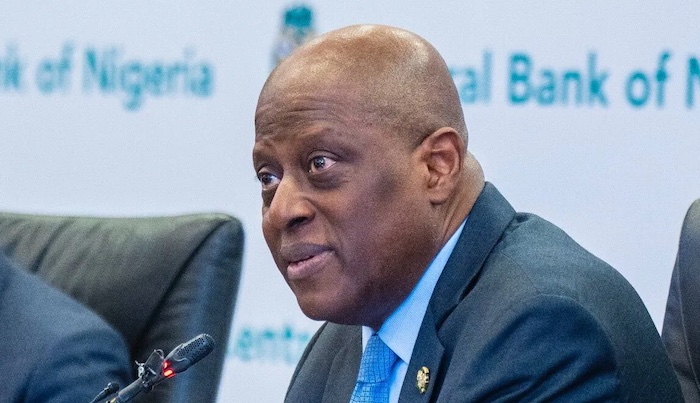
The Central Bank of Nigeria (CBN) said Nigeria’s foreign exchange inflows rose by 13.8 per cent to a record $109.86 billion in 2025, driven largely by stronger autonomous inflows from non-oil exports, capital importation, and over-the-counter (OTC) purchases.
According to the report, aggregate foreign exchange inflows into the economy increased from $96.53 billion in 2024 to $109.86 billion in 2025, while aggregate outflows rose by 27.83 per cent to $49.05 billion, from $38.37 billion recorded in the preceding year.
The figures, contained in the apex bank’s 2025 Annual Report and Statement of Accounts, also showed continued expansion in the country’s digital payments ecosystem, with the value of electronic payment transactions climbing to N3.46 quadrillion, while electronic fraud losses declined by more than half to N25.85 billion.
CBN stated that cross-border transactions settled through the Pan-African Payment and Settlement System (PAPSS) recorded significant growth, rising to $143.40 million during the year.
It said despite the higher outflows, the economy recorded a stronger net foreign exchange inflow of $60.81 billion, compared with $58.16 billion in 2024.
The report stated, “The economy recorded an increase in net foreign exchange inflow, driven by autonomous inflows in the review period.
“Aggregate FX inflow into the economy at $109.86 billion in 2025, rose by 13.81 per cent, from $96.53 billion in 2024.
“The development was attributed, largely, to increase in inflow through autonomous sources. Aggregate FX outflow, at $49.05 billion, rose by 27.83 per cent, from $38.37 billion, mainly, due to increased outflow through autonomous sources.
“Overall, the economy recorded a higher net inflow of $60.81 billion, from $58.16 billion in 2024. FX inflow through the Bank decreased by 2.08 per cent to $39.32 billion and accounted for 35.8 per cent of total inflow. The decrease was mainly due to lower receipts from government debt and FX swaps.”
The report added, “Foreign exchange inflow through autonomous sources, which accounted for 64.21 per cent of total FX inflow, rose by 25.12 per cent to $70.54 billion in 2025, from $56.38 billion.
“The growth was primarily due to increase in non-oil export receipts and over- the-counter (OTC) purchases, particularly capital importation. Outflow through the Bank constituted 66.86 per cent, while outflow through autonomous channels accounted for the balance.”
The CBN report stated, “A breakdown showed that, outflow through the Bank increased by 1.74 per cent to $32.79 billion, from $32.23 billion.
“Similarly, outflow through autonomous channels rose by 164.84 per cent to $16.26 billion, relative to the level in 2024. A net inflow of $54.28 billion was recorded through autonomous sources, compared with $50.24 billion in 2024.
“Similarly, the Bank recorded a net inflow of $6.52 billion.”
According to CBN, the value of electronic payment transactions increased by 26.07 per cent to N3,458.77 trillion (N3.46 quadrillion) in 2025, while transaction volume rose by 2.62 per cent to 47.88 billion transactions.
The bank attributed the growth to “user preferences, adoption of digital channels, growth in e-commerce, and infrastructure improvements”.
A breakdown of transaction volumes showed that ATM transactions recorded the strongest growth, rising 61.94 per cent to 1.66 billion transactions.
USSD transactions increased by 20.89 per cent to 669.55 million, while Point-of-Sale (PoS) transactions grew by 19.78 per cent to 15.66 billion.
The report stated:, “Analysis of retail payments showed notable changes between 2024 and 2025. The volume of e-payments transactions increased by 2.62 per cent to 47,879.73 million in 2025, compared with 2024. The value of transactions also rose by 26.07 per cent to N3,458.77 trillion.
“The increases reflected user preferences, adoption of digital channels, growth in e-commerce, and infrastructure improvements.”
The report said, “A breakdown of volume of transactions by channels showed that ATM recorded the highest rise of 61.94 per cent to 1,655.51 million. This was followed by 20.89 per cent rise in USSD to 669.55 million, and 19.78 per cent increase in PoS use to 15,661.61 million. Decreases were, however, recorded in the volume of transactions through the mobile app, internet/web, and direct debits.”
On payment security, the report showed that electronic fraud losses declined sharply to N25.85 billion in 2025, representing a 50.5 per cent reduction from N52.26 billion recorded in the previous year.
It stated, “Significant losses were incurred by PSPs with weak fraud monitoring systems. Digital payment fraud in Nigeria stood at N25.85 billion in 2025. Though this was lower than N52.26 billion in the preceding year, it represented a substantial loss for PSPs. The lower losses in 2025 reflected improvements in monitoring, BVN-NIN integration, and tighter controls.”
CBN said, “The improvements coincided with continued growth in the Bank Verification Number (BVN) ecosystem. “BVN enrolment increased to 67.82 million, from 64.40 million in 2024, while the number of bank accounts linked to BVN rose sharply to 368.92 million, compared with 297.29 million a year earlier.”
The report said active bank accounts increased to 339.26 million from 311.60 million. The number of fraud-related BVNs placed on the watch-list also increased to 13,117, from 9,476 in 2024, which the apex bank said reflected improvements in fraud monitoring and resolution.
BVNs classified as belonging to deceased persons also rose to 28,754, from 21,118 recorded in the preceding year.
The report showed that cross-border payments through the Pan-African Payment and Settlement System (PAPSS) expanded significantly during the year.
According to the CBN, the value of transactions settled on PAPSS by Nigerian participants increased almost fivefold to $143.40 million, from $29.23 million in 2024, while transaction volume rose to 44,088 from 17,808.
It stated, “The Pan-African Payment and Settlement System (PAPSS) continued to streamline cross-border transactions across African markets by reducing the cost and complexity of foreign-exchange conversions. It eased the pressure on current accounts, reduced the demand for foreign exchange liquidity, and supported financial
inclusion and economic growth through intra- African trade.
“The number of Nigerian banks participating in PAPSS was 20, relative to 22 in 2024. The value and volume of transactions settled on PAPSS for Nigerian participants increased significantly to $143.40 million and 44,088 transactions, respectively, compared with $29.23 million and 17,808 transactions in 2024.”
Nume Ekeghe