Monetary Policy Committee keeps key rates unchanged, citing easing inflation, global uncertainties and the need to preserve recent gains in the economy……
The Central Bank of Nigeria (CBN) has left its benchmark interest rate unchanged at 26.5 per cent, signalling its determination to maintain a tight monetary policy stance despite signs of moderating inflation.
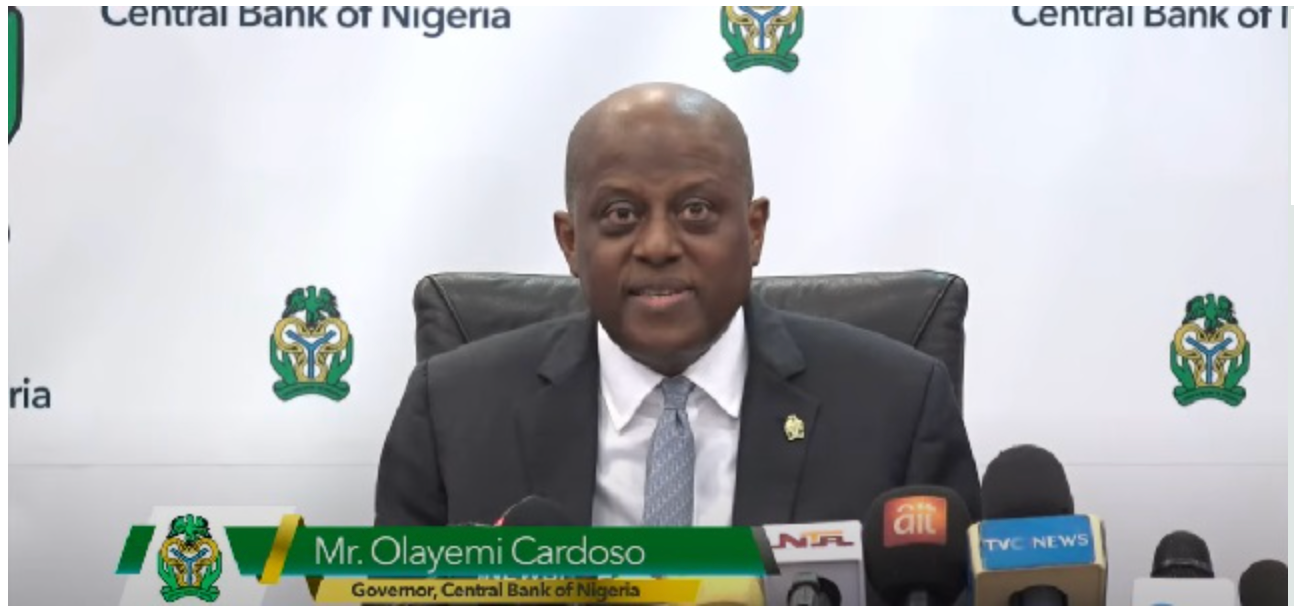
The decision was announced on Tuesday by CBN Governor Olayemi Cardoso after the conclusion of the 306th meeting of the Monetary Policy Committee (MPC), held in Abuja on July 20 and 21.
Cardoso said all 11 members of the committee participated in the two-day meeting, where they reviewed developments in both the domestic and global economy before unanimously deciding to retain the Monetary Policy Rate (MPR) at 26.5 per cent.
According to the CBN governor, the committee believes maintaining current policy settings will help sustain the recent slowdown in inflation, support exchange rate stability and consolidate macroeconomic improvements recorded in recent months.
Inflation shows slight improvement
The committee noted that Nigeria’s headline inflation rate eased marginally to 15.91 per cent in June 2026, compared with 15.93 per cent recorded in May, suggesting that overall price pressures continued to moderate.
However, food inflation remained a concern, rising on a monthly basis to 3.75 per cent in June from 2.98 per cent the previous month, reflecting renewed pressure on food prices.
Other policy parameters retained
Beyond leaving the benchmark interest rate unchanged, the MPC also retained all other key monetary policy parameters.
The Cash Reserve Ratio (CRR) remains at 45 per cent for commercial banks and 16 per cent for merchant banks, while the Standing Lending and Deposit Facilities Corridor was maintained at +50 and -450 basis points around the MPR.
In addition, the CRR applicable to non-Treasury Single Account (TSA) public sector deposits was left unchanged at 75 per cent.
Explaining the committee’s decision, Cardoso pointed to growing geopolitical tensions and uncertainties in the global economy.
“Global uncertainties have heightened due mainly to the renewed hostilities in the Middle East. In view of the evolving developments, maintaining a cautious policy stance remains appropriate,” he said.
What the decision means
By retaining the MPR at 26.5 per cent, the CBN has effectively left borrowing conditions unchanged for businesses and households while continuing its efforts to keep inflation under control.
The Monetary Policy Rate serves as the benchmark used by the apex bank to influence lending rates, liquidity in the financial system and overall macroeconomic stability.
Although higher interest rates typically increase borrowing costs for businesses and consumers, they are also intended to curb inflation by slowing excess demand in the economy.
Business groups have repeatedly expressed concerns that elevated interest rates are making access to credit more expensive and limiting investment and expansion.
Tight policy cycle continues
Since Olayemi Cardoso assumed office as CBN governor in 2023, the central bank has pursued one of the most aggressive monetary tightening cycles in Nigeria’s recent history as part of broader reforms introduced by the Tinubu administration.
The benchmark rate was raised six consecutive times during 2024, climbing from 18.75 per cent to 27.50 per cent by November of that year, as policymakers sought to tackle soaring inflation and stabilise the foreign exchange market.
Although the pace of tightening has eased since late 2025, the latest decision indicates that the MPC remains cautious and is unwilling to loosen monetary conditions until inflation shows more sustained improvement.
The committee is scheduled to hold its next policy meeting on September 21 and 22, 2026.