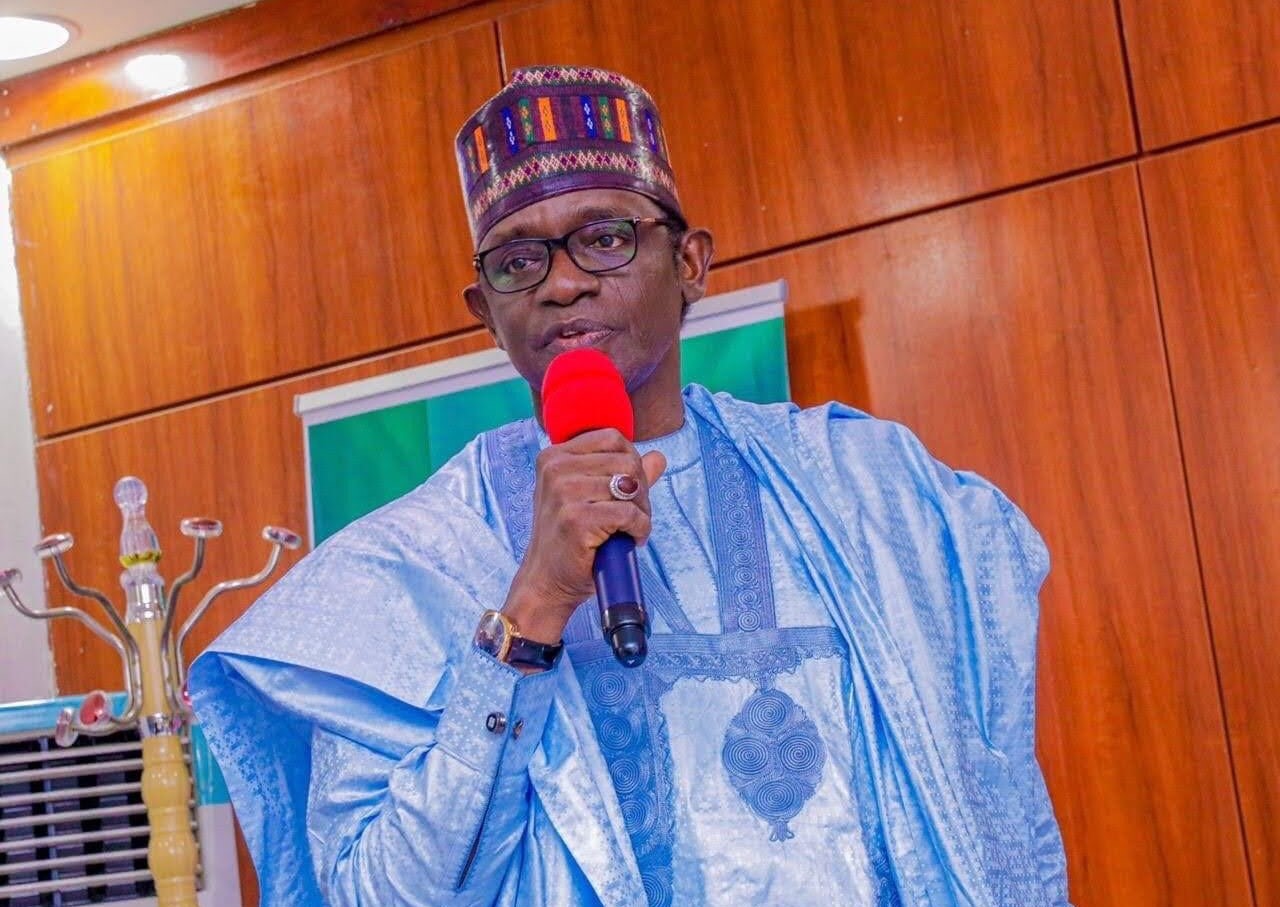
Yobe State Governor, Mai Mala Buni, has called for a fundamental shift in Nigeria’s political and social discourse, urging citizens and leaders alike to allow the nation’s strengths—not its worst elements—define its identity.
Buni made the appeal during a courtesy visit by the Director-General of the Institute for Peace and Conflict Resolution, Joseph Ochogwu, warning that rising divisions and toxic narratives posed a serious threat to national stability.
Framing Nigeria’s imperfections as challenges to be resolved rather than trigger for disintegration, the governor stressed the need for unity and collective responsibility.
“Whatever imperfections that our system has should not lead to the destruction of our country. We are human beings—solution providers, divinely put together,” he said.
Buni lamented what he described as increasingly divisive rhetoric from political actors, noting that such tendencies deepen fault lines instead of fostering cohesion.
He said: “There is need for peace and reconciliation. Some political leaders have made statements that are so divisive, which is not good for the people.”
He urged Nigerians to embrace dialogue and conflict resolution as tools for national survival, emphasising that differences must be managed constructively.
The governor insisted that Nigeria must not be defined by its worst actors, arguing that the majority of citizens were law-abiding and patriotic.
“The good should be what brands our nation—not the worst,” he declared.
He, however, criticised sections of the media and political class for amplifying narratives that undermine national unity, accusing them of promoting pessimism and division.
Michael Olugbode