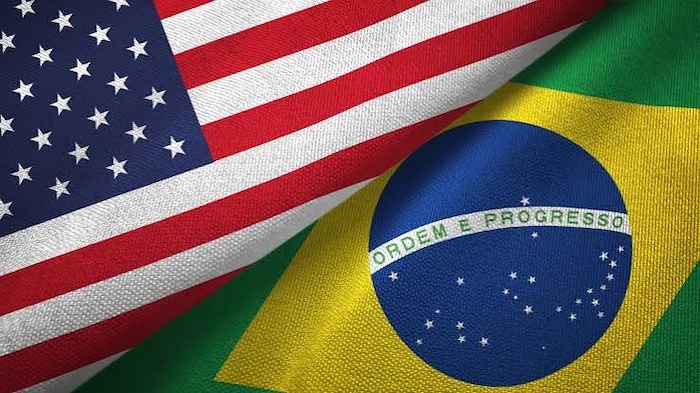
Brazilian President Luiz Inácio Lula da Silva has confirmed that his government denied visas to two United States officials, accusing them of attempting to interfere in the country’s October presidential election.
Speaking on Wednesday, Lula said the officials were prevented from entering Brazil because of concerns they intended to influence the electoral process.
“We had to deny visas to two young folks they were sending to Brazil to meddle in Brazil’s elections,” Lula said.
The two US State Department officials were scheduled to visit Brazil in late July for meetings focused on freedom of expression, religious freedom and election integrity. They were also expected to meet with right-wing presidential candidate Flávio Bolsonaro.
However, the US State Department has rejected the allegations, previously describing claims that its officials sought to undermine Brazil’s elections as “a baseless lie.”
Brazil’s October election is expected to pit the 80-year-old incumbent President Lula against Flávio Bolsonaro, the son of former President Jair Bolsonaro.
Jair Bolsonaro is currently serving a 27-year prison sentence after being convicted of plotting a coup following his defeat in the 2022 presidential election. Before that conviction, he had already been barred from seeking public office after repeatedly making unsubstantiated claims that Brazil’s electronic voting system could be manipulated.
The former president questioned the integrity of the country’s voting system both after his 2018 election victory and throughout the 2022 campaign, including during a meeting with foreign diplomats.
Following his election defeat, supporters of Jair Bolsonaro stormed Brazil’s Congress, the Supreme Court and the Presidential Palace on January 8, 2023, in an attack widely compared to the January 6, 2021, assault on the US Capitol.
In recent weeks, Flávio Bolsonaro, who has received endorsements from Argentine President Javier Milei and Israeli Prime Minister Benjamin Netanyahu, also raised concerns about Brazil’s electronic voting system during a meeting with diplomats.
He claimed Brazil’s voting machines shared the same origin as Venezuela’s and referenced a CIA report alleging electoral fraud in the South American country.
Flávio Bolsonaro later denied questioning the credibility of Brazil’s elections, insisting that he was only advocating for greater international observation of the polls.
Following the meeting, the Brazilian government blocked visas for a US delegation, citing concerns that its members could help amplify unfounded claims about the country’s electoral process.
The officials denied entry were identified as Riley M. Barnes, an Assistant Secretary of State for Democracy, Human Rights and Labor, and Samuel Samson, a Deputy Assistant Secretary in the same bureau.
Brazil’s Superior Electoral Court has repeatedly dismissed allegations against the country’s electronic voting system, maintaining that there is no evidence of systemic fraud.
Electronic voting has been used nationwide since 1996 without any recorded case of widespread electoral fraud. The system uses fingerprint verification to authenticate voters, produces printed vote tallies that can be compared with official results, and is subjected to independent audits.
Authorities also invite cybersecurity experts to test the machines for vulnerabilities before elections as part of efforts to strengthen public confidence in the integrity of the voting process.
Boluwatife Enome