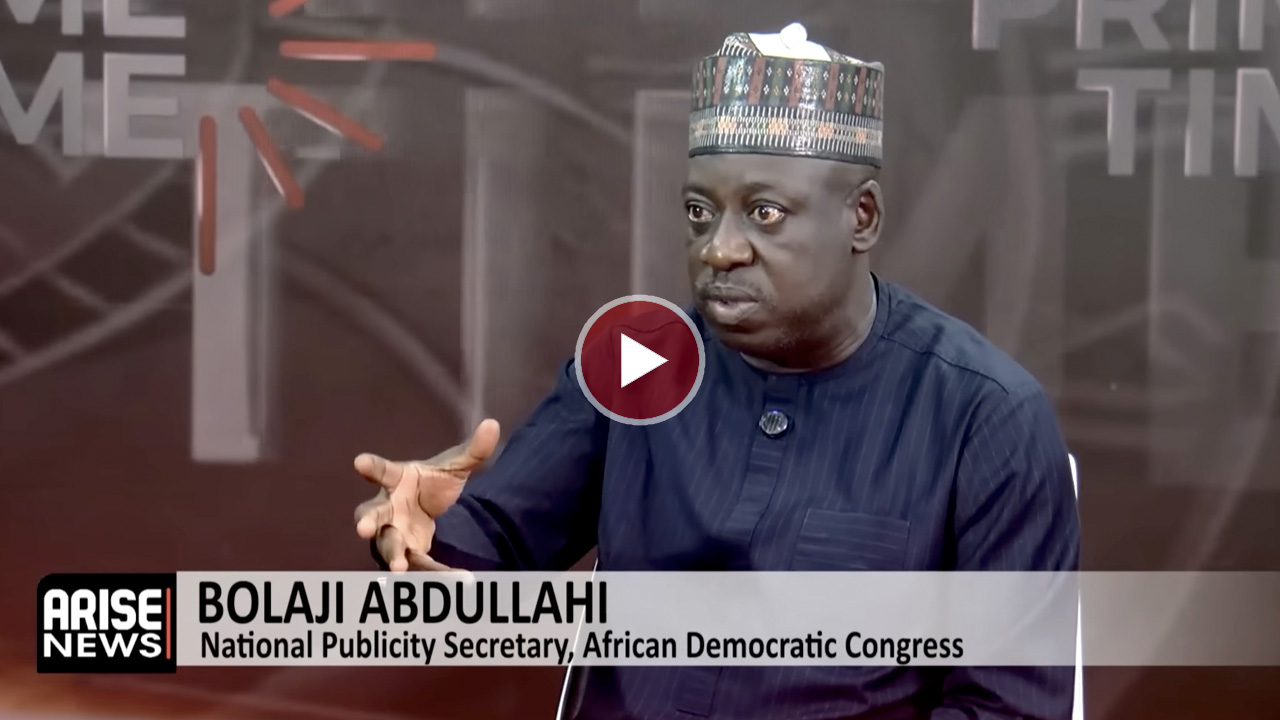
The national publicity secretary of the African Democratic Congress, (ADC), has said the African Democratic Congress faced INEC-level logistics challenges in conducting its nationwide primaries but managed to adapt and proceed with the exercise despite initial unpreparedness.
“We always knew it was going to be a challenge because it requires an INEC-level logistics to be able to do a nationwide election. And I must admit that it came to us more or less as a curveball; we weren’t prepared to do this. But when the INEC imposed it on us as the only option aside from the consensus, then we had no choice but to brace up for it,” he stated.
Dismissing suggestions that the consensus process collapsed, he said it remained a structured effort that required formal ratification, but legal constraints prevented a convention.
“I would not use the word collapse because it has its own dynamics. When you broker a consensus, it would still require you to do a convention to affirm the outcome of the consensus. And some of the court situations that we have at the moment do not allow us to hold a convention,” he explained.

On whether internal rivalries could destabilise the ADC after the primaries, he said all three aspirants had agreed to abide by the process. He acknowledged possible disputes but maintained that party structures were strong enough to manage outcomes and insisted no serious complaints had emerged so far.
“The three gentlemen have committed to submit themselves to the primaries. We pride ourselves in the systems that we have put in place. And so far we’ve not received any serious complaints about anything untoward,” he said.
Speaking further, Abdullahi said the party’s approach prioritised persuasion over imposition, even if that made decision-making more complex. He maintained that the leadership still had the capacity to enforce direction when necessary, but chose dialogue as the preferred method for managing internal competition.
“The ADC is a party that prides itself in contestation, internal contestation of ideas, of positions. We don’t impose. In the ADC, we don’t direct, we don’t tell people what to do. We discuss, we negotiate, and we argue until we agree. So what you see was a situation where these three gentlemen were invited round the table and there were debates and there were arguments and there were all that.”
Defending the ADC, Abdullahi said the ADC should be judged by its structures and principles rather than the backgrounds of its aspirants, with candidates bound by its manifesto and ethical code above individual ambition.
“The ADC is being deliberately designed as a party that is able to impose its authority on its members at all levels. We have our manifesto, we have our ethical principles and philosophy that each of these leaders, each of these aspirants at the point of screening had to sign, committing themselves to the ethical principles of the ADC,” he said.
Dismissing claims of a rival faction, the ADC national publicity secretary said the group did not meet the criteria required to be recognised as such within the party structure
“Faction is a technical term. For you to call a group of people a faction within a whole, certain qualities, certain qualifications, certain criteria have to be met.”
Assuring Nigerians of a different approach to governance, he said an ADC-led administration would prioritise citizens over market forces. He added that every policy would be guided by its impact on livelihoods, security and overall quality of life, positioning the people at the centre of decision-making.
“We will put the people first. Every single policy of our government would be guided by one single question: How does it improve the livelihood of the people? How does it protect the people, and how does it make them live a better life? That’s the difference,” he assured.
Favour Odima