President says new people-focused tax regime will boost investment, transparency, and long-term prosperity….
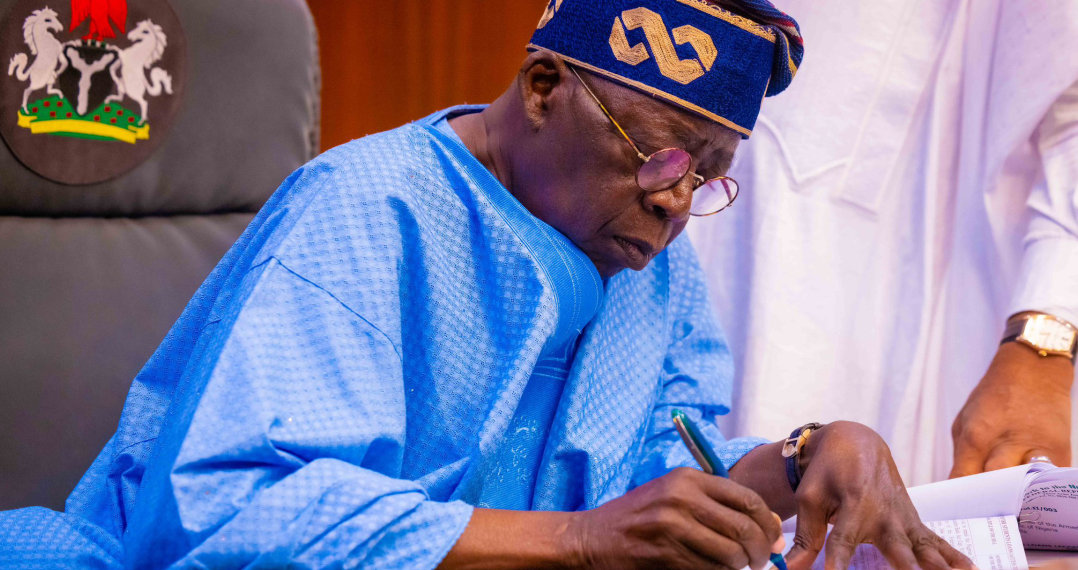
President Bola Tinubu has sharply criticised Nigeria’s colonial-era tax structure, describing it as a system that deepened poverty through fragmentation, duplication, and inefficiency. He assured Nigerians that ongoing reforms are designed to create a more inclusive and prosperous economy.
Speaking on Tuesday in Abuja during the inauguration of the new 16-storey headquarters of the Nigeria Revenue Service (NRS), Tinubu said the moment marked more than the unveiling of a building, it represented a turning point in Nigeria’s fiscal direction.
According to him, a nation cannot achieve sustainable growth with a weak and disjointed revenue system, nor can a government earn public trust if taxation remains opaque and unfair. These concerns, he said, informed his administration’s decision to pursue sweeping tax and fiscal reforms.
Tinubu stressed that the newly implemented tax framework, which became fully operational in January, is structured to prioritise citizens while encouraging investment and economic expansion. He said the reforms aim to dismantle outdated laws and reposition Nigeria as a competitive player in the global economy.
Reaffirming his campaign promises, the President said his administration is committed to addressing structural economic challenges, stabilising public finances, and building a system grounded in fairness and opportunity. He described these commitments not as political rhetoric but as a binding promise to Nigerians.
The President also commended the Executive Chairman of the NRS, Zacch Adedeji, for overseeing the completion of the new headquarters, a project that took 30 months to deliver after being stalled for over two decades. The facility is designed to accommodate about 3,000 staff and includes modern amenities such as a data centre, training facilities, a clinic, and a library.
He further praised the Minister of State for Finance, Taiwo Oyedele, for spearheading efforts to simplify and modernise Nigeria’s tax laws, making them more practical and easier to understand.
Addressing public concerns, Tinubu said the NRS has been repositioned as a technology-driven revenue agency guided by data, research, and sensitivity to citizens’ needs especially vulnerable groups. He added that the reforms are intended to eliminate inefficiencies, promote fairness, and create an environment where businesses can thrive.
The President pointed to early signs of progress, including improved fiscal stability, stronger foreign reserves, and rising investor confidence. He emphasised that these gains are the result of deliberate policy choices and sustained reform efforts.
Describing the new NRS headquarters as symbolic, Tinubu said it reflects a renewed commitment to professionalism, transparency, and efficiency in public institutions. He urged the agency to go beyond revenue collection and focus on building trust, ensuring accountability, and setting a standard worthy of both domestic and international respect.
Also speaking at the event, Senate President Godswill Akpabio called on Nigerians to remain patient, noting that the administration’s reforms are already delivering tangible results. He highlighted the disappearance of long fuel queues as a sign of progress and credited increased private-sector involvement in the petroleum sector.
Similarly, Speaker of the House of Representatives Tajudeen Abbas said Nigeria’s past revenue challenges stemmed less from effort and more from a lack of coordination. He noted that the current reforms are aligning policies, institutions, and incentives into a more coherent system.
The event drew a wide range of dignitaries, including governors, lawmakers, ministers, and private-sector leaders underscoring the significance of the reforms in shaping Nigeria’s economic future.