
Journalism has a wide mandate beyond just breaking news and events.
The approach to the different roles and expectations matters if it is to contribute towards achieving a much wider goal for humanity.
Being part of the counter-narratives discussions and media toolkit development under the Working in Solidarity with Vulnerable Communities Project, supported by UNAIDS and the Embassy of the Kingdom of the Netherlands, deepened my appreciation of journalism’s role in shaping public understanding of HIV, stigma, and the lived realities of communities often spoken about but rarely listened to.
Although brief, the engagements challenged journalists to look beyond headlines, official statements, and public opinion, and to ask harder questions about evidence, context, and the human impact of the stories we tell.
Through this experience, I saw first-hand why inclusive, analytical reporting matters in Uganda’s HIV response, especially when working in solidarity with key population communities.
When journalists examine facts, listen to affected communities, and report with sensitivity, they can help shift conversations from fear and judgment to evidence, dignity, and public health.
Uganda’s ambition to end AIDS as a public health threat by 2030 remains one of the country’s most important development goals. Progress has been made: new HIV infections have declined, treatment coverage has improved, and public awareness is higher than ever.
Yet difficult challenges remain, particularly among populations that are socially marginalized, misunderstood, or politically sensitive.
For decades, much of the media has relied on event-based reporting built around the traditional five Ws and H: Who, What, Where, When, Why, and How.
This approach is useful for covering conferences, political statements, government announcements, and public events. However, for complex public health issues such as HIV, stigma, discrimination, and access to services among Key Populations, event reporting alone is not enough.
Analytical journalism goes deeper. It connects facts, examines causes and consequences, explores evidence, interrogates assumptions, and gives audiences the context needed to understand complex issues.
This is particularly important in Uganda, where discussions around HIV and Key Populations often intersect with deeply held cultural, religious, and political beliefs.
Groups such as sex workers, men who have sex with men, transgender persons, and other vulnerable communities are frequently viewed through moral, cultural, or legal lenses rather than public health lenses, making public debate easy to polarise.
Populations most affected by HIV do not disappear because society chooses not to talk about them. They exist within our communities, neighbourhoods, workplaces, schools, and families. Whether society approves of their lifestyles or not, they remain part of Uganda’s population and, therefore, part of its HIV response.
Pushing these communities out of sight does not eliminate HIV risk. It drives people further from information, prevention services, testing, treatment, and support. When people fear stigma, discrimination, arrest, or public exposure, they are less likely to seek services that protect both individual and public health.

The debate surrounding the Anti-Homosexuality Act demonstrated the dangers of addressing complex public health matters without sufficient analysis. Much of the national conversation focused on morality, culture, religion, and politics, while far less attention was given to implications for HIV prevention, treatment access, public health outreach, and Uganda’s 2030 target.
Instead of merely reporting political positions, journalists could have explored evidence on HIV prevalence among vulnerable groups, examined international experiences, assessed the impact of reduced service access, and analysed long-term public health implications.
Such reporting would not require support for any lifestyle or political position; it would help citizens and policymakers make evidence-based decisions.
A key challenge is that many journalists have limited training in critical reporting, data journalism, health reporting, and investigative techniques related to HIV and vulnerable populations.
Research conducted through the Uganda AIDS Commission Media Self Coordinating Entity found significant gaps in reporting capacity, particularly on issues affecting Key Populations. As a result, coverage was often episodic, sensationalised, or shaped by moral judgment rather than evidence-based analysis.
To report more responsibly, journalists need ongoing training, mentorship, access to experts, and practical tools that support ethical, data-informed storytelling. The Media Reporting Toolkit on HIV and Inclusive Reporting offers guidance on sourcing, framing, evidence use, and sensitive coverage, helping journalists navigate complex issues while maintaining professional standards and public trust.
At its core, the toolkit reinforces a simple but important principle: journalism should centre people’s lived realities, not society’s assumptions. The role of journalists is to investigate, explain, verify, and inform. Public understanding improves when reporting is grounded in evidence, human experience, and context rather than stereotypes or fear.
As Uganda enters the final stretch toward 2030, the media must evolve from transmitters of events to interpreters of complex realities. The country needs journalism that explains why HIV infections occur, why certain communities remain vulnerable, why stigma persists, and what interventions are most likely to succeed.
Ending AIDS by 2030 is not simply a medical challenge. It is also a communication challenge.
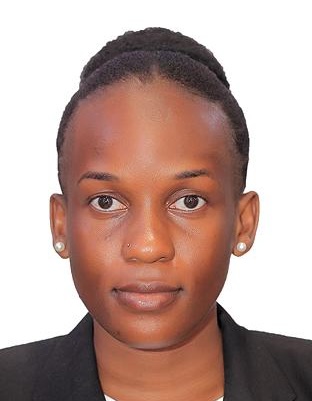
The author is a journalist with Nation Media Group (NMG)