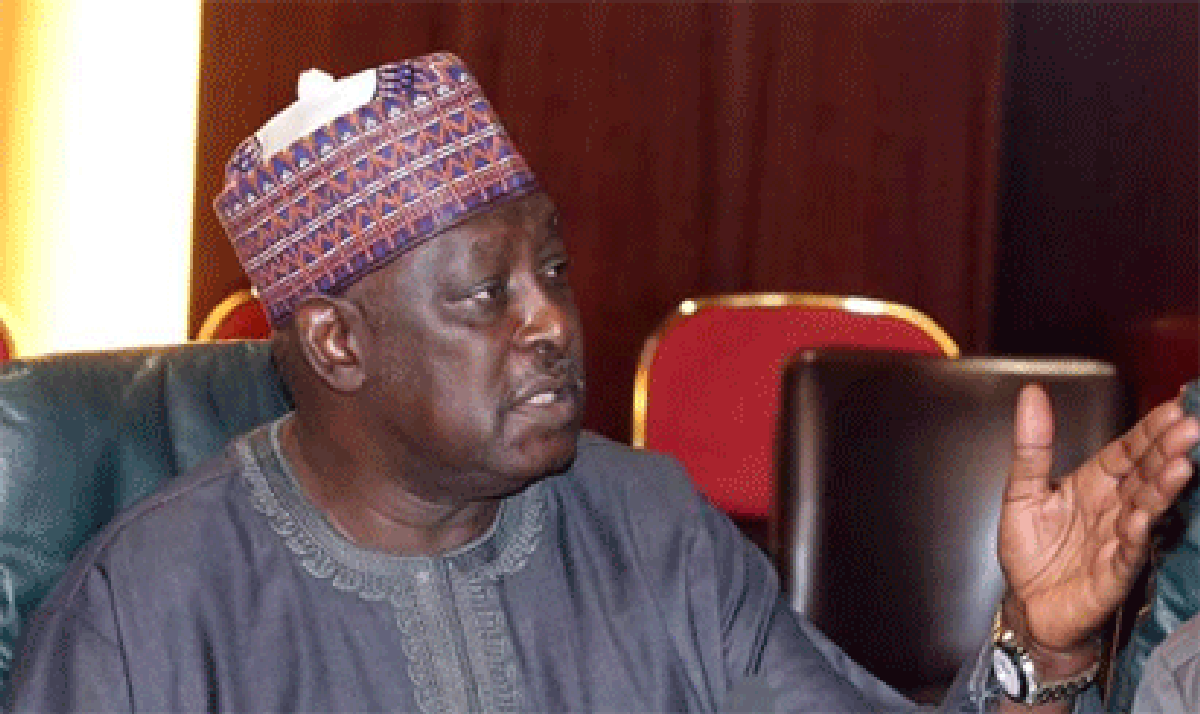
A former Secretary to the Government of the Federation, Babachir Lawal, has called for a judicial inquiry into the controversy surrounding the alleged fake Presidential Fiscal and Infrastructure Projects Council, arguing that the scandal pointed to deep institutional failures rather than a simple administrative error.
In an interview with ARISE NEWS, Lawal said the circumstances surrounding the alleged agency suggested the existence of a wider network that enabled it to function within government processes despite questions over its legal status.
He insisted that an administrative investigation alone would not be insufficient.
“I don’t think it should even be administrative alone; it should be a judicial inquiry,” the former SGF clearly stated.
Lawal questioned claims surrounding an alleged ₦27.5bn take-off grant reportedly linked to the agency, asking how such funds could have been approved and released if the organisation had no legal basis.
“Nigerians are talking about how N1.3bn was inserted into the budget. The man himself first said the quarrel came about because he refused to part with 48% of the 27-point-something billion Naira take-off grant. That money has been spent before this budget office was looking for the budget.
“Who gave him the money? It was not appropriated for; it’s not in any budget, that N27.5bn Naira for which he says somebody demanded 48%. Who gave him the money? How did the process of generating the request for the release come up? How did it go through?
“We are just talking about the tip of the iceberg here. Down there, before we got to here, N27.5bn had already been disbursed, according to him, as a take-off grant. How did that money get to him? It was not in the budget.
“So this is what should frighten us. If such money can go to a fictitious organisation, we only now begin to see it when we are quarrelling about how it got into the budget. How did that money get to them?,” Babachir queried.
The former SGF argued that the controversy only became public because of disagreements over the sharing of funds rather than because government oversight mechanisms functioned effectively.
Chuks Okocha