Industry warns soaring fuel costs and mounting debts could cripple airlines, threaten entire aviation ecosystem….
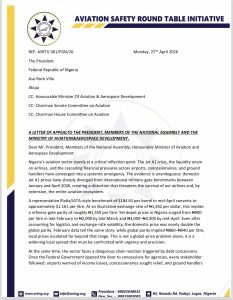
The Aviation Safety Round Table Initiative has issued a strong appeal to President Bola Tinubu, the National Assembly and the Ministry of Aviation, warning that Nigeria’s aviation sector is facing a deepening crisis driven by soaring Jet A1 fuel prices and mounting financial pressures.
In a letter dated April 27, 2026, signed by its President, Ademola Onitiju, and General Secretary, Fidel Ohunayo, the group described the situation as a “systemic emergency,” noting that rising fuel costs, liquidity constraints and financial strain across airlines, airports and service providers are converging to threaten the survival of the industry.
According to the group, domestic Jet A1 prices have sharply diverged from global benchmarks between January and April 2026. While international refinery-gate prices suggest a significantly lower cost per litre, local depot prices surged from about ₦900 per litre in February to as high as ₦3,300 by mid-April.
The group said this disparity goes beyond global oil price movements, pointing instead to widening inefficiencies within the local supply chain that require urgent policy attention.
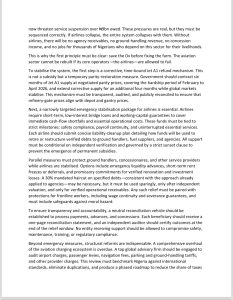
It warned that the crisis is already triggering a chain reaction across the aviation value chain. Following recent debt concessions granted by the Federal Government, multiple stakeholders including airports, concessionaires and ground handling companies have begun seeking similar relief, with some operators reportedly threatening to suspend services over unpaid debts.
The organisation stressed that the survival of airlines must remain the top priority, noting that the collapse of airline operators would have far-reaching consequences for the entire ecosystem, including revenue losses for agencies, service providers and thousands of jobs.
To stabilise the sector, the group proposed a time-bound Jet A1 price intervention mechanism aimed at restoring parity with global benchmarks. It suggested that the government secure fuel supply at negotiated rates over a defined period and ensure transparent pricing across the supply chain.
In addition, it called for an emergency support package for airlines, including low-interest loans and working capital guarantees tied to strict conditions such as safety compliance, payroll continuity and uninterrupted services.
The group also recommended targeted support for ground handlers and other service providers through measures such as temporary financial relief, structured debt adjustments and safeguards to protect workers.
To enhance transparency, it proposed the establishment of an independent reconciliation mechanism to oversee disbursements, verify claims and ensure accountability across the sector.
Beyond immediate interventions, the organisation emphasised the need for structural reforms, including a comprehensive review of aviation charges, taxes and fees to align Nigeria’s cost structure with global standards and eliminate inefficiencies.
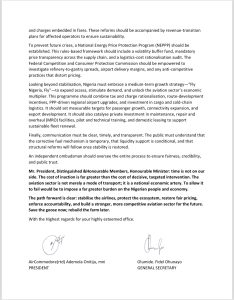
It further recommended the creation of a National Energy Price Protection framework to manage fuel price volatility, improve transparency and address anti-competitive practices within the supply chain.
Looking ahead, the group urged the government to adopt a broader growth strategy for the aviation sector, focused on expanding connectivity, improving infrastructure and attracting private investment in areas such as maintenance, training and cargo logistics.
The organisation concluded that urgent and coordinated action is needed to stabilise the sector, warning that the cost of inaction could be far greater than the financial implications of targeted intervention.