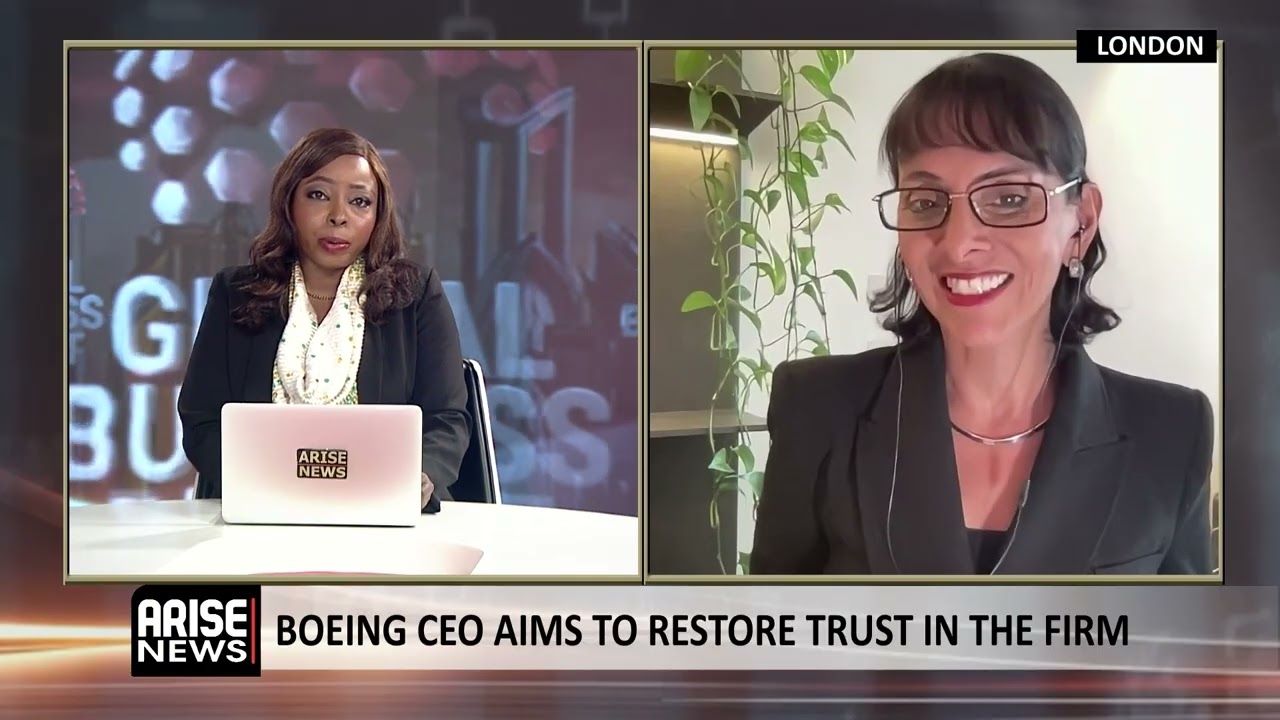
Tourism Ambassador and Advisor to the United Nations World Tourism Organisation (UNWTO), Anita Mendiratta, says global aviation demand continues to surge, with tourism and trade driving growth across the sector despite geopolitical tensions, rising fuel costs and climate-related challenges
Speaking during an interview with ARISE NEWS on Wednesday, Mendiratta said Boeing’s strong second-quarter performance, increased aircraft deliveries and growing order backlog highlight the resilience of the global aviation industry and its importance to worldwide connectivity.
Reacting to Boeing’s delivery of 171 commercial aircraft in the second quarter, Mendiratta said the results reflect the strength of demand across global aviation.
“Demand of global aviation continues to surge and that’s both for tourism as well as trade. The numbers that came through yesterday are, as exactly the CEO of Boeing said, a reflection of a very solid quarter.”
She said the increase in aircraft deliveries shows the aviation industry’s ability to expand and continue supporting growing passenger and cargo demand.
“This is reporting of the ability of global aviation to grow and continue on its trajectory of growth, which the world needs.”
Mendiratta said Boeing’s improved performance represents more than just the company’s financial recovery, describing it as a reflection of renewed stability and confidence across the broader aviation sector.
“Boeing’s stronger performance is not just about the company’s results but also reflects growing stability within the wider aviation sector.”
She said demand for aircraft remains strong despite global conflicts, rising energy prices, airspace disruptions and climate-related challenges affecting the industry.
“Regardless of all the conflicts in the world, whether we look at geopolitics, the issues around jet fuel and the prices of energy, and now as we see, because of conflict, airspace is being locked off and now we have Mother Nature having her fires at play, there still continues to be a demand that’s growing.”
On Boeing’s efforts to rebuild trust following previous challenges, Mendiratta said safety, quality and consistent performance are critical to restoring confidence in the company.
“Rebuilding trust requires a continued focus on safety, quality and consistent performance as Boeing works to strengthen confidence in the company.”
She stressed the importance of trust in the aviation industry, saying it remains the foundation of confidence among passengers, airlines and industry partners.
“Trust is the most important currency when it comes to global aviation.”
On Boeing’s recovery efforts, Mendiratta praised Chief Executive Officer Kelly Ortberg’s leadership, saying his focus on accountability and improving production has helped strengthen the company’s performance.
“Kelly Ortberg’s focus on accountability and improving production has helped strengthen Boeing’s performance and rebuild confidence in the company.”
Addressing rising jet fuel prices, she said higher operating costs remain a major challenge for airlines as geopolitical tensions continue to affect global energy markets.
“Higher operating costs, driven by rising jet fuel prices and geopolitical pressures, remain a significant challenge for airlines navigating uncertain global energy markets.”
She said airlines are carefully managing fuel consumption, aircraft capacity and route networks to improve efficiency while meeting demand.
“Airlines are having to manage very, very carefully jet fuel consumption, capacity, networks, how they’re maximizing as well the efficiencies of the aircraft based on seasonal demand.”
On the growing competition in aircraft manufacturing, Mendiratta said China’s COMAC could become an important addition to the global aviation market by increasing aircraft supply and competition.
“COMAC is a very good addition to the duopoly, now creating a triopoly. This is a good thing for global aviation because not even the duopoly has been able to meet that demand.”
She said the expansion of aircraft manufacturing capacity is necessary as demand for global travel and trade continues to increase.
“Expanding aircraft manufacturing capacity is essential because the growth in global travel and trade requires more aircraft to meet rising demand.”
Speaking on the impact of Europe’s wildfires and heatwaves on tourism, Mendiratta said climate challenges are reshaping travel patterns rather than reducing people’s desire to travel.
“Climate challenges are changing where and when people travel, but they are not diminishing the global appetite for tourism.”
She explained that travellers are adapting by changing travel periods and selecting alternative destinations to manage the impact of extreme weather conditions.
“Travellers are adjusting their plans by choosing different seasons and destinations as they adapt to the growing impact of extreme weather conditions.”
Mendiratta concluded that aviation remains a vital link for the global economy, connecting people, businesses and markets through tourism and trade.
“The world is connected by global aviation, whether that’s travel or through trade.”
Goodness Anunobi