The 12th Africa Magic Viewers’ Choice Awards (AMVCA 2026) delivered everything fans expected: cinematic excellence, show-stopping fashion and unforgettable drama.
Held over the weekend of 9 May 2026 at Eko Hotel and Suites in Lagos, Nigeria, the event drew comparisons to the Met Gala for its theatrical red carpet displays. But a few gowns and the bitter disputes that followed almost overshadowed every trophy and acceptance speech.
A red carpet that rivalled the Met Gala
This year’s AMVCA theme honoured craft and celebrated culture, and African designers answered the call with sculptural silhouettes, oversized trains, feathers, crystals, and conceptual nature-inspired couture.
Among the most talked-about moments was Queen Mercy Atang arriving in a dress made from more than 500 loaves of bread, crafted by celebrity stylist Toyin Lawani of Tiannah’s Empire to promote Atang’s baking business. While visually arresting, it sparked immediate debate about food waste and ethical fashion.
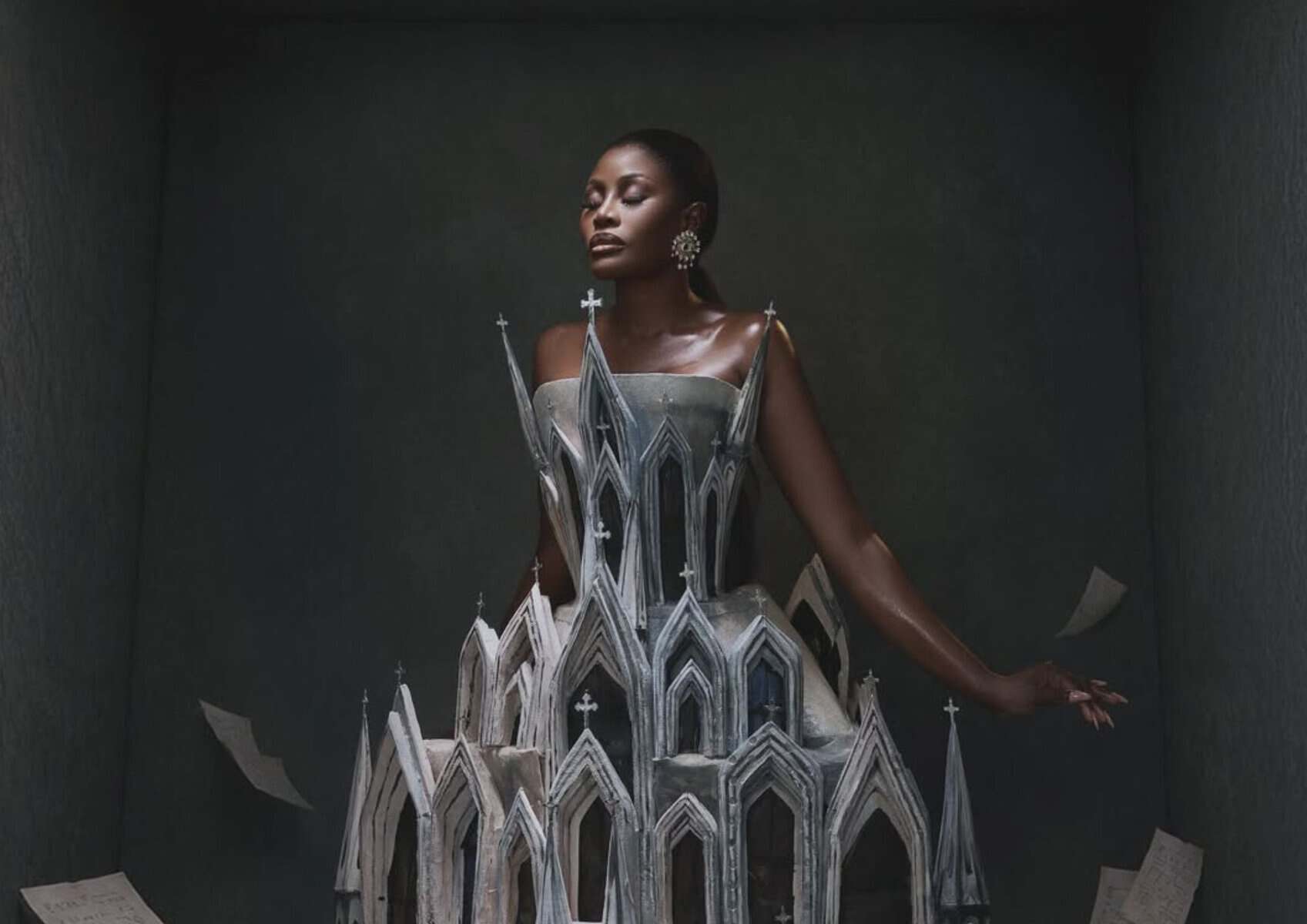
But no look generated more conversation than the one worn by Ghanaian actress, model, and fashion icon Nana Akua Addo.
Addo arrived in a towering silver Gothic architectural gown inspired by Germany’s iconic Cologne Cathedral.
Designed by Nigerian creative Mohammed Abbas Ossu (known by his label Abasswoman/Abbaswoman.ng), the piece featured hand-painted stained-glass window details on the bodice and skirt of the gown, dramatic structured extensions, and a sweeping silhouette so grand it required a team to help her navigate the red carpet.
It was breathtaking, so it naturally went viral, and within hours of the event, it became deeply controversial.
The copyright allegations
Shortly after the AMVCA 2026 red carpet wrapped, Almée Couture, a Paris-based atelier, claimed that Addo had commissioned them in 2025 to create a nearly identical cathedral-inspired gown.
According to Almée, the project was eventually cancelled, and a refund was issued, only for the concept to allegedly resurface, executed by a different designer, without credit or permission.
Almée posted side-by-side comparisons of sketches and concept visuals alongside the finished gown, writing: “Wanna talk about this blatant THEFT… okay, you steal… but mention… ‘got inspired by’… AT LEAST.”
The post spread rapidly, igniting a debate about inspiration versus imitation, cross-border creative collaboration, and the fragile intellectual property landscape in African fashion.
Nana Akua Addo fires back
Addo wasted no time in responding to clear her name and the air. On 11 May, she pushed back firmly, asserting that the original concept and all creative direction were entirely hers.
She explained that she had pitched an AI-generated vision board and a detailed mood board to Almée Couture, but the Paris atelier declined to execute her exact vision, citing the design’s complexity. A refund was agreed upon, and Addo subsequently brought the concept to Abbas, who began working on it from November 2025.
“The entire concept and creative direction were my intellectual property,” Addo stated, dismissing the controversy as a “headache.”
For his part, Mohammed Abbas Ossu confirmed the months-long production timeline and later acknowledged Almée Couture as a collaborator amid mounting online pressure, though the acknowledgement did little to fully settle the debate.
In addition to the main cathedral gown controversy at AMVCA 2026, two other high-profile looks fuelled broader discussions about design originality, crediting and “inspiration” in African red-carpet fashion.
Butterfly dress drama
Several butterfly-themed gowns stood out, tying into Nigeria’s rich biodiversity (home to Africa’s highest number of butterfly species).
Notably, Laura Ikeji wore a dramatic one-shoulder black velvet mermaid gown with a massive, hand-painted five-foot butterfly wing attached to the shoulder, styled as a tribute to Nigerian butterflies. It was widely praised as artistic and culturally resonant.
A Nigerian fashion designer and artist publicly accused Laura Ikeji and Lesliana Pereira, along with their respective designers, of lifting elements from his existing butterfly collection.
Side-by-side comparisons circulated, sparking debates similar to the cathedral gown issue. At the same time, British fashion illustrator Hayden Williams called out a gold gown worn by Toni Tones (and styled for the event), claiming it was directly inspired by, and closely replicated from, his earlier concept sketch created for American artist/actress Teyana Taylor.
Williams had illustrated a gilded, croc-embossed, feathered couture gown envisioning Taylor on a red carpet (shared earlier in 2026). After the AMVCA appearance, he noted the strong resemblance (differences mainly in feathers and bust positioning). The stylist and Toni Tones eventually added credit to Williams following public awareness and his comments.
Beyond the red carpet
The design disputes are bigger than a few dresses, as they cut to the heart of several urgent conversations in the global fashion industry.
The first being the fact that intellectual property in fashion is notoriously difficult to protect. Unlike literary or musical works, fashion designs, particularly conceptual ones, enjoy limited copyright protection in most jurisdictions.
Mood boards, sketches, and even finished garments frequently fall into legal grey areas, making “inspiration” disputes commonplace and difficult to resolve.
The debates also touch on global South vs. Western fashion power dynamics seen at play when a Paris-based atelier accuses Nigerian and Ghanaian creatives of theft. Many noted how this raises questions about whose creativity is centred, whose IP is taken seriously, and how African designers are perceived on the world stage.
The rapid pace at which this became a global conversation also reminded the collective that social media accelerates everything. Side-by-side image comparisons and celebrity platforms turn nuanced creative disputes into viral flashpoints overnight. All parties now face intense public scrutiny that forces rapid responses, whether or not the full picture is clear.
Lastly, Addo’s disclosure that she used AI-generated imagery to develop her concept raises new questions about authorship in the age of generative tools. If a concept originates from an AI prompt and a human mood board, who owns it, and how should that be communicated to collaborators?