Tinubu gives nod for minister’s political move after key policy milestones, signaling early realignments ahead of 2027 elections….
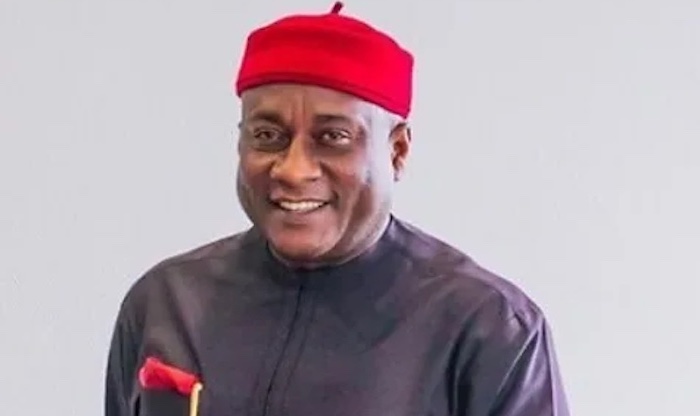
Nigeria’s Minister of Power, Adebayo Adelabu, is on the verge of stepping down from his role following a decisive meeting with President Bola Tinubu at the Presidential Villa in Abuja.
Details of the meeting, which took place behind closed doors on Tuesday, emerged through a statement from Adelabu’s media aide, Tunji Bolaji. According to the statement, the president commended the minister’s efforts in steering reforms within the power sector and gave his approval for Adelabu to pursue his political ambitions in Oyo State ahead of the 2027 elections.
With that endorsement secured, Adelabu is now expected to formally resign in the coming days, bringing his tenure as power minister to a close.
During the meeting, the minister presented an extensive account of his time in office, highlighting reforms and structural initiatives aimed at repositioning Nigeria’s electricity sector. Central to his presentation was the National Integrated Electricity Policy (NIEP), a long-term framework designed to tackle persistent challenges in power generation, transmission, and distribution.
He also outlined the accompanying Strategic Implementation Plan (SIP), which provides a roadmap for executing the policy through defined timelines and institutional responsibilities. Together, these frameworks are intended to improve electricity access, strengthen infrastructure, and incorporate renewable energy into Nigeria’s power mix.
Adelabu noted that his planned exit comes only after putting key policy foundations in place, a move he described as necessary to ensure continuity in ongoing reforms.
His tenure, however, has not been without controversy. While the administration has pointed to policy strides and investment efforts, many Nigerians have continued to grapple with unreliable electricity supply, periodic grid collapses, and rising tariffs. Ongoing issues such as gas supply constraints and infrastructure limitations have also weighed heavily on the sector.
The minister’s anticipated resignation follows weeks of speculation about his political future. Rumours had intensified after a supposed resignation letter circulated online in March, though it was quickly dismissed by his media team at the time.
Despite earlier uncertainty especially after a reported deadline for politically ambitious appointees to step down, Tuesday’s development confirms that Adelabu’s governorship ambitions remain firmly on track.
A familiar face in Oyo politics, Adelabu previously contested the governorship election in 2019 under the All Progressives Congress (APC) but lost to incumbent governor Seyi Makinde. In 2023, after failing to secure the APC ticket, he ran under the Accord Party and finished third.
His expected return to the APC sets the stage for what could be a fiercely contested race, as political alignments begin to shift ahead of the next election cycle.
More broadly, his exit reflects a growing trend within the current administration, as cabinet members with political aspirations begin to step aside in compliance with electoral expectations. It also underscores the early onset of political maneuvering as 2027 approaches.
As Adelabu prepares to leave office, attention will likely turn to both his political prospects in Oyo State and the future direction of Nigeria’s power sector in the wake of his reforms.