A new kind of risk is quietly reshaping Uganda’s financial sector, one that doesn’t show up on traditional balance sheets but could determine the future of investment, lending and economic growth.
At a high-level meeting in Kampala, aBi Finance, working with key industry partners, unveiled two initiatives aimed at pushing banks and microfinance institutions toward a new standard: financing that accounts not just for profit, but for environmental impact, social responsibility and governance, what experts call ESG.
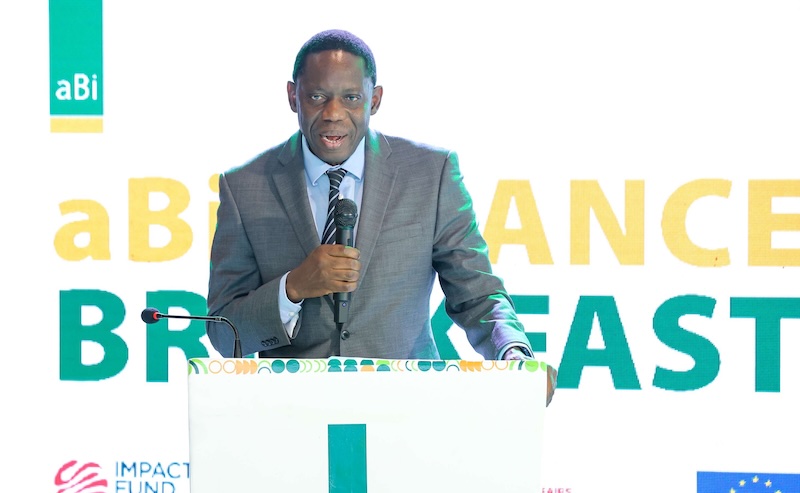
The launch, held at Four Points by Sheraton and presided over by Bank of Uganda Governor Dr Michael Atingi-Ego, signals a shift in how Uganda’s financial system understands risk in a changing world.
“IFRS S1 and S2 mark a fundamental shift in how our financial sector understands and manages risk,” Atingi-Ego said.
“It requires institutions to go beyond traditional financial reporting and integrate climate and sustainability considerations into governance, strategy, and decision-making.”
In simple terms, banks are being asked to look beyond numbers like profits and losses and start asking harder questions: How exposed are we to climate shocks? Are we financing activities that harm the environment?
Are our governance systems strong enough to manage long-term risks? These are no longer abstract concerns. Globally, investors are increasingly directing money toward institutions that can demonstrate transparency, sustainability and resilience.
Countries that fail to adapt risk being locked out of long-term capital. The first initiative, a capacity- building programme developed with the Uganda Bankers Association, focuses on helping financial institutions adopt international reporting standards known as IFRS S1 and S2, alongside the Global Reporting Initiative framework.
These standards guide how organisations disclose climate risks and sustainability performance. For Uganda’s banking sector, the challenge is not just compliance, but credibility.
“Many institutions perform better in governance than in environmental and social areas, and in some cases lack sufficient evidence to support reported ESG performance, raising concerns about credibility,” said Ronald Ocheng, a senior research officer at the Uganda Bankers Association. That gap matters.
Without reliable data, sustainability claims can look like marketing rather than measurable progress. The second initiative targets a different segment of the financial system: microfinance institutions, often referred to as Tier IV institutions.
These are the lenders closest to Uganda’s grassroots economy, serving farmers, small traders, women- led businesses and communities that formal banks often struggle to reach. The new ESG framework, developed with the Association of Microfinance Institutions of Uganda, aims to embed responsible practices into these institutions without overwhelming them.
“Tier IV ESG Framework will provide a practical and context- specific approach that reflects the capacity and operational realities of Tier IV institutions,” said Jackline Mbabazi, the association’s executive director.
“It will reinforce governance, promote responsible lending, and strengthen environmental stewardship.” That distinction is important.
What works for a large commercial bank does not always translate easily to a rural savings group or a micro-lender operating in informal markets. Still, the direction is clear. Uganda is aligning itself with a global shift in finance, one where sustainability is no longer optional, but expected.
The implications extend beyond banks. Over the past decade, aBi Finance and its partners have channelled investment into agriculture, small businesses and inclusive finance, reaching more than 2.2 million farmers.
More than 70 per cent of those beneficiaries are women, while 42 per cent are youth groups often excluded from formal financial systems. The programme has also helped create over 300,000 jobs.
These numbers reveal a deeper story. Sustainability, in this context, is not only about climate. It is also about who gets access to capital, who benefits from growth, and whether development reaches the margins of the economy.
Signe Winding Albjerg, Denmark’s ambassador to Uganda, framed the issue as one of collective responsibility.
“No single institution or partner can address today’s interconnected challenges alone,” she said.
“Through long-term partnerships, we have demonstrated that patient and well-structured finance can unlock investment, expand inclusion, and improve livelihoods.”
That idea — “patient capital” — may be one of the most important, and least understood, shifts in global finance. It prioritises long-term impact over short-term returns, aligning closely with Uganda’s ambition to grow its economy to $500 billion by 2040.
Yet challenges remain. Adopting global standards requires technical capacity, strong data systems and institutional discipline; all areas where gaps persist. There is also the risk that smaller institutions could struggle to keep up if requirements become too complex.
Still, the alternative is riskier. As climate change accelerates and global investors demand greater transparency, financial systems that fail to adapt may find themselves increasingly isolated.
“At aBi Finance, we remain committed to being a partner to the sector, supporting innovation, building capacity, and driving inclusive growth and sustainability,” said CEO Mona Muguma Ssebuliba.