In Buganda culture, kings do not die; they simply disappear. When they do, their remains are preserved in what is known as amasiro (tombs or mausoleums).
While today the most widely known masiro in Buganda are the UNESCO World Heritage site – Kasubi Royal Tombs, similar sites are spread across the kingdom, serving as the final resting places for past kings – referred to as Ssekabaka after their demise. Historical records indicate that more than 36 kings have ruled Buganda, each with a designated tomb where their remains are interred.
Today, The Observer explores Wamala Tombs in Wakiso district, which house the remains of Ssekabaka Ssuuna Kalema II.
Visiting the tombs, however, left me with second thoughts about the idea of exploration, after learning that others visit for cultural and spiritual consultations.
As a staunch born-again Christian, whose faith sometimes stands in tension with certain cultural practices and norms, you can understand my hesitation and the quiet inner struggle of trying to strike a balance between upholding my obligations to my faith and the appreciation of my culture.
However, I finally overcame my fears and off I went to my brief expedition.
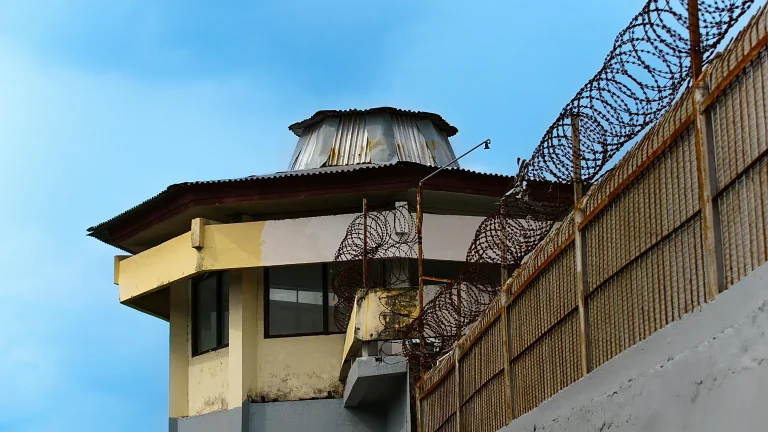
Just like at Kasubi, the Wamala tombs have a perimeter wall surrounding the entire facility with two main entrances guarded at all times. At the entrance, a UPDF soldier records visitors’ details before granting them access.
On my first day, I was unable to get past the gate after being informed there was no one to guide me through the site. I returned the following day.
INSIDE EKIGANGO
This time I was required to pay a fee before I was led into the waiting area known as ekigango; it is a grass-thatched structure built in a spherical shape with bricks, having a front and back door that was mainly closed.
The kigango is one of the important houses found inside this royal site. Visitors many whom come for cultural and spiritual reasons, are received here and state their intentions for the visit. The entire floor is covered with mats and animal skins spread out with a pillar wrapped with bark cloth and cowrie shells standing in the middle, holding the structure firm.
Around the space, there are various traditional baskets and calabashes randomly arranged.
I waited for over 30 minutes before a lady clad in a gomesi came through the main entrance and began attending to us.
She moved patiently, listening to each person’s reason for visiting. There were three people ahead of me and I watched as she handled their concerns one by one before eventually turning her attention to me. After explaining to her that my reasons for the visit where purely for study purposes, she led me inside the tombs where we took a deep dive into the rich history of the cultural site.
WHO WAS SSEKABAKA SSUUNA KALEMA II?
Inside the tombs, I learnt that this particular lady is a royal descendant whose name is Mukondo Nakku Musoke belonging to the Fumbe clan.
Mukondo said she is a wife to the Ssekabaka and her main duty is to protect the relics of the king – “okukuuma ebifundikwa bya Kabaka” – in other words, a medium.
She explained that her great great grandmother was a wife to Ssekabaka Ssuuna II and customarily, her descendants have to keep that role.
“She was a wife to the king and her heirs throughout the different generations keep on the role of being a wife to the king,” she said.
Speaking about the history of Ssekabaka Ssuuna II, Mukondo did not reveal much part from his year of birth and ascension to the throne.
“Kabaka Ssuuna II’s history goes way back to 1820, when he was born at Bujuuko to Ssekabaka Kamanya and Nnamasole Nakkazi Kannyange,” she said. “She was one of the many wives in the royal household.”
Upon Kamanya’s death in 1832, the young prince ascended to power at just twelve years old.
Basing on the available sources online, his early reign began with admiration from his people owing in part to his striking appearance, which many attributed to his mother, reputed to be among the most beautiful women of her time.
Yet, beyond his popularity, Ssuuna II also embraced and even surpassed the royal tradition of marrying widely, taking more than 148 wives, a number that outdid his father, who had at least 30 wives.

This expansive household inevitably produced a vast lineage, with records indicating that he fathered more than 221 children.
However, as years passed, Ssuuna adopted grand titles suggesting invincibility and he was consumed by fear of losing his throne; so, he ordered the execution of his own brothers, a decision that led to the deaths of 58 out of 60 princes, leaving only Prince Wassajja and Prince Mugogo as survivors.
However, some sources debunk this theory, saying he did not personally order the killing of his brothers, but rather, they died during the extensional wars Buganda usually engaged in.
His death came in October 1856 due to smallpox and famine, which had hit the region. He was just 36.
His remains were interred at Wamala hill, which was also one of his palaces.
Ssuuna II’s legacy was marked by the expansion of the kingdom’s borders to include areas such as Kooki. Additionally, he is said to have welcomed the Arab traders to Buganda kingdom.
INSIDE THE TOMBS
Mukondo explained that the royal facility used to seat on 100 acres, but due to encroachment the land has reduced gradually.
“We only remained with 16 acres, which have also reduced further,” she explained. She added that the tombs have been in place for a long time, although there are modifications that have been added as time passed.
“For example, this particular house that holds the remains of the king was modified in 2015 to look the way it does now,” she said.
Mukondo said the house holding the remains of the king is called Batanda Bezaala.
It was built following the royal customs that were followed while constructing Muzibu Azaala Mpanga at Kasubi.
“There is no difference between the two; they followed the same customs,” she said.
Mukonda added that the Wamala tombs used to be the royal residence of Suuna II, which explains why his remains where kept there.
“Previously when kings died, they were buried in their palaces,” she said. “Even Suuna II’s predecessors were all kept in their respective palaces which later became tombs.”
Asked why four previous kings were buried at Kasubi royal tombs, Mukondo explained that kings have the prerogative to bring new traditions.
“It was only started in Kasubi, but previously it was not like that,” she said.
The interior of the Batanda Bezaala looks exactly the same as the interior of the main mausoleum at Kasubi – Muzibu Azaala Mpanga.
Inside, there are a number of spears and shields that the king used, as Mukondo explained: “He really loved hunting and fighting to expand his kingdom and those are the items he used.”
Additionally, there is a fireplace that is used to keep the place warm and keep bugs away.
“The electricity was only installed recently; we always used the fireplace.”
There are also drums that are used to entertain the king even in death, and calabashes used to bring local brew for the king.
TOMBS MAINTENANCE
Mukondo said to maintain the tombs, there in a need for regular repair of the grass-thatched roof on Batanda Bezaala and other houses on site that are grass-thatched.
“It is done once in a while when there is need for replacement, and is done by well-wishers mostly,” she said. “The money collected at the gate is used for expenses related to maintaining this place such as paying for cleaning.”
Mukondo added that there are other duties carried out by the various clans of Buganda, all in service of the tombs.
LIMITED TOURISM
Despite the rich history of the cultural site, Mukondo explained that tourism revenue is limited.
“It’s on rare occasions that we receive visitors that want to tour the site,” she said. “There are days that we do not get any visitor; sometimes a few come and on rare occasions we get big numbers.”
She said in most cases those who visit come for prayers and ‘consultations’ with the spirits.