FCT minister says consistent criticism without acknowledging government achievements can undermine the credibility of public commentary…..
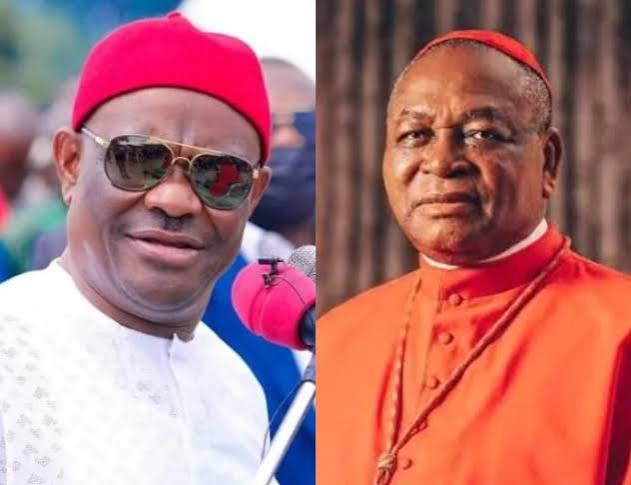
Federal Capital Territory (FCT) Minister Nyesom Wike has questioned the neutrality of Cardinal John Onaiyekan, saying the Archbishop Emeritus of Abuja openly took sides during the 2023 general election and should strive for greater objectivity in his public comments.
Wike made the remarks on Tuesday during a media briefing while reacting to the recent exchange between the Presidency and the senior Catholic cleric following the Catholic Bishops’ Conference of Nigeria (CBCN) meeting with President Bola Tinubu.
The disagreement stemmed from comments made by Onaiyekan after the closed-door meeting, in which he suggested that some presidential aides were presenting an overly optimistic picture of the country to the President while attention was already shifting toward the 2027 elections. The Presidency subsequently criticised the remarks, describing them as an abuse of the privilege extended to the bishops.
Weighing in on the issue, Wike said religious leaders have an important role in national discourse but risk diminishing the impact of their interventions if they are perceived as aligning with political interests.
According to the minister, criticism of government policies is legitimate and necessary in a democracy, but it should be accompanied by recognition of areas where progress has been made.
Wike argued that public commentary should reflect both achievements and shortcomings, rather than focusing exclusively on negative developments.
Referring specifically to Onaiyekan, the FCT minister maintained that the cleric’s political preferences during the 2023 elections were widely known.
He said that when a religious leader is seen as taking sides politically, it becomes more difficult for the public and government to view subsequent comments as impartial advice.
Wike also faulted what he described as a pattern of persistent criticism, saying government successes should be acknowledged alongside calls for improvement.
According to him, balanced feedback strengthens credibility and makes constructive criticism more effective.
He added that when public figures consistently highlight only the government’s shortcomings without recognising positive developments, authorities are likely to interpret such remarks as politically motivated rather than objective assessments.
The comments come amid renewed debate over the role of religious leaders in public affairs and the balance between holding governments accountable and maintaining political neutrality.