Troops of the Nigerian Armed Forces neutralised over 102 terrorists and criminal elements across various theatres of operation in July, as part of ongoing efforts to tackle insecurity and restore peace across the country, the Defence Headquarters (DHQ) has said.
The development comes as the federal government announced plans to establish a shared regional security database and deploy drones, CCTV and other technology in the southeast to combat kidnapping, armed robbery and other crimes.
However, even as security agencies intensify efforts to curb terrorism and violent crime, fresh concerns are emerging over politically motivated violence ahead of the 2027 general election, with reports indicating that some political actors are recruiting and mobilising armed groups in parts of the country.
Furthermore, the DHQ also disclosed that troops arrested 345 terrorists and criminals, rescued 393 kidnapped civilians and recovered 59 arms and 1,118 rounds of ammunition during the period.
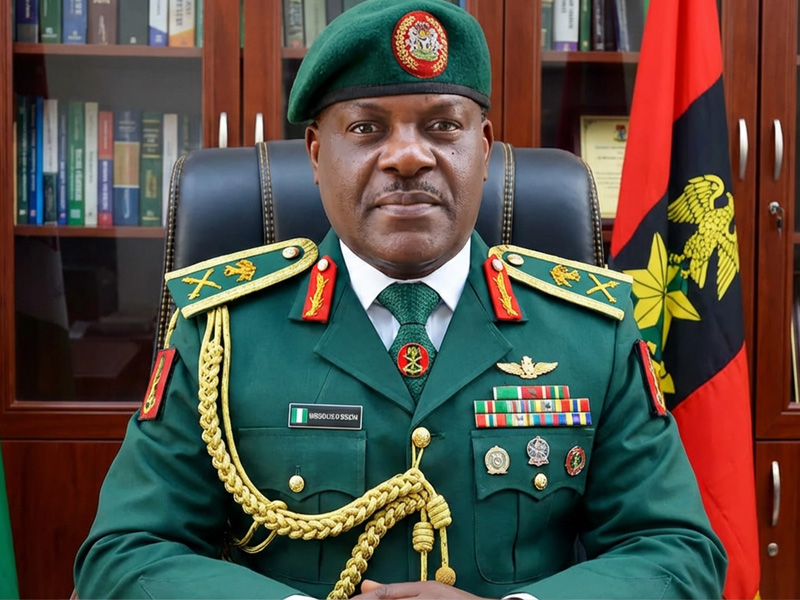
The Director of Defence Media Operations (DMO), Maj.-Gen. Michael Onoja, disclosed this yesterday, during the monthly operational briefing, adding that 57 insurgents surrendered to troops within the month.
Providing a breakdown of the operations, Onoja said troops in the North-East neutralised 54 fighters, arrested 102 terrorists, rescued 102 kidnapped victims and facilitated the surrender of 57 insurgents and their families.
In the North-West, troops under Operation Fansan Yamma neutralised 33 fighters, arrested 66 terrorists and rescued 191 kidnapped victims. Similarly, troops operating across the three theatres in the North-Central region killed 15 terrorists, arrested 148 suspects and rescued 53 victims during the month under review.
In the South-South and South-East regions, troops rescued a combined total of 47 victims, comprising 37 in the South-South and 10 in the South-East, while 29 criminal elements were arrested—three in the South-South and 26 in the South-East.
Onoja also disclosed that troops of Operation Delta Safe sustained anti-kidnapping and economic protection operations across Akwa Ibom, Edo and Rivers States, dismantling 18 illegal refining sites and recovering over 250,500 litres of petroleum products.
He said that on July 4, troops dismantled a major illegal refining complex in the Egboama/Ogbogolo area of Ahoada West Local Government Area of Rivers State, deactivating three refining sites and recovering stolen crude oil and illegally refined Automotive Gas Oil.
“This was reinforced on 5 and 7 July with the deactivation of two other illegal refining sites within the Orashi National Forest. Troops discovered additional illegal refining sites within Ogbogolo community, Ahoada East LGA, during operations conducted from 11 to 22 July.
“Specifically, anti-oil theft operations conducted on 19 and 22 July resulted in the discovery of five illegal bunkering camps at Egboama and Egbogolo areas. Subsequently, approximately 25,000 litres of stolen crude and 2,000 litres of suspected illegal Premium Motor Spirit at Okrika, Okrika LGA, were recovered.”
Security Summit: FG to Establish Regional Database, Deploy Drones, CCTV, in Southeast
Meanwhile, the federal government has announced plans to establish a shared regional security database and deploy drones, CCTV and other technology in the Southeast to combat kidnapping, armed robbery and other crimes.
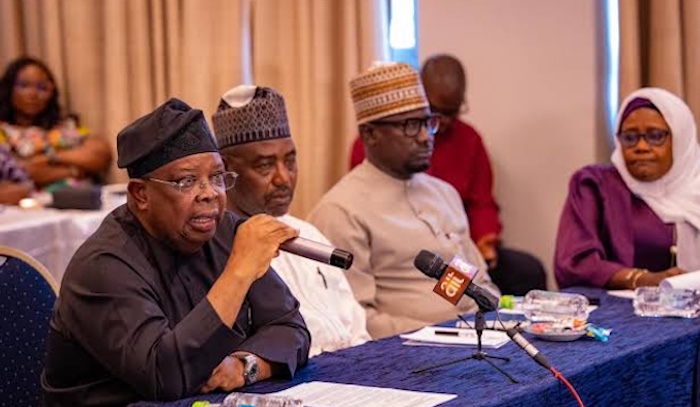
This was contained in a communique issued at the end of the maiden one-day Southeast Regional Security Summit 2026 held in Umuahia on Thursday, July 30, 2026. The summit had as theme: “Collaborative Approaches to Strengthening Security and Regional Stability.”
Convened by the Ministry of Defence in collaboration with the Office of the Senior Special Assistant to the President on Community Engagement, South-East, and hosted by the Abia State Government, the summit observed that although security in the region had improved, threats persist from kidnapping, armed robbery, politically motivated violence, attacks on security personnel, illicit arms proliferation, cultism, drug abuse, misinformation and violent enforcement of unlawful sit-at-home orders.
Delivering the communique, Special Assistant to the Minister of Defence, Rear Admiral Oluwale Bankole, Rtd, said insecurity in the Southeast transcends state boundaries, making isolated state-level responses inadequate.
“No single government, no single institution, no single security agency or state can effectively address the prevailing security challenges without sustained regional collaboration, coordinated action, and the active participation of all stakeholders,” he said.
On implementation, Bankole said the Minister of Defence has set up a technical team to develop an implementation framework. He explained that the Southeast summit would be harmonised with similar regional engagements, with the next scheduled for North-Central in Makurdi on August 30 and 31.
Key implementation measures agreed included the development of a shared regional database of wanted persons, criminal networks, kidnappers, arms traffickers, drug dealers, stolen vehicles and other assets linked to crime.
“We cannot operate without a database. Even if you go into technology, we all need to be on one data, so that if you are committing a crime in Enugu, it can be detected in Abia,” Bankole said, adding that National Identity Management Commission (NIMC) officials had already met with the Minister to discuss integration.
The summit also called for greater investments in drones, geospatial mapping, CCTV systems, automated vehicle identification, digital databases, emergency communication platforms, and professionally managed surveillance infrastructure, noting that checkpoints alone were insufficient against mobile and technologically enabled criminal groups.
Stakeholders further resolved that security is a shared responsibility requiring the involvement of federal, state and local governments, security agencies, traditional institutions, religious leaders, town unions, civil society, private sector, media, youth and women groups, transport unions and citizens.
The communique identified unemployment, youth frustration, drug abuse, political manipulation and inadequate government presence as factors that criminal elements exploit. It stressed that peace and security are fundamental to economic prosperity, investment, agriculture, education and social stability in the region.
The summit also called for strengthening the judicial process to ensure timely investigation, prosecution and punishment of offenders to reinforce deterrence and public confidence.
The summit concluded that sustainable peace in the Southeast depends on coordinated regional action, technology-driven policing, and inclusive stakeholder engagement.
Linus Aleke and Ahmad Sorondinki and Boniface Okoro