FG Adopts Kaduna’s Household Mapping Model To Identify Out-Of-School Children Nationwide
Nigeria’s approach to tackling the out-of-school children crisis is set for a major shift, as the Federal Government adopts Kaduna State’s household mapping model to identify children who are not in school. The Minister of Education, Tunji Alausa, announced the move after a meeting with Kaduna State Governor, Uba Sani, saying the model would become …
Nigeria’s approach to tackling the out-of-school children crisis is set for a major shift, as the Federal Government adopts Kaduna State’s household mapping model to identify children who are not in school.
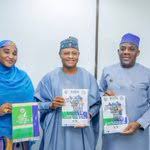
The Minister of Education, Tunji Alausa, announced the move after a meeting with Kaduna State Governor, Uba Sani, saying the model would become the framework for a nationwide exercise.
Under the initiative, the Federal Ministry of Education, in partnership with the National Bureau of Statistics, will conduct household mapping across the 36 states and the Federal Capital Territory to determine the exact number, location and circumstances of out-of-school children.
Alausa said the exercise would replace years of relying on estimates with accurate household-level data.
“With this exercise, we now know where these children are and the households they belong to. That gives us the opportunity to work closely with the Kaduna State Government to bring them back to school”, he said.
The minister explained that previous education planning was largely based on projections that did not provide a clear picture of where affected children lived. According to him, the new approach would help governments and development partners design better interventions and ensure resources are directed to the communities that need them most.
Using Kaduna as an example, Alausa revealed that the state’s mapping exercise showed a significant difference between projections and reality.
“While previous estimates placed the number of out-of-school children in Kaduna at about 585,000, the household mapping exercise revealed that the actual figure was fewer than 200,000′,he said.
He commended Governor Uba Sani for pioneering the initiative, describing accurate data as essential to improving education delivery and reducing the number of children excluded from the school system.
“The Federal Ministry of Education is already working with the National Bureau of Statistics to replicate the same methodology nationwide”, Alausa added.
Governor Uba Sani welcomed the adoption of the model, describing it as evidence that data-driven planning can improve education outcomes.
“Education remains one of the most important investments any government can make”, the governor said, reaffirming Kaduna State’s commitment to expanding access to quality education.
Nigeria has one of the world’s largest populations of out-of-school children, with poverty, insecurity, social barriers and inadequate infrastructure identified as major factors contributing to the challenge.
The Federal Government says the new mapping system will support its Renewed Hope Agenda by ensuring that more children are identified, enrolled and retained in school.