Abia governor says Hope Uzodinma cannot speak for all South-East governors as Igbo Leaders of Thought fault regional leaders over what they describe as excessive praise for the President…..
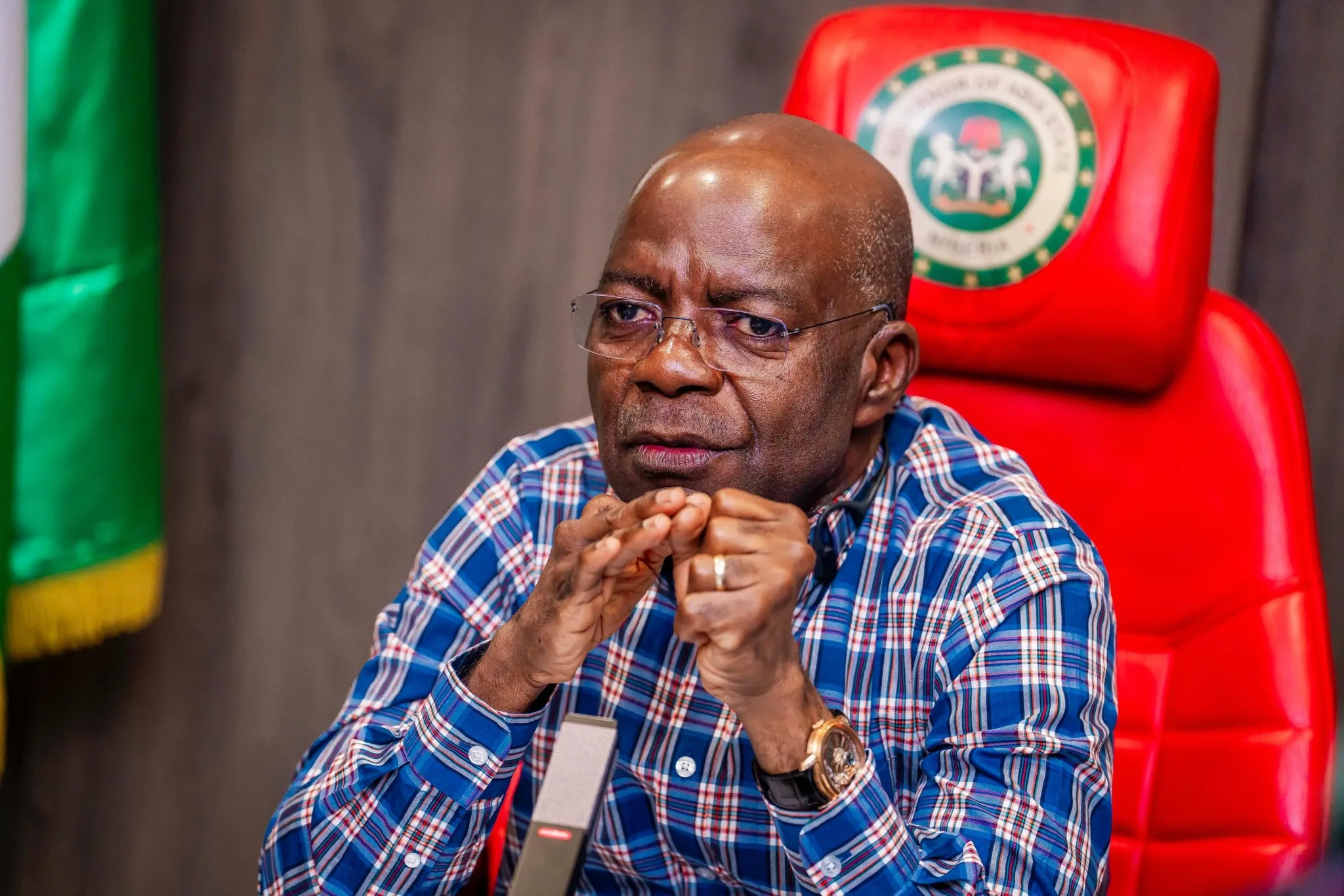
Abia State Governor, Alex Otti, has distanced himself from claims that South-East governors have collectively endorsed President Bola Tinubu for a second term, insisting that the decision on who occupies the presidency in 2027 rests solely with Nigerian voters.
Otti made the remarks during the July 2026 edition of his monthly interactive media session, Governor Alex Otti Speaks to Abians, held at the Michael Okpara Auditorium in Umuahia.
His comments followed reports that Imo State Governor, Hope Uzodinma, said governors from the South-East had resolved to support Tinubu’s re-election, citing ongoing federal projects in the region, including road construction, railway development and the establishment of the South East Development Commission (SEDC).
Responding to the claim, Otti acknowledged Uzodinma’s right to express his views but maintained that no individual governor could commit the entire region to a political position.
“If he said that, he is entitled to his opinion as a governor and as an individual, but he cannot speak for everyone. When the time comes, Nigerians will make their decision,” Otti said.
The Abia governor reaffirmed his membership of the Labour Party, noting that the party would field its own presidential and vice-presidential candidates in the 2027 general election.
“My party is the Labour Party, and the Labour Party has its own presidential and vice-presidential candidates. Naturally, we will support our party’s candidates,” he stated.
Otti, however, stressed that he had no objection to President Tinubu seeking another term, describing it as a constitutional right available to every qualified candidate.
He said democracy gives every eligible Nigerian the opportunity to contest for office, while the electorate retains the ultimate power to determine the outcome through the ballot.
The governor also reiterated his support for some of the Federal Government’s economic reforms, particularly the removal of petrol subsidy, arguing that subsidising consumption encourages corruption and is not a sustainable economic policy.
Beyond politics, Otti disclosed that South-East states, in collaboration with some South-South states, are exploring the development of a regional railway network to improve transportation, connectivity and economic integration.
According to him, Abia State has suspended plans for an independent light rail project in favour of broader discussions on an interconnected regional rail system that would benefit multiple states.
Meanwhile, the Igbo Leaders of Thought (ILT) criticised some governors in the South-East, accusing them of attributing virtually every developmental project in the region to President Tinubu in what it described as unnecessary political sycophancy.
In a statement jointly signed by its President, Elochukwu Amucheazi, and Secretary, Professor Jerry Chukwuokolo, the group argued that elected governors diminish their own achievements when they consistently credit the President for projects executed under their administrations.
The organisation cited examples from Enugu and Ebonyi states, where, according to it, governors had linked state projects to presidential support despite their own constitutional responsibilities to deliver development.
The ILT urged political office holders in the region to focus on governance and the delivery of democratic dividends rather than seeking political favour through excessive praise of the Federal Government.
The group also rejected claims that the current administration has done more for the South-East than any previous government, questioning suggestions that the concession of the Akanu Ibiam International Airport should be regarded as a special favour to the region.
The Igbo socio-political group further expressed concern over what it described as increasing pressure on opposition parties ahead of the 2027 elections.
It warned that actions capable of shrinking the country’s political space could undermine democratic stability and heighten political tensions.
The ILT referenced concerns recently raised by former Labour Party presidential candidate Peter Obi regarding his personal safety and alleged attempts to frustrate his business interests. It also criticised court decisions which, in its view, have weakened some opposition parties ahead of the next general election.
According to the group, Nigeria’s democratic journey was built through years of struggle against military rule, warning that any attempt to weaken political competition could have serious consequences for the country’s democratic future.
Drawing lessons from the crises that preceded military interventions in the First and Second Republics, as well as the post-election violence that followed the 2011 presidential election, the ILT urged political leaders to protect democratic institutions and ensure a level playing field for all political parties.
The organisation said its intervention was motivated by patriotism rather than political partisanship, urging those in authority to safeguard Nigeria’s democracy and prevent avoidable political instability ahead of the 2027 elections.