
Screenshot
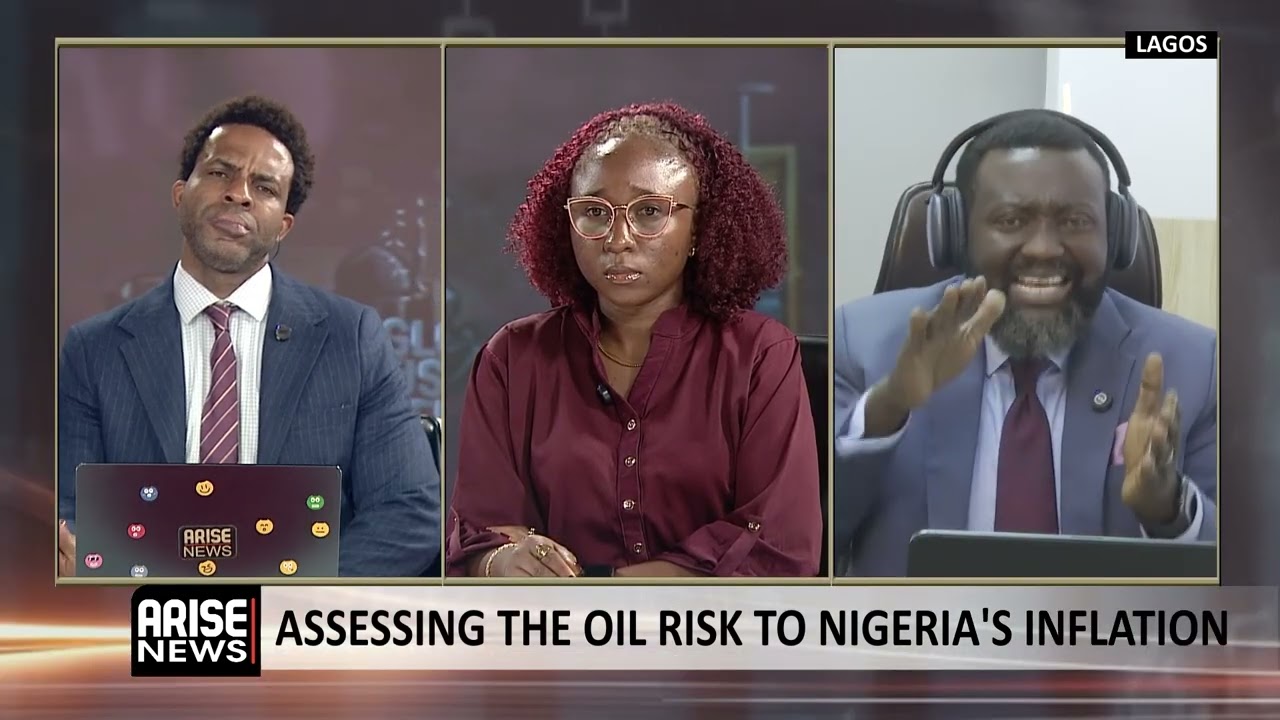
Director and Chief Investment Officer at MDU Capital Limited, Robert Omotunde, has backed the Central Bank of Nigeria’s decision to retain the Monetary Policy Rate (MPR) at 26.5%, describing the move as an appropriate response to persistent inflationary pressures and prevailing domestic and global economic uncertainties.
Speaking during an interview with ARISE NEWS on Tuesday, Omotunde said rising global oil prices affect inflation through both direct and indirect channels, making it necessary for monetary authorities to maintain a cautious policy stance.
On the impact of oil prices on inflation, he stated:
“The direct impact is on energy costs, particularly the pump price of petrol, while the indirect impact comes from the fact that higher energy costs increase production and operating expenses across virtually every sector of the economy.”
Speaking on the Monetary Policy Committee’s decision to retain the policy rate, Omotunde said the current monetary policy stance was appropriate given prevailing economic conditions.
“I believe this is one of the reasons the Monetary Policy Committee decided to keep rates unchanged. Overall, holding the policy rate was the right decision, considering global shocks, inflationary pressures and domestic uncertainties.”
Addressing the Central Bank’s projection of achieving single-digit inflation by the first quarter of 2027, Omotunde described the target as difficult to achieve under current conditions.
“I think that would be a tall order. It’s not impossible, but the conditions required would have to be much more favourable.”
Speaking on factors shaping the inflation outlook, Omotunde acknowledged the Central Bank’s progress in stabilising the foreign exchange market but cautioned that geopolitical tensions and persistently high oil prices continue to pose significant risks to inflation.
“When the Central Bank made its earlier projections, it could not have anticipated geopolitical tensions such as the conflict involving the United States and Iran. These are external shocks that are difficult to factor into forecasts.”
Commenting on the key drivers of inflation, Omotunde identified food prices as Nigeria’s biggest inflationary challenge, stressing that improving security is critical to boosting agricultural production and easing persistent price pressures.
“Rather than single-digit inflation, I think a moderation to around 11–12% is more realistic, provided there are no additional economic shocks.”
Speaking on borrowing costs, Omotunde said Nigeria’s elevated lending rates continue to weigh on businesses, particularly small and medium-sized enterprises (SMEs), limiting their access to affordable credit and slowing economic growth.
“Maximum lending rates are around 35%. While that may be profitable for banks, it is restrictive for economic growth because small and medium-sized enterprises face prohibitively high borrowing costs.”
Concluding, Omotunde expressed optimism about Nigeria’s economic outlook, saying stronger oil production, sustained growth in the services sector and increased domestic refining capacity are expected to drive economic expansion in 2026.
“Taken together, these factors should support GDP growth of around 4% to 4.1% in 2026, and I broadly agree with that outlook,” he added.
Goodness Anunobi