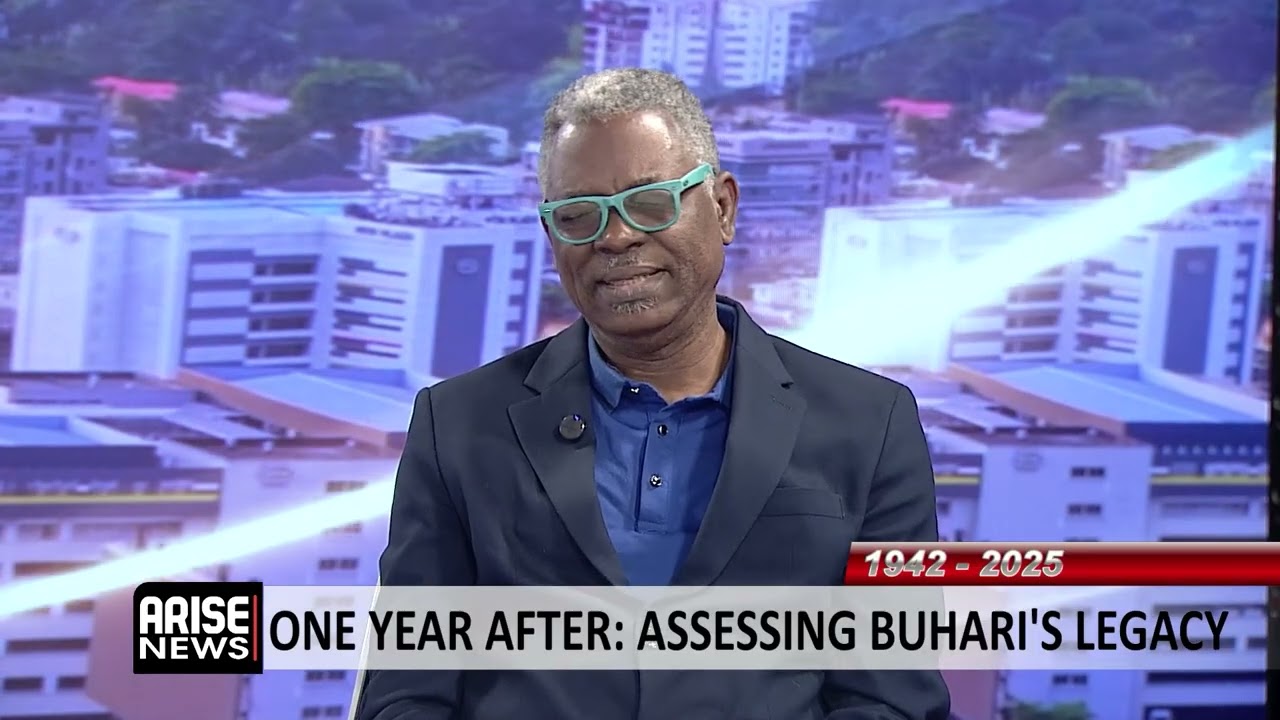
Director of Politics at ARISE News, Akin Osuntokun, has said former President Muhammadu Buhari achieved his personal ambition of becoming “a hero of the North” but fell short in improving the standard of living of Nigerians, describing that contradiction as one of the defining features of Buhari’s legacy.
Speaking in an interview with ARISE NEWS on Monday during a discussion marking one year since Buhari’s death, Osuntokun said it was difficult to objectively assess the late president because of the convention against speaking ill of the dead, but insisted that history must still evaluate his record.
“Personally, for me, and I’m trying to be as objective as I can, I think his aspiration and ambition, he achieved it. That was to live and die as a Northern hero, as a hero of the North. I think that was his primary aspiration and ambition and his ideological position. So he achieved that. He died as a hero of the North, whatever interpretation you might want to give that.”
Osuntokun noted that Buhari also built a reputation as a man of integrity and an anti-corruption crusader during his time as military head of state.
“He also had, to some extent, this attribution of being a man of integrity and a crusader against corruption, especially during the era of his military dictatorship. He did well in that respect, and of course, he earned that reputation. In a country where corruption was a top national concern, that reputation launched him into politics.”
However, he argued that Buhari’s political career was also shaped by northern political mobilisation that emerged after former President Olusegun Obasanjo assumed office in 1999.
Recalling that period, Osuntokun said Buhari became a leading figure in the agitation surrounding the introduction of Sharia in parts of northern Nigeria.
“When Obasanjo became president in 1999, there arose a kind of Northern Muslim reaction against him, which was prosecuted through the introduction of Sharia. Obasanjo called it ‘political Sharia’. Buhari was at the head of it. The statements he made then are still worthy of being recalled.”
He further alleged that Buhari openly identified with Fulani interests before becoming president.
“There was a conflict between Fulani herders and the Yoruba community in Oke-Ogun, and he went to see Lam Adesina, saying he was there on behalf of the Fulani people. It was like some kind of presage of what was going to come later.”
According to Osuntokun, Buhari also became the only sitting Nigerian president to address the nation in Hausa.
“He was the only president on record who addressed Nigeria in the Hausa language as a sitting president.”
Asked whether Buhari truly served northern interests during his presidency, Osuntokun argued that while he remained widely admired in the region, his administration did not significantly improve the welfare of ordinary northerners.
“That was the contradiction about him, and that was the tragedy of his government. He was a hero, but he didn’t govern well in terms of affecting the standard of living of the people.”
He cited Buhari’s handling of violent clashes involving herders and farmers as an example.
“There was a time the conflict between Fulani militia and farmers escalated, and he was making statements saying, ‘They are your brothers; you should learn to live with them.’”
Osuntokun also criticised Buhari’s appointments.
“Look at his appointments. There was categorically a Northern-dominated government, and he himself was unapologetic about being perceived that way.”
Despite this, he maintained that the principle of rotating Nigeria’s presidency was never intended to enable leaders to favour their regions.
“No president is elected to favour his people. The principle of rotation came against the background of the June 12, 1993 election crisis. It was meant to give every part of the country a sense of belonging, facilitate national integration and unity, and address the feeling of unequal citizenship.”
On Buhari’s anti-corruption credentials, Osuntokun described a sharp contrast between the former president’s reputation and the realities of his administration.
“That’s the contradiction. He built his political career on his reputation as a corruption crusader, yet there were massive corruption cases during his administration.”
He suggested that Buhari’s prolonged ill health weakened his ability to govern effectively.
“The explanation he gave was that he was no longer the younger man who had demonstrated such toughness against corruption during his military era. But beyond that, people took advantage of the vacuum in leadership.”
“He was in a hospital in London for almost a total of nine months. For the better part of his presidency, he didn’t enjoy good health, and even when he was in Nigeria, his capacity to preside effectively was hampered. I think that created a vacuum for people surrounding him to go on a rampage.”
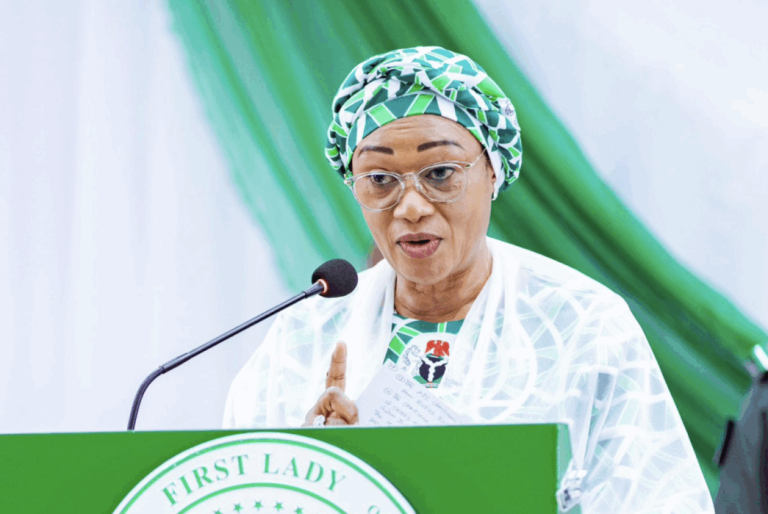
Osuntokun also rejected claims by former First Lady Aisha Buhari that the late president’s enduring legacy lay in education and human capital development.
“it’s very funny. In what respect? I find it funny that anybody can attribute educational achievements to Buhari. He who alleges must prove. I don’t see any evidence of that.”
He argued that Buhari even dismantled one of the education initiatives introduced by his predecessor.
“When he became president, one of the first things he did, or allowed to happen, was the abolition of the almajiri education system that President Goodluck Jonathan had put in place.”
While acknowledging that some institutions were established during Buhari’s administration, Osuntokun said he was unconvinced that education could be regarded as the defining achievement of the former president.
“Supporters talk more about infrastructure and completing projects started by President Goodluck Jonathan. This is the first time I’m hearing that Buhari’s legacy is education. I don’t see the evidence. That’s a stretch.”
He concluded that Buhari’s overall legacy remains open to interpretation.”Whether history will be kind to him or otherwise is for Nigerians, observers and analysts to decide.”
Boluwatife Enome