President says stronger institutions remain key to Nigeria’s democracy as Wike credits Tinubu’s intervention for delivery of landmark legal infrastructure…..
President Bola Ahmed Tinubu has reiterated his administration’s commitment to strengthening Nigeria’s democratic institutions, saying sustained investment in judicial infrastructure is critical to upholding the rule of law and promoting good governance.
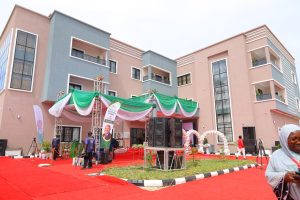
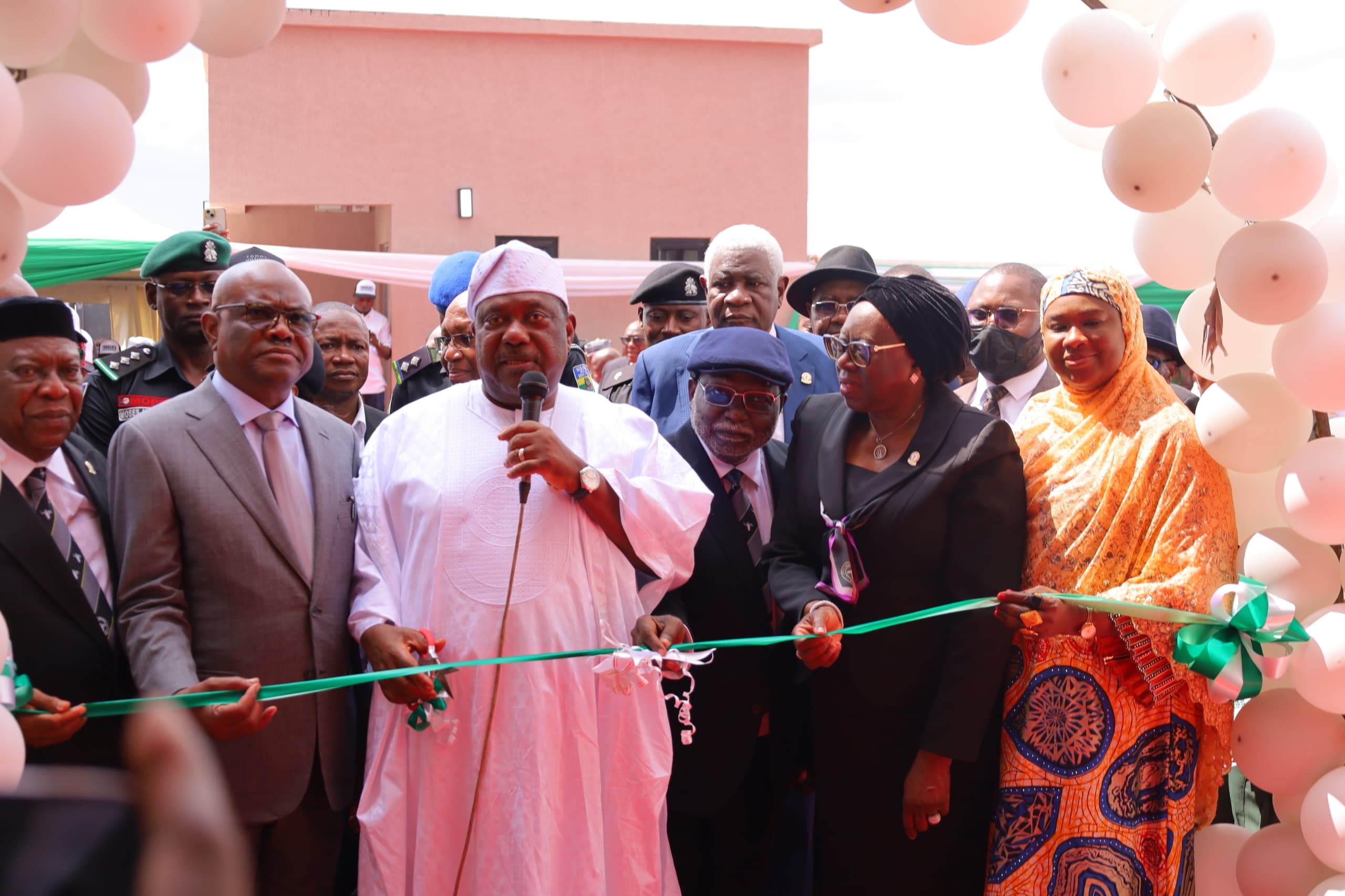
The President made the declaration during the inauguration of the new Body of Benchers Office Annex located in Abuja’s Institution and Research District.
Represented by the Secretary to the Government of the Federation, George Akume, Tinubu described the newly completed facility as more than just another public building, saying it represents the government’s determination to build stronger institutions capable of delivering justice and supporting national development.
“It is with profound honour and a great sense of national purpose that I stand before you today to officially commission this state-of-the-art Office Annex for the Body of Benchers,” the President said.
According to him, the project reflects his administration’s unwavering commitment to strengthening the legal profession and preserving the independence of institutions responsible for administering justice.
“Today’s ceremony is not merely a celebration of a beautiful edifice crafted with architectural excellence. It is a resounding affirmation of our administration’s steadfast commitment to the rule of law, the independence of our institutions, and the dignity of the Nigerian legal profession,” he stated.
Tinubu said the Renewed Hope Agenda places institutional development at the centre of governance, stressing that democracy can only thrive when public institutions are adequately equipped to carry out their constitutional responsibilities.
“When we took the oath of office, we promised Nigerians a Renewed Hope. We made it clear that democracy cannot thrive in a vacuum; it requires strong, resilient and well-equipped institutions to anchor it,” he said.
The President described the Body of Benchers as one of Nigeria’s most important legal institutions, noting that its role in regulating admission into the legal profession and maintaining professional discipline makes it deserving of world-class infrastructure.
He maintained that government support for the judiciary should not be interpreted as interference but rather as a constitutional obligation to provide the resources needed for the effective administration of justice.
Tinubu also disclosed that the Federal Capital Territory Administration has approved the construction of two 300-bed hostels for the Nigerian Law School in Bwari, completed the access road linking the Body of Benchers Secretariat to Nile University, and commenced the construction of a fire service station to serve the district.
The President used the occasion to commend the Minister of the Federal Capital Territory, Nyesom Wike, for what he described as remarkable progress in infrastructure development across Abuja.
“When I appointed Wike, I gave him a clear mandate to transform Abuja into a modern, functional and world-class capital city. Over the last three years, the scale of infrastructural development, urban renewal and project delivery in the FCT has been unmatched,” Tinubu said.
He cited projects such as the Court of Appeal Complex, Judges’ Quarters, the Outer Southern Expressway and several other infrastructure developments as evidence of the administration’s commitment to modernising the nation’s capital.
According to the President, the successful completion of the Body of Benchers annex demonstrates that focused leadership can deliver meaningful results.
“The timely completion and handover of this Body of Benchers Annex is yet another feather in that cap of accelerated governance. It shows that when leadership is focused, things get done, and they get done right,” he added.
Tinubu urged the leadership of the Body of Benchers to utilise the new facility as a hub for legal education, professional mentorship, ethical standards and reforms that will strengthen Nigeria’s justice system.
He also assured judicial officers of his administration’s continued support through improved welfare, better working conditions and the provision of modern facilities.
Earlier, the Minister of the Federal Capital Territory, Nyesom Wike, attributed the successful delivery of the project to President Tinubu’s prompt approval of funding.
According to the minister, the proposal for the office annex was initially presented by a former Chairman of the Body of Benchers, Chief Adegboyega Solomon Awomolo (SAN), after the annual budget had already been passed.
Wike said he subsequently sought the President’s approval to include the project in a supplementary budget, which was later endorsed by the National Assembly.
“Luckily, he prayed very well and Mr. President said, ‘Put it in the supplementary budget.’ That was approved by the National Assembly, and today we are here commissioning the project,” Wike said.
The minister further disclosed that the FCT Administration had already addressed another request by the Body of Benchers by constructing a new access road designed to ease traffic congestion around the institution, with the project expected to be commissioned by the Vice President.
He assured members of the legal body that the FCT Administration would continue to support initiatives aimed at improving the justice sector.
In his remarks, the Chairman of the Body of Benchers, Olorogun Albert Akpomudje (SAN), described the new annex as a major milestone for the legal profession, saying it would enhance legal education, strengthen professional discipline and improve the administration of justice.
He called for sustained collaboration between government and relevant stakeholders to preserve public infrastructure and deepen access to justice across the country.
Also speaking, the Minister of State for the FCT, Mariya Mahmoud, said the new facility represents a significant investment in Nigeria’s legal system and will serve as a centre for professional excellence, mentorship, ethical practice and institutional development.