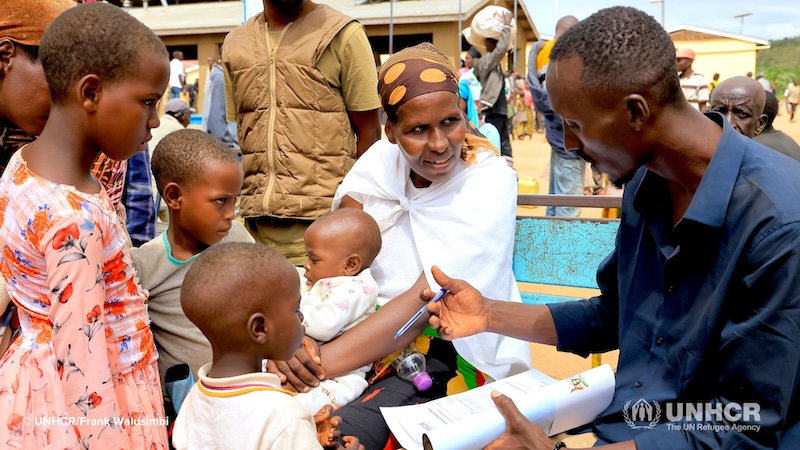
Uganda’s refugee response is under growing pressure as deep funding cuts begin to erode one of Africa’s most progressive refugee protection systems, threatening food security, education, healthcare and livelihoods for more than two million people seeking safety in the country.
For years, Uganda has earned international recognition for its open-door refugee policy, allowing refugees to work, move freely, own businesses and access land for farming. But officials now warn that those achievements are becoming increasingly difficult to sustain as humanitarian funding shrinks.
“Our funding has reduced by over 50 per cent. This is adversely affecting service delivery across all sectors,” Patrick Okello, Commissioner for Refugee Management in the Office of the Prime Minister (OPM), said.
Uganda currently hosts about 2.02 million refugees, the largest refugee population in Africa. Around 92 per cent live in 13 settlements spread across the country, while the rest reside in urban centres, including Kampala.
Most fled conflict in neighbouring South Sudan and the Democratic Republic of Congo, although others come from Sudan, Eritrea and more than 20 other countries. The country’s refugee model has often been cited as an example for the region.
Through the OPM, working alongside the United Nations High Commissioner for Refugees (UNHCR) and humanitarian partners, Uganda has invested in refugee registration, protection, identity documentation and access to essential services.
More than 500,000 refugee children are enrolled in schools, while many families have received land to support farming and livelihoods. Those gains, however, are now under threat. The most immediate impact has been on food assistance.
Refugees supported by the World Food Programme are now receiving food rations worth about $3 a month, a level officials say is far below what is needed to meet basic nutritional needs.
“I don’t know who among us can survive on $3 a month. The consequences are already emerging. Child labour as families struggle to meet basic needs, forcing children out of school in search of food or income. Schools in refugee-hosting areas are also under pressure, with overcrowded classrooms and a shortage of teachers,” Okello said.
The funding squeeze is also straining healthcare services and exposing vulnerable families to greater protection risks. According to the OPM, cases of gender-based violence are increasing, while more refugee children are ending up on the streets or resorting to begging in urban areas.
“These challenges are directly linked to the reduction in resources,” Okello said.
Despite the mounting difficulties, government officials insist refugees should not be viewed simply as recipients of aid. Instead, they argue that Uganda’s inclusive policy has allowed many refugees to become active contributors to the country’s economy.
Government estimates indicate that refugee-owned businesses have created more than 300,000 jobs for both refugees and Ugandan nationals. Officials also point to the arrival of skilled professionals, including engineers and medical specialists, whose expertise has strengthened local services.
“We have received highly skilled individuals, including medical specialists and engineers, who are sharing knowledge with Ugandans,” Okello said.
Refugees also provide an important market for locally produced goods, creating economic opportunities for surrounding host communities.