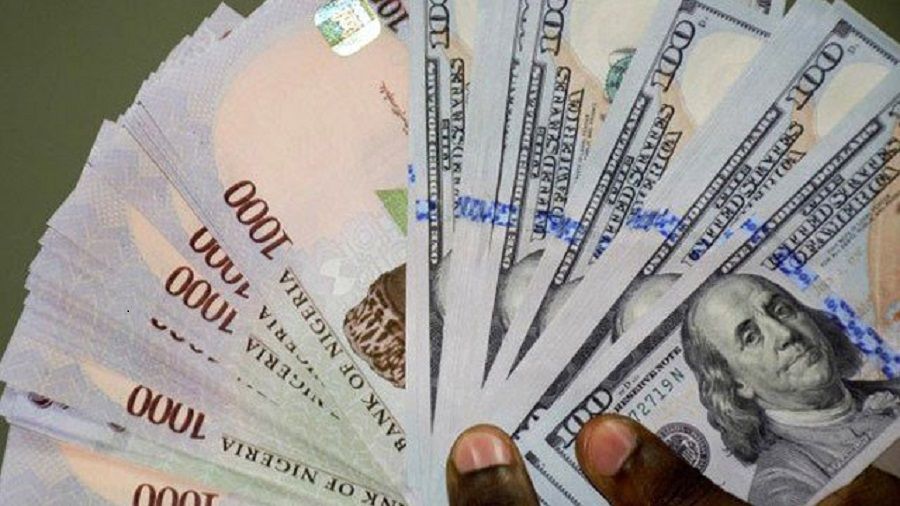
Foreign exchange activity jumps over 22% in one week, driven by stronger spot market transactions and increased demand for forward contracts…..
Nigeria’s foreign exchange market closed the final full week of June on a strong note, with trading activity rising sharply as investors ramped up transactions across both the spot and derivatives segments.
Fresh data released by FMDQ Securities Exchange Limited showed that total turnover in the foreign exchange market climbed to $2.84 billion during the week ended June 26, 2026, reflecting renewed activity and improved market liquidity.
The latest figure represents a 22.06 per cent increase from the $2.32 billion recorded in the previous week, translating to an additional $512.37 million in trading value.
According to FMDQ’s Weekly FX Turnover Analysis Report, the improvement was largely driven by stronger activity in the spot market, while transactions involving foreign exchange forward contracts also recorded significant growth.
The report revealed that FX spot transactions accounted for the bulk of market activity, rising by 21.18 per cent to $2.77 billion, compared to $2.29 billion recorded a week earlier. The increase of $484.47 million reinforced the segment’s position as the dominant contributor to overall market turnover.
While the spot market generated the highest transaction value, the derivatives segment posted the fastest growth rate during the period.
Foreign exchange derivatives turnover surged 77.20 per cent, climbing from $36.14 million in the previous week to $64.04 million.
FMDQ attributed the sharp increase entirely to higher trading volumes in FX Forward contracts, noting that activity in Exchange-Traded FX Futures remained unchanged throughout the week.
“The week-on-week increase in FX Derivatives turnover was driven by the 77.20 per cent increase in FX Forwards turnover,” the report stated.
The surge in overall trading activity also lifted the market’s daily average turnover to approximately $567.09 million, highlighting increased participation in the Nigerian Autonomous Foreign Exchange Market.
The stronger performance comes as financial authorities continue efforts to deepen liquidity, improve price discovery, and strengthen transparency in Nigeria’s foreign exchange market through ongoing market reforms.