Baghdad says years of conflict and the recent Middle East war have crippled its oil industry, making a stronger production allocation essential for economic recovery…..
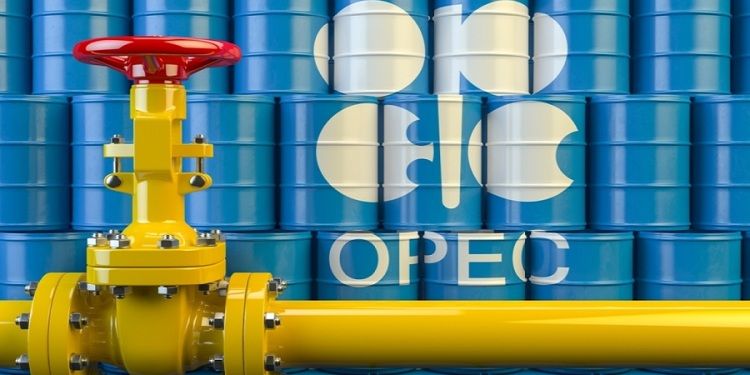
Iraq has renewed its push for a higher oil production quota from the Organization of the Petroleum Exporting Countries (OPEC), arguing that decades of conflict and the recent Middle East war have severely damaged its oil sector and weakened the country’s economy.
In a statement issued on Thursday, Iraq’s Oil Ministry said the country has repeatedly called for a review of production baselines to ensure they accurately reflect the sustainable output capacity of member states, particularly in light of Iraq’s unique security and economic challenges.
The ministry noted that OPEC has already begun a process to reassess the production capacities of its member countries, a move Baghdad believes could pave the way for a fairer production allocation.
Oil remains the backbone of Iraq’s economy, accounting for nearly 90 percent of government revenue. The country was among the hardest hit by the recent regional conflict, with disruptions to exports and attacks on energy infrastructure putting additional pressure on an already fragile sector.
Speculation has recently emerged that Iraq could be considering an exit from OPEC. However, the ministry dismissed those reports, insisting they do not reflect the government’s official position.
Speaking to AFP, Oil Ministry spokesperson Salim al-Rikabi reaffirmed Iraq’s commitment to the producers’ alliance but stressed that the country’s production quota must be increased.
“Iraq has no intention of withdrawing from the organisation and remains committed to its mechanisms,” al-Rikabi said. “However, OPEC has to raise Iraq’s production quota. Otherwise, a decision will have to be made about whether to stay or leave the organisation.”
He added that Iraq has continued to expand production in line with its available capacity and domestic economic needs.
The ministry also stressed that any discussions regarding production baselines or output limits should continue through OPEC’s established technical and consensus-driven processes.
According to Iraqi officials, fellow OPEC members understand the extraordinary circumstances facing the country after decades of wars, international sanctions and the recent attacks that further disrupted its oil industry during the Middle East conflict.
Baghdad believes these factors should be taken into account when determining a production level that reflects Iraq’s actual capabilities and supports its economic recovery.
The recent conflict also disrupted global energy markets, with Iran’s blockade of the Strait of Hormuz restricting the movement of oil shipments and forcing production cuts across several producing nations, including Iraq. During the fighting, multiple Iraqi oil fields were targeted by drone attacks, many of which were attributed to pro-Iran armed groups.
Before the conflict erupted on February 28, Iraq was producing roughly four million barrels of oil per day while exporting an average of 3.5 million barrels daily, most of which passed through the Strait of Hormuz.
Following a recent agreement between Washington and Tehran aimed at ending hostilities, Iraqi authorities say they are optimistic production will return to pre-war levels within the next two months.