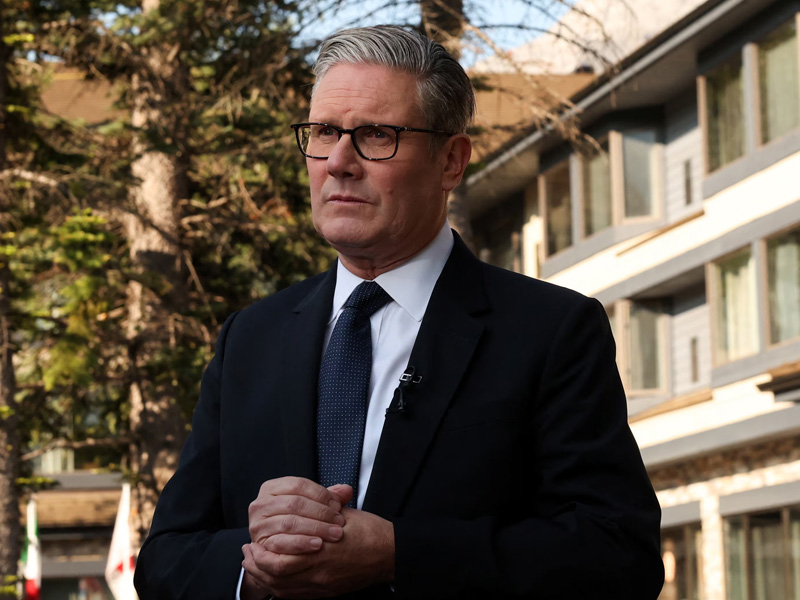
Starmer announced on Monday that he would be leaving office, bringing an end to a premiership that sought to rebuild ties with Europe and strengthen Britain’s international standing after years of political turbulence.
During his time in office, Starmer worked to improve cooperation between the United Kingdom and the European Union following the divisions created by Brexit. Although he ruled out rejoining the bloc, he pursued closer diplomatic and economic engagement with European partners.
The outgoing leader also remained a prominent supporter of Ukraine, working closely with French President Emmanuel Macron and German Chancellor Friedrich Merz in coordinating European backing for Kyiv during its ongoing conflict with Russia.
European Commission President Ursula von der Leyen was among the first leaders to acknowledge Starmer’s departure, praising his leadership and commitment to European security. She said his efforts had strengthened cooperation across the continent and reinforced support for Ukraine.
Starmer entered Downing Street in 2024 after leading Labour to a decisive election victory, ending years of Conservative rule. He inherited an economy facing significant challenges and a country still grappling with divisions that followed the Brexit referendum.
Despite achieving successes on the international stage, Starmer struggled to maintain strong support among British voters. Like several leaders across Europe, he faced growing dissatisfaction from electorates increasingly drawn to anti-establishment political movements promising major change.
While critics at home often questioned his political appeal and leadership style, many European governments viewed him as a dependable partner who helped restore stability in Britain’s relations with neighbouring countries.
Irish Prime Minister Micheál Martin commended Starmer for helping improve cooperation between Dublin and London, while also encouraging stronger engagement between Britain and the European Union.
Ukrainian President Volodymyr Zelenskiy also expressed gratitude for Starmer’s support, describing him as a committed ally whose involvement and assistance remained consistent throughout his time in office.
A spokesperson for the German government described the departing British leader as a trusted and reliable partner, highlighting the close working relationship between Berlin and London during his premiership.
Reactions from outside Europe were more critical. US President Donald Trump criticised Starmer’s record, arguing that his administration had failed to effectively address issues such as immigration and energy policy.
Meanwhile, in Russia, Kirill Dmitriev, a senior envoy to President Vladimir Putin, claimed critics of Starmer had contributed to his political downfall. His remarks later prompted clarification from a spokesperson, who said the comments reflected his personal views rather than an official government position.
As tributes continue to arrive from across Europe, Starmer leaves office having played a key role in reshaping Britain’s relationship with its allies while facing mounting political pressures at home.
Goodness Anunobi