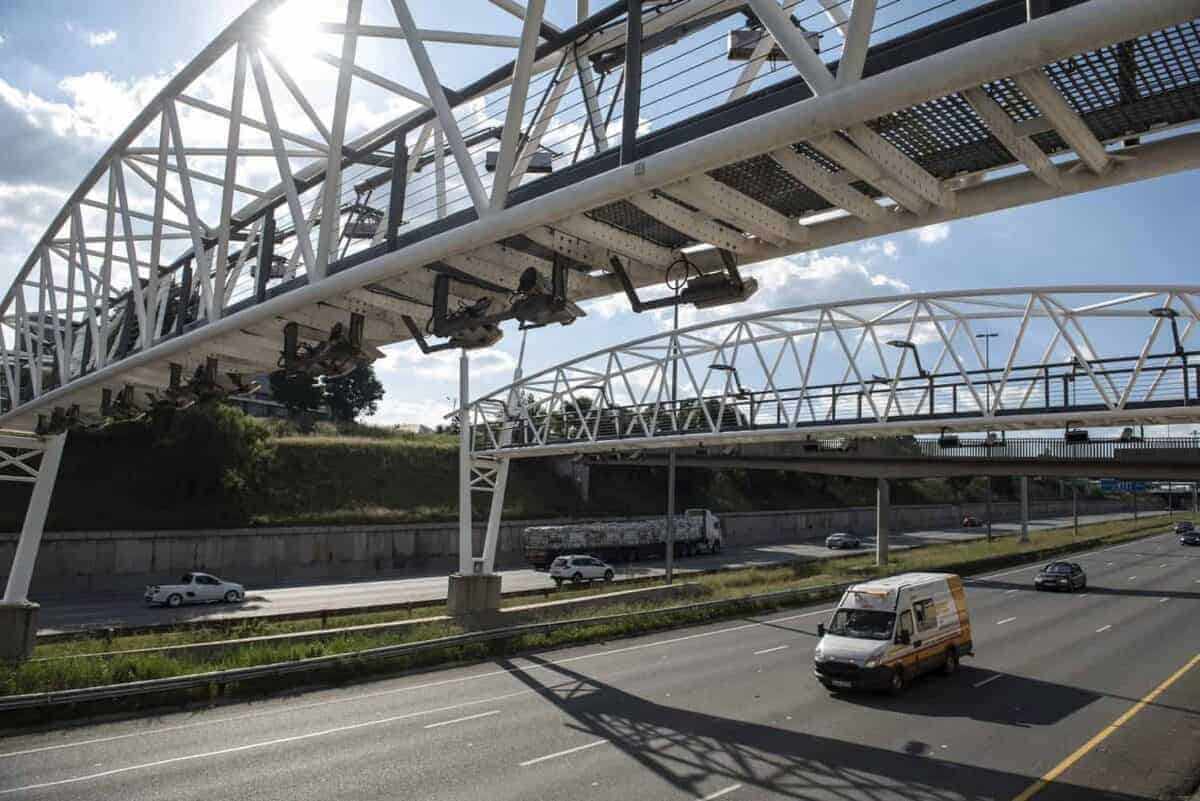
Revenge, they say, is a dish best enjoyed cold. Well, it doesn’t get any colder for me than the news this week that the government is writing off R29 billion in debt from the ill-fated Gauteng Freeway Improvement Project (GFIP).
The revenge would be on one Nazir Alli. Remember him? The arrogant man who tried to tell you the GFIP was the best thing since sliced bread and you were lucky to be able to pay for it through e-tolls.
In a conversation he and I had one night on a show on 702 radio, I said: “Mr Alli, if it walks like a duck and quacks like a duck, chances are it’s a duck. So let’s just call e-tolls what they are: another tax on an already overburdened South African taxpayer.”
He made some dismissive insults, implying that I was dim. Well, I was right and you were wrong.
The newspaper I was working for just after the 2010 Fifa World Cup was one of the first to reveal the outrageous charges proposed to be levied via e-tolls by Alli and his fellow travellers at the SA National Roads Agency Limited.
The public outcry which followed gained momentum, to the extent that it became not only a consumer boycott but, effectively, the biggest passive resistance campaign in post-1994 South African history.
Uncomfortably for Alli et al, I had more than a passing knowledge of the whole toll system and how it had been hijacked by the construction company cartels, beginning long before the ANC came to power.
South African engineers had studied the American turnpike model, which was that construction companies would build and maintain a road and charge for its use for a certain period, normally 25 years.
The American system had three stipulations: that the road be handed back to the government at the end of the concession period, that motorists always be offered alternate routes if they didn’t want to pay… and that toll charges follow a strict formula.
All of these have been chucked out of the window in this country following pressure from the construction companies.
Particularly painful is the fact that the law was changed so that alternate routes no longer have to be provided.
Ditto with the charges which initially were limited to 75% of the average amount a motorist would save in fuel.
In the case of the latter, toll companies soon pushed for AA rates per kilometre saved and then nebulous and ridiculous calculations of the cost of time saved were added in.
When it came to the GFIP, the R20 billion-plus initial charge was for 182km of, effectively, one additional lane, resurfacing and a few new interchanges.
That worked out, per kilometre, more than it would have cost to build an entire four-lane highway from scratch in a city in the US.
Alli tried to deny that, too… but the numbers didn’t lie, even allowing for the exchange rate and converting miles to kilometres, which made his attempts at defence even more pathetic.
The GFIP-e-tolls saga was definitely a cloud with a silver lining, though, especially for citizen activism.
Outa, let’s not forget, was set up as the Opposition to Urban Tolling Alliance, before becoming the Organisation Undoing Tax Abuse.
Wayne Duvenage and his team are now fighting government abuse on a number of fronts.
What the whole experience proved was the power of the people… and those people told Nazir Alli and his cronies in no uncertain terms to take their duck and waddle off into the sunset.