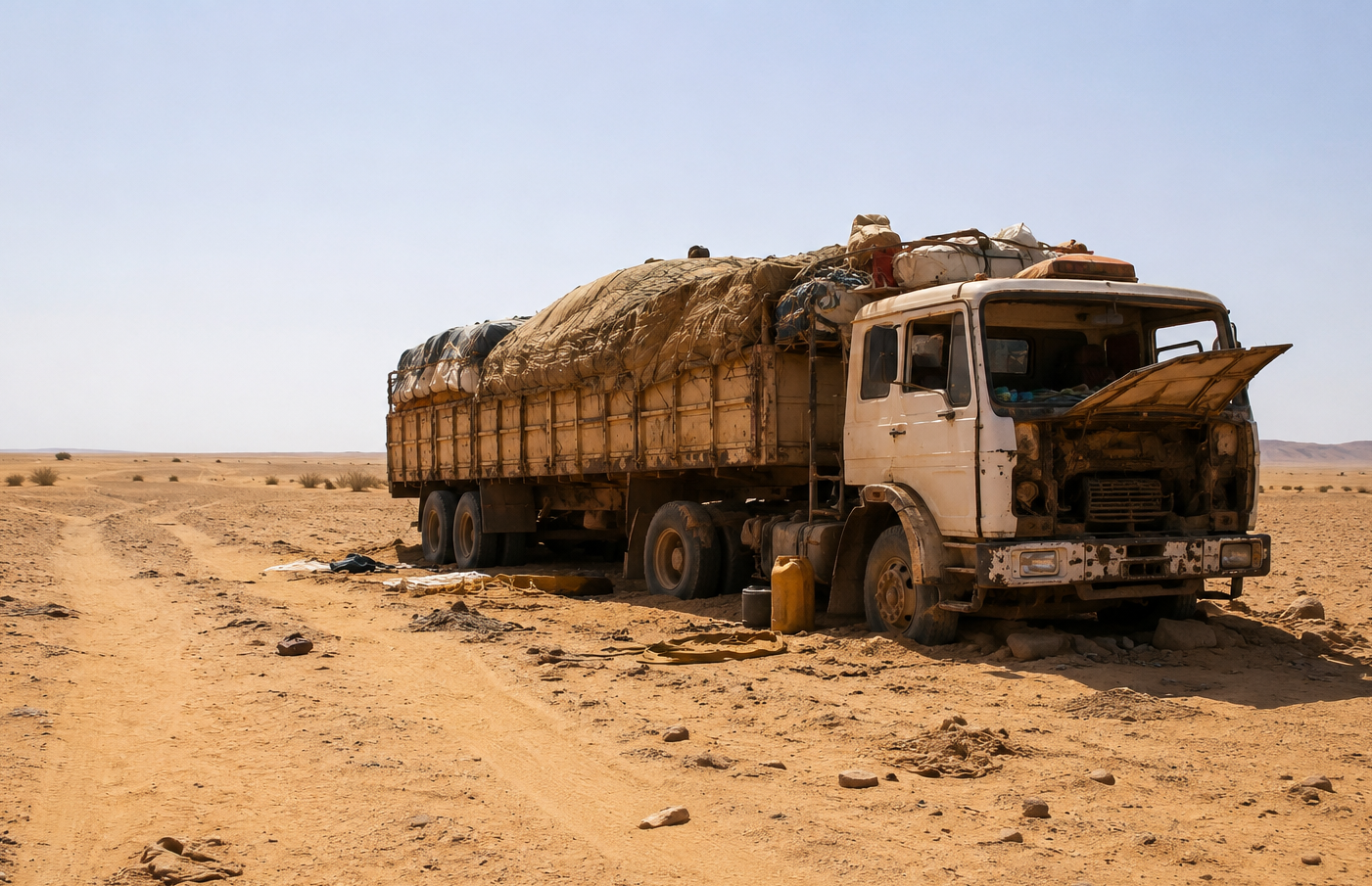
At least 49 people have died of thirst in a remote part of the Sahara Desert in northern Niger after the lorry carrying them broke down, authorities said.
The group had been returning from neighbouring Mali, where they attended a Muslim festival, when they became stranded more than 80km west of Assamaka, a major border crossing between Niger and Algeria.
“The travellers found themselves trapped in the heart of a hostile environment where extreme temperatures and lack of supply points make survival extremely difficult,” a statement from the Agadez governor said.
Only 2 people survived. They trekked across the desert to Assamaka and alerted authorities.
According to the governor, the lorry left the Malian town of Telhandek but veered off its intended route. For several days, the driver and passengers tried unsuccessfully to repair the vehicle.
“Deprived of water and unable to repair the vehicle despite the efforts of the driver, his apprentice and passengers, travellers found themselves trapped in the heart of a hostile environment,” the statement added.
“Dozens of lifeless bodies were found under the immobile truck and in its surroundings,” it said.
Rescue workers dispatched by local authorities buried the victims in mass graves near the scene.
While returning from the operation, the rescue team encountered another broken-down lorry carrying more than 60 people. The passengers had been stranded for 3 days after the vehicle suffered a battery failure.
The governor said the lorry had departed from the Malian town of Harouba, more than 300km from the Niger border.
The rescue team, which included Nigerien soldiers, provided water to the “exhausted and distressed travellers” and helped repair the vehicle, allowing them to continue their journey safely.
The Niger desert remains a key transit route for migrants from across West Africa seeking to reach Europe despite the dangers of the journey.
The governor said the tragedy highlighted the “vulnerability of young people engaged in migratory and cross-border economic activities, often forced to pass through unstable areas in order to survive or seek better living conditions”.
Faridah Abdulkadiri