The best thing that Pixar studio boss Pete Docter said this year was that Pixar was making a movie, “not hundreds of millions of dollars of therapy.”
And while he was talking about the significant recut of the upcoming film Elio, the comment could just as easily have applied to many of the studio’s recent releases
Recent films often seemed more concerned with delivering messages than telling compelling stories.
There was Lightyear with a controversial same-sex moment of intimacy, Turning Red and its themes of puberty along with Luca‘s metaphors that explored themes of hiding your identity, fear of rejection, and of course, accepting yourself.
Pixar’s flicks did not end up with teachable moments; they’ve become blatant socio-political guidebooks dressed up in pretty pictures.
Docter admitted as much when he told the Wall Street Journal that Pixar “didn’t want to expose its young audience to things they weren’t ready to see or hadn’t discussed with their parents.”
Less lesson, more story
At least, Pixar’s latest, Hopper, is somewhat different.
It’s watchable without any cringe and is much closer to the quality of Woody’s adventures in the first couple of Toy Story movies than we have seen from the studio in years.
Even though Pixar couldn’t help itself with some pretty strong themes of environmentalism, activism, and, thankfully, some clever political satire.
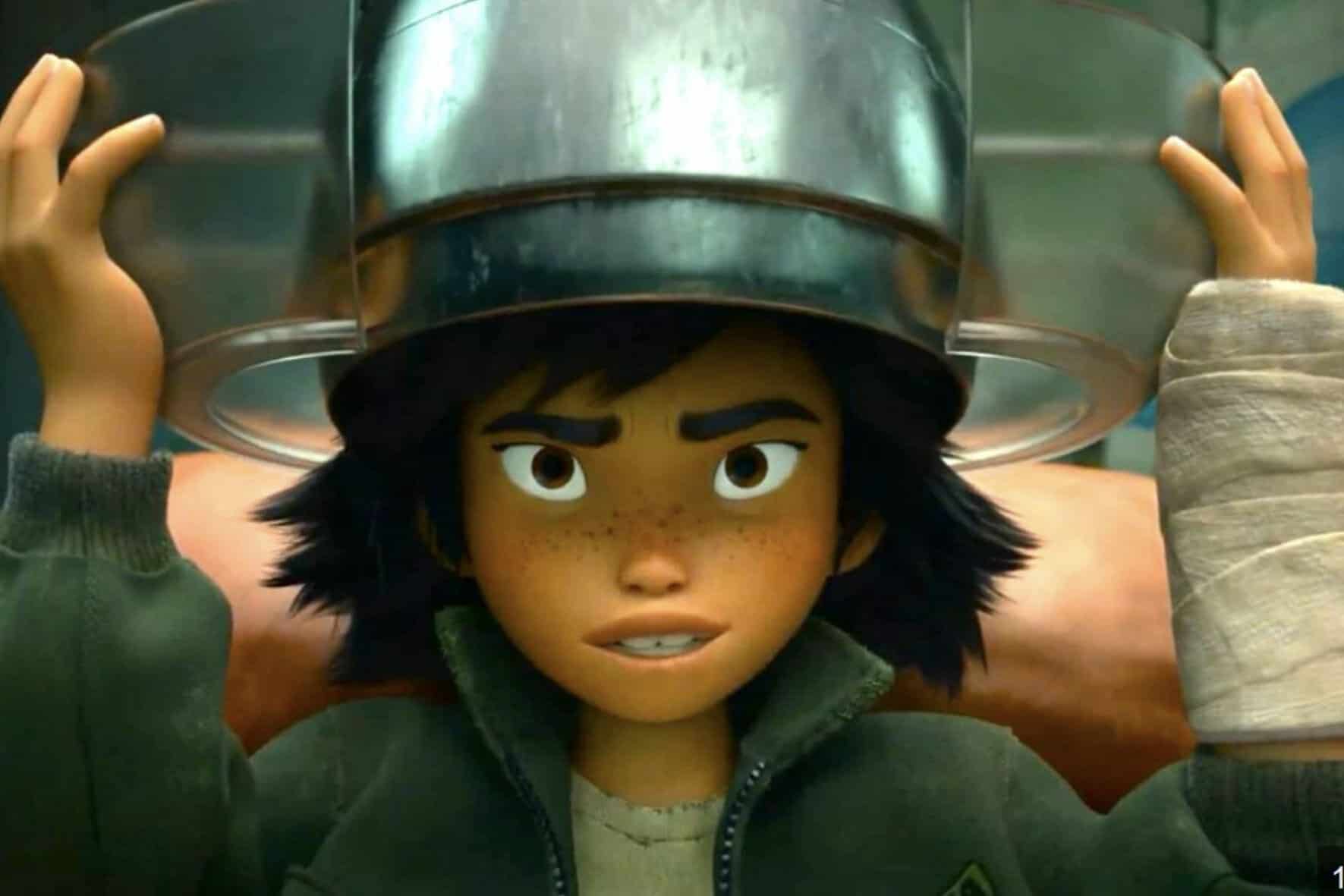
Hopper‘s plot tells of Young Mabel Tanaka, who has been fighting for animals since she was a child. It was a passion passed on to her by her granny. So, when the mayor of Beaverton, her hometown, announces plans to uproot her beloved nature reserve to make way for a new freeway, she starts to campaign to stop him.
Her campaign gains little traction until she discovers a secret scientific project called Hoppers, a technology that allows humans to transfer their consciousness into robotic animals.
Of course, when the scientists were not looking, Mabel hopped into a robotic beaver and headed to the forest to mingle with the animals.
It’s then that she discovers a plot involving sound-emitting devices disguised as trees that emit noises to drive the animals out of the area the mayor wants to bulldoze.
While she’s a robot beaver, Mabel meets the animal king George, a beaver, who lives alongside all the other animals in a secret spot where humans have not managed to interfere, yet.
Robot beavers and animal politics
But believe it or not, animals have politics, too.
‘Beaver’ Mabel appears before the animal council, asking for help. But instead, she accidentally sets off events that lead to assassination plots, royal power struggles and the rise of an extremist insect ruler named Titus.
Mabel must then protect the very mayor she once considered her enemy from animal assassins who could spark an all-out war between humans and four- and six-legged creatures.
This, while insect Titus finds out about the Hopper technology and manages to turn himself into a robotic, murderous human being.
Watch the trailer
It’s all about taking control of the reserve and, of course, the highway to be constructed through it (which becomes a second layer as the plot twists).
The showdown is great and reminds of some great anime conflicts in its depiction and angles of visual storytelling.
And of course, in the end, good wins over evil. As it should be in a family movie.
In this instance, compromise beats conflict as the freeway plans are redone, thus saving the forest. Humans and animals learn to live together in harmony because living together peacefully is better than conquering one another.
Teachable moments not in your face… much
The life lessons taught are a bit more universal and palatable, because they speak about activism, extremism, and dish out a healthy dose of empathy, respect and the kind of values we all want our children to learn from us.
All the while also standing up for what they believe in, in a responsible manner.
So, ya. Pixar served up a really great and entertaining movie with strong themes, but this time around, it’s well-woven into the story and not as obviously annoying as a nagging toddler.
There’s enough action to keep kids entertained and more than enough satire (the mayor looks suspiciously like what a younger, animated Donald Trump may have looked like) and meaning with a measure of humour, to make it appealing.
Hopper may finally signal a segue for the studio from finger wagging back to a hug and animated entertainment, not droll lesson-telling, but rather, storytelling.