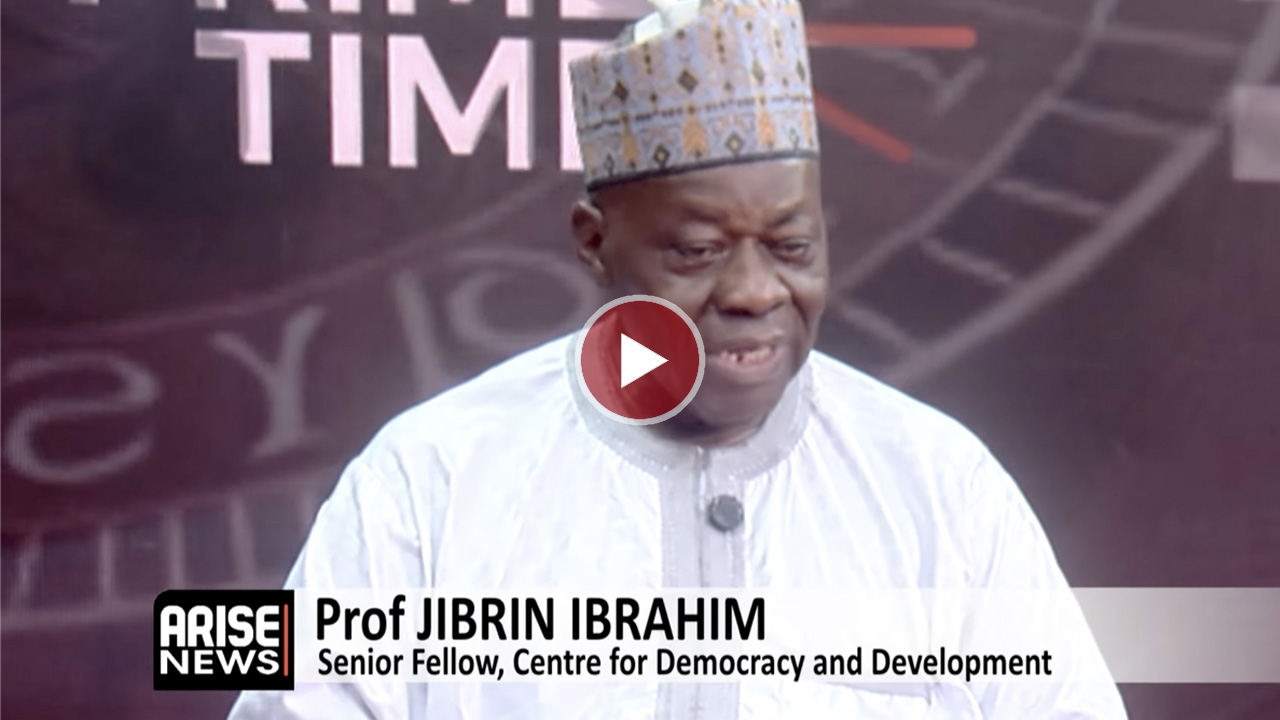
A senior fellow at the Centre for Democracy and Development, and Chair of the Board of Premium Times Newspaper, Professor Jibrin Ibrahim, has said President Bola Tinubu’s administration has failed to improve the living conditions of ordinary Nigerians despite claims of economic progress and improving macroeconomic indicators.
Speaking during an interview with ARISE NEWS on Friday, Professor Ibrahim argued that positive economic narratives mean little when the majority of citizens continue to experience hardship, misery, and declining living standards across the country.
“My feeling has always been that great narratives about achievements that do not translate into improved conditions of living remain what they are: narratives that do not mean much to the people of the country.
“If, in a four-year tenure, after three years you are saying the indicators are positive—even if lived reality is one of misery and suffering—then you have lost the argument.

“I don’t find it convincing at this stage, having gone through three-quarters of the tenure, to make the case that foreign observers—some foreign observers—are telling you you’re doing well. My sense of democracy is that it’s your citizens who tell you whether their lives are improving. And any ability to listen to what Nigerians are saying would be very clear in its verdict: that the life they experience, for the majority of them, is one of misery and suffering,” he said.
While acknowledging that the Tinubu administration has consistently pointed to increased government revenue as one of its biggest achievements, Prof. Ibrahim questioned the impact of such gains, arguing that many ministries and agencies still receive less than 10 per cent of their capital budgets.
“The biggest achievement that has been pointed out is increased revenue. But when you talk to people in the ministries, all of them say they are getting only 5%, maximum 10%, of their budgets. So when government says its fiscal policies have now raised the levels of revenue massively, and you say, ‘Oh, that’s excellent. So that means government ministries, departments, and agencies will have more money to produce public goods.’ And as many ministers have confessed in public, the reality is they are getting less than 10% of their capital budgets, which means the increased revenue has no basis in reality. And that, in my assessment, is what this government says is its biggest achievement,” he argued.
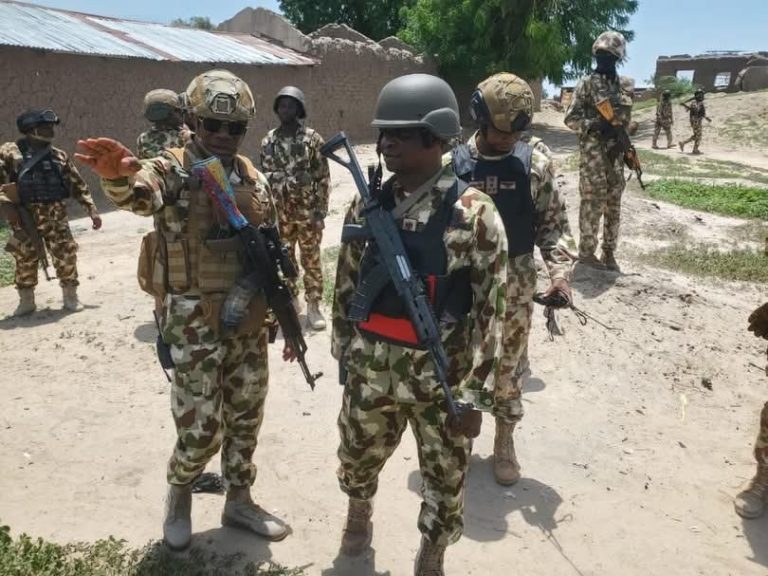
He also identified worsening insecurity as the administration’s biggest failure, citing the rising cases of banditry, kidnapping for ransom, attacks on farmers, and unsafe highways across the country.
“In terms of the general performance, I feel strongly that the level of insecurity that has been rising since the President came into power has been the biggest problem for the people of this country. The fact that banditry is increasing, kidnapping for ransom is increasing, the killing of peasants on their farms is increasing, movement along our roads remains a very risky affair—all these point to the fact that this basic issue that every state is supposed to guarantee, the security of lives and properties of citizens, is not at all guaranteed in this country,” he said.
Reiterating his stance, Prof. Ibrahim said the repeated cycle of policy promises without concrete implementation reflects a troubling disconnect between government rhetoric and the realities faced by Nigerians daily.
“It is really problematic that at the policy front, what we hear government say—since his first year in office, President Tinubu has been talking of, ‘We’ll have state police and that will solve the security of the country.’ Three years later, he’s saying what he said in the first year: ‘We will have state police.’ So when are you going to have state police when you have done three-quarters of your tenure—and you haven’t done what you said you’ll do?
“I’m not saying state police is the answer, but it’s just to point at this terrible confusion at the level of policy of making claims that are not borne out in reality, making promises that are not fulfilled. And all this is a real problem for a government that wants to be taken seriously by citizens,” he stressed.
Speaking on the evolving political landscape ahead of the next election, the professor said the race may resemble 2023 but with weaker ruling-party advantage, rising public dissatisfaction, and uncertain outcomes despite political realignments.
“Yes indeed, it’s very clear that it is going to be a similar election. But the dynamics have shifted considerably, and the outcomes may not be as clear as they were in 2023.
“Increasingly, the reality the President is facing is that support he enjoyed in 2023 has reduced considerably, due directly to his policies.”
Responding to questions about which opposition figure is better positioned ahead of 2027, Prof. Ibrahim said it is still too early to draw conclusions, noting that voting patterns are becoming more regionalised, with Atiku Abubakar and Peter Obi both relying on different regional blocs while the North Central region is expected to play a decisive role in the final outcome.
“My sense is that it’s too early to make that determination. But what is clear is that the voting pattern is going to be regionalized because of the behavior of the APC president and his focus on the Southwest only; he has alienated the others. That’s the sentiment Atiku is trying to benefit from by saying, ‘Look at what the president is doing. He is only interested in the Yoruba race. Therefore, let’s focus on our own people.’
“And of course, Peter Obi is prepared to see the extent to which the combination of the Southeast and South-South would provide that support. And because of Kwankwaso, he will get a significant vote from Kano, but that wouldn’t be significant enough to change the bigger numbers. I think it’s the North Central, really, that is going to determine the run of play, because that’s where people are available, as it were, to shift between one and the other. We have not yet seen the dynamics there to be able to make that determination,” he maintained.
Favour Odima