Investors adopt cautious stance as markets await next week’s MPC meeting amid rising inflation and pressure on Nigeria’s forex market…..
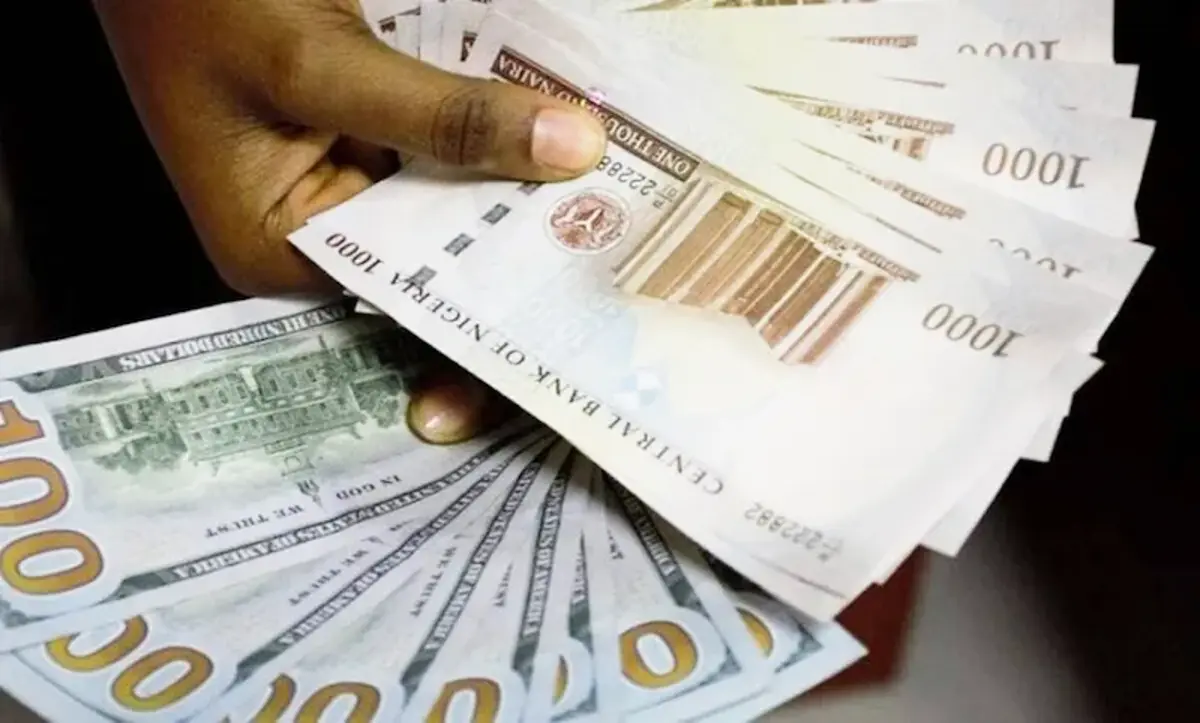
The naira recorded a slight decline at the official foreign exchange market on Friday, closing at N1,372 per dollar as investors positioned cautiously ahead of next week’s Monetary Policy Committee meeting of the Central Bank of Nigeria.
Data released by the CBN showed that the local currency weakened by N8 compared to last Friday’s closing rate of N1,364/$, reflecting mild pressure in the foreign exchange market despite relative stability throughout the week.
Although the depreciation was modest, analysts say market participants are increasingly cautious as attention shifts to the outcome of the apex bank’s 305th MPC meeting, where policymakers are expected to take critical decisions on interest rates and broader monetary policy direction.
Trading activity during the week showed the naira moving within a relatively narrow band, suggesting that the extreme volatility seen in previous months has eased considerably.
The currency traded at N1,375/$ on Monday before strengthening slightly to N1,373/$ on Tuesday, N1,368.95/$ on Wednesday and N1,371/$ on Thursday before settling at N1,372/$ on Friday.
By comparison, the previous week closed at N1,364/$ after the naira traded between N1,358/$ and N1,367/$ during that period.
Despite persistent demand for foreign exchange, Nigeria’s external reserves posted a marginal increase during the week, offering limited support to the local currency.
CBN data showed that the country’s reserves rose from $48.45 billion on May 11 to $48.54 billion by May 14, representing an increase of nearly $94 million.
However, the apex bank has not officially disclosed the factors responsible for the latest reserve accretion.
Market analysts say investor sentiment is now largely tied to expectations surrounding next week’s MPC meeting, especially following the CBN’s recent shift toward a softer monetary stance.
At its last meeting, the Monetary Policy Committee reduced the benchmark interest rate by 50 basis points to 26.5 per cent from 27 per cent — the first rate cut after an aggressive tightening cycle aimed at curbing inflation and stabilising the economy.
The decision was widely interpreted as a balancing act by the central bank, which has faced mounting pressure from businesses seeking lower borrowing costs amid slowing economic activity.
Historically, the naira’s performance ahead of MPC meetings has varied depending on investor expectations and market confidence in the CBN’s policy direction.
Ahead of the February 2025 MPC meeting, the currency weakened slightly as investors adopted defensive positions, while the naira posted moderate gains before the November 2024 meeting amid improved market sentiment.
Meanwhile, inflationary pressure remains a key concern for policymakers.
Nigeria’s headline inflation rate climbed to 15.69 per cent in April 2026 from 15.38 per cent recorded in March, adding fresh pressure on the central bank as it weighs the need to support growth against the risk of rising prices.
The latest market developments also come amid concerns over Nigeria’s external reserve position.
Recent reports showed that the country’s reserves declined by about $855 million within five weeks, dropping from $49.18 billion on April 1 to $48.33 billion as of May 7, reflecting continued pressure on foreign exchange liquidity.
Since the implementation of major economic reforms under President Bola Tinubu, Nigeria has moved away from the heavily controlled foreign exchange system previously dominated by multiple exchange rate windows and direct central bank interventions.
The reforms, particularly exchange rate liberalisation, were introduced to attract foreign investment, improve transparency and allow market forces to play a larger role in determining the value of the naira.