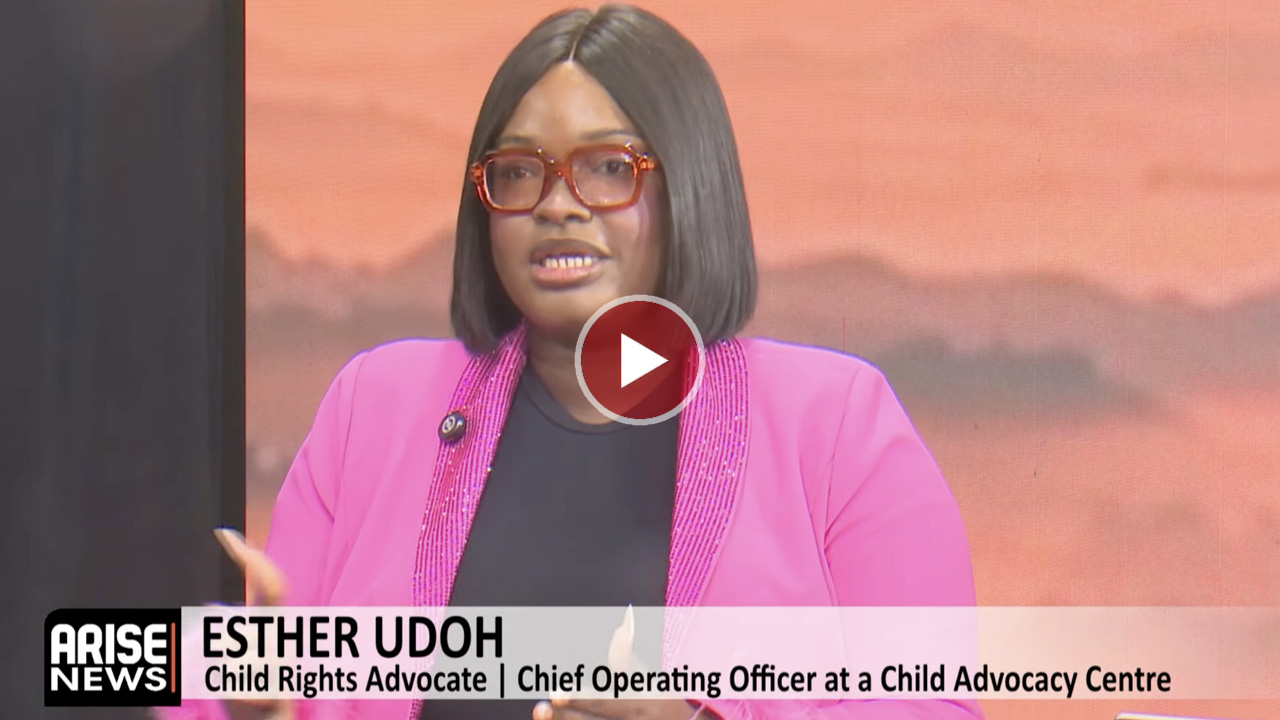
A child rights advocate and Chief Operating Officer at the Child Advocacy Center, Esther Udoh, has called for urgent action to address the growing crisis of child abuse in Nigeria, describing it as a “rot” that continues to thrive under a culture of silence.
Speaking in an interview with ARISE NEWS on Friday, Udoh stressed the need for families to create safe environments where children can speak up about abuse without fear, while urging stronger protection systems and increased public awareness to safeguard vulnerable children.
“That number definitely shows that this is the majority of the children in our society who are being affected by different forms of abuse. If you even go deeper into that, you see that one in four girl children get sexually abused, and then one in ten boys get sexually abused before the age of 18. This saddens the reality as you can see that with the society that we live in, there’s a lot of silence around abuse. If systems are not put in place to ensure that this doesn’t happen, this rot will continue to get deeper.
“As today is International Family Day—especially in relation to families, inequalities, and child well-being—we must ensure that we bring light to this major issue. With the family role being what it is, we must ensure that we create a safe environment for children and make sure that the family actually creates a safe and healthy boundary for these children. We must ensure that children know they are allowed to speak up so there’s no silence around things that are happening. The first thing that must happen is breaking out of that silence. I believe the first step to ensuring these numbers get better is making sure children are aware they are allowed to speak up and that you can get help from these avenues. For me, that’s the first step: the silence is broken,” she stressed.
Speaking further, Udoh urged parents and guardians to pay close attention to behavioural changes in children, noting that abuse victims often show early warning signs that are easily overlooked.
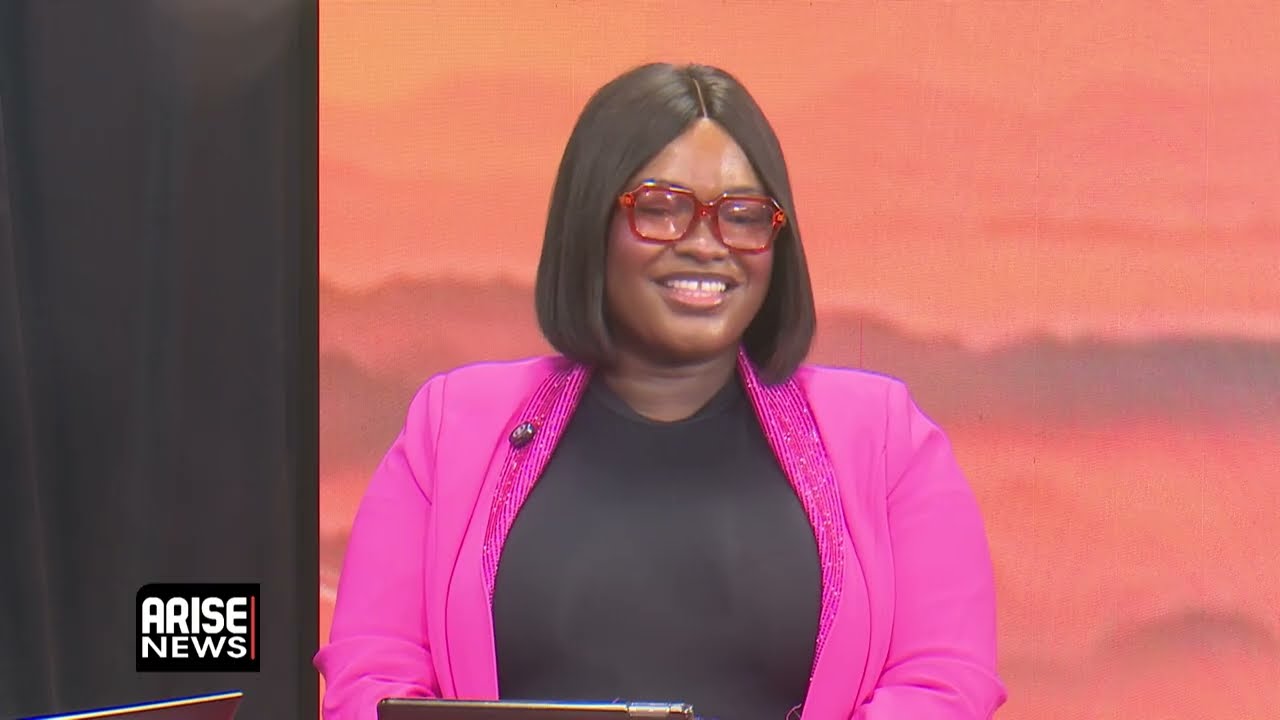
“Children do start to exhibit different signs. One of the first early signs is a change in behavior. These are the first early signs for a guardian or a parent to look out for, and to then be able to encourage the child to speak up. I do believe that we live in a very silent society, so parents, you must ensure that you have the resources available to you, but you must ensure that you’re open with your child to ensure they feel you are a safe space for them to come to speak about issues like this,” she urged.
She noted that NGOs are promoting child safeguarding awareness in communities, while stressing that protecting children is the responsibility of every adult. Udoh also called for stronger implementation of the Child Rights Act to better safeguard vulnerable children.
“There are NGOs who are available and doing that at the moment. These NGOs go out to teach in communities about safeguarding for children. I believe that every child is every adult’s responsibility, regardless of if you’re a parent or a guardian. One, you must ensure that safeguarding awareness is made available to the general public, and then following that, we look at laws to ensure that children are protected. Look at the Child Rights Act; those must be implemented across different boards across our agencies as well,” she said.
Responding to concerns about abuse by familiar individuals, Udor stressed the importance of educating both parents and children on safety and abuse awareness.
“I believe the first step is knowledge. We do have a lot of illiteracy in our society around these issues. Some parents do not understand the thin line between discipline and physical abuse. We must teach people these lessons first of all. Secondly, we must show them the difference between a friendly face and sexual abuse. We must teach them the right words—key words, safe words, and unsafe words—so when a child uses them to express an activity that has happened to them, then they know ‘this is safe’ or ‘this is unsafe.’ So I believe the first step is knowledge, and then secondly, ensuring that for everyone who comes into your home, that individual is also aware of this knowledge,” she stressed.
She highlighted disbelief as one of the major mistakes parents and guardians make when children report abuse, noting that children should not be dismissed when they speak up.
“I do believe the first thing is that, as a society, we do not believe children know what they are saying. As an adult, you must believe a child, because to what end does it profit a child to lie against an adult, especially for something so grave? We must just ensure that we believe children regardless and investigate. Especially with sexual abuse,” she admonished.
Speaking on the implementation gap between child protection laws and reality in Nigeria, Udoh called for stronger support for NGOs operating at community level, stressing that many abuses persist due to poor awareness and entrenched cultural practices that normalise child labour.
“What can be done is empowering NGOs that have ‘boots on ground’ to teach society. We must put out knowledge for individuals to know that is not right. I do know NGOs who are being backed by international bodies to do this already on ground in Lagos and in Abuja. There are already moves on this,” she said.
On the impact of the recent partnership with the Lagos State Ministry of Justice, Udoh said it will improve the handling of child abuse cases by equipping justice officials with the right knowledge and procedures.
“This will change things by ensuring that the individuals who are actually handling these cases—from the judges to the clerks in the court to the policeman who actually receives these children—know what to do.”
The child’s rights advocate also stressed the need for child protection policies to be actively implemented rather than left as documents on paper, ensuring real accountability across all levels of society.
“From the father and the mother then expanding across boards, going into institutions, making sure that there are safeguarding policies within institutional policies as well. It doesn’t just become a policy document that is in a library that is being read as a novel.”
Emphasising the need to address inequality in access to education, she noted that education remains the strongest tool for levelling opportunities for every child regardless of background.
“Education levels the ground. And this is then a call to the government to ensure that teachers are trained appropriately for different socio-economic levels of society. I do believe that to start with, it must be education. Education levels the ground for each child, and if we ensure that education across the board is leveled and at the right level, then that would make sure each child excels and progresses across life,” she stated.
Highlighting the importance of open communication in families, Udoh suggested that parents should actively create space for honest dialogue with their children about safety and well-being.
“For me, it would be, ‘Do you feel safe in this home? And if you don’t, what can be done to ensure you feel safe?’ Because when a child feels safe, every conversation is on the table. Start with, ‘Do you feel safe? And if you don’t, what can we do to ensure you feel safe? And if you do feel safe, do you have any conversations that you’d like to have with me?’ So, yes, that would be that for me,” she concluded.
Favour Odima