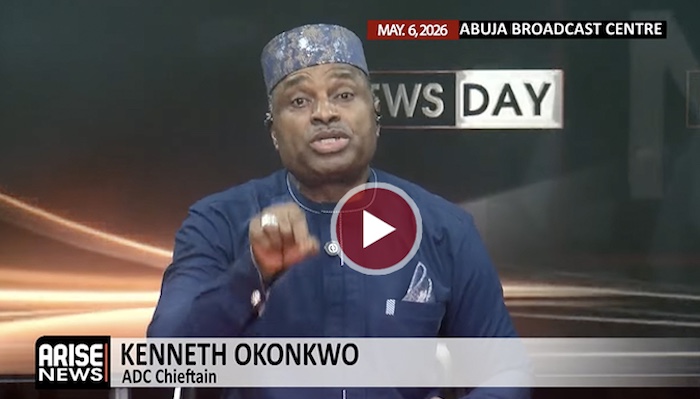
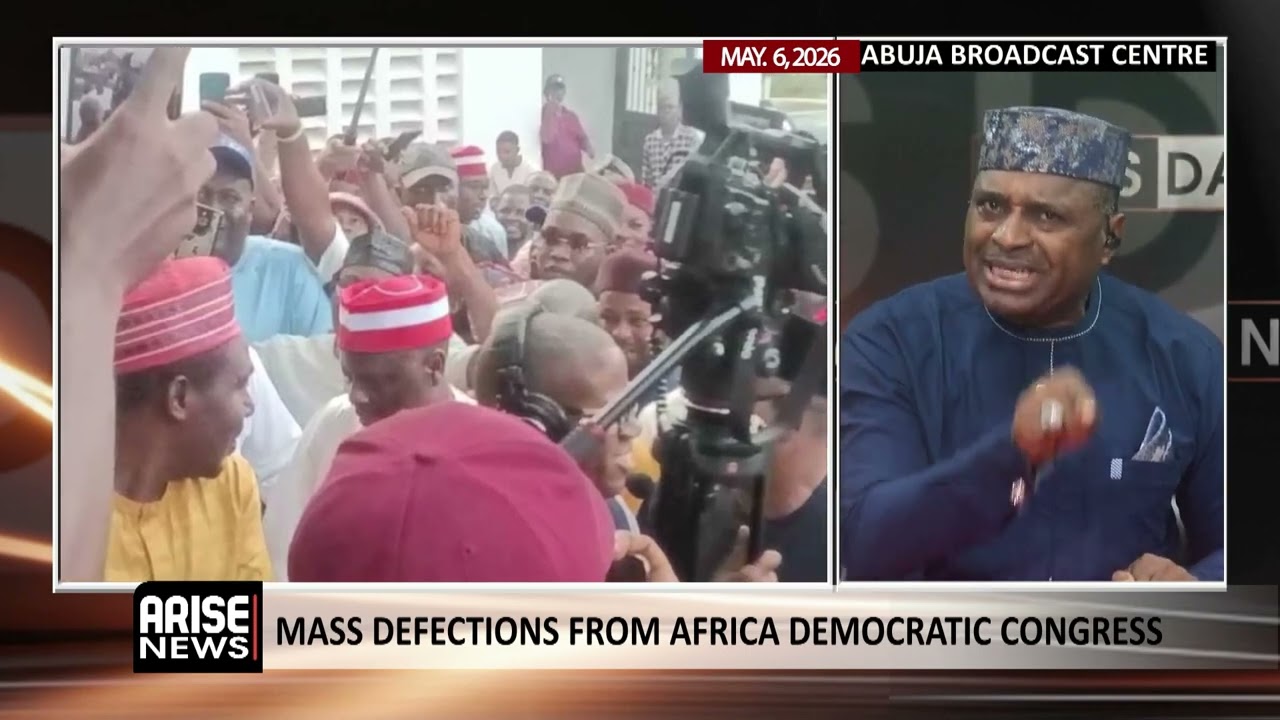
Fresh cracks have emerged within Nigeria’s opposition coalition ahead of the 2027 elections, with ADC chieftain Kenneth Okonkwo accusing former Labour Party presidential candidate Peter Obi of abandoning the coalition to avoid participating in a competitive primary election.
Speaking during an interview on ARISE News, Okonkwo claimed Obi’s departure from the ADC was driven not by ideological disagreement or internal crisis, but by what he described as a longstanding fear of open electoral contests.
“Peter Obi is afraid of free and fair primary election,” he said.
Okonkwo argued that Obi’s public explanation for leaving the coalition that he wanted to avoid ongoing legal and political disputes within the ADC was merely a cover for deeper concerns about facing other aspirants in a transparent primary process.
“He gave the reason of challenges… but his main reason is that he does not want to face the primary election,” he said.
According to him, Obi has historically avoided competitive primaries throughout his political career and has instead relied on negotiations and political arrangements.
“He has never been in one, and he will not be in one until he finishes his political career,” Okonkwo stated.
He recalled Obi’s emergence as governor under APGA, alleging that Obi initially lost the party primary before party leaders intervened to overturn the result.
“He entered into primary election, he failed and lost… and they still gave him the ticket,” he claimed.
Okonkwo further alleged that Obi sought significant control over the ADC’s internal processes after joining the coalition, including the organisation of party primaries and electronic registration systems.
“He should be allowed to produce the National Organizing Secretary,” he said Obi demanded.
According to Okonkwo, the arrangement would have given Obi influence over the structure and conduct of the party’s internal elections.
“He was to be the one to organize the primary,” he said.
Despite those concessions, Okonkwo maintained that Obi still chose to exit the coalition because of concerns over participating in a genuinely open contest.
“Yet, he was still afraid of free and fair election,” he added.
The ADC chieftain dismissed concerns that Obi’s departure would weaken the coalition, insisting that the party remained stable and politically relevant.
“ADC is moving on,” he said.
He also argued that Obi’s political influence had already declined before joining the coalition, citing setbacks in Anambra State and internal divisions within his support base.
“His political career was already dead,” Okonkwo claimed.
Okonkwo further predicted that several politicians who followed Obi out of the coalition would eventually return after discovering what he described as instability within their new political alignment.
“What you’re seeing is a fad… and it will die out,” he said.
Okonkwo concluded that the ADC remains focused on building its coalition ahead of 2027, insisting that Obi’s departure would not derail the party’s plans and arguing that competitive internal democracy remains essential to the credibility of any opposition platform.
By Ojo Triumph