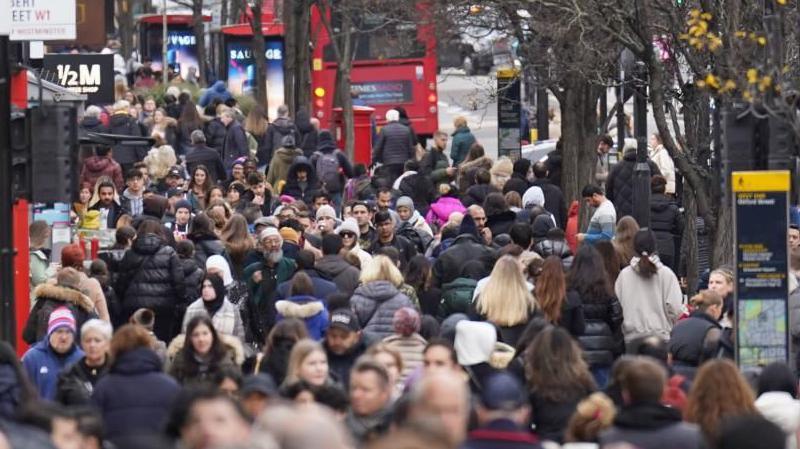
The United Kingdom’s population is expected to rise to 71.0 million by mid-2034, lower than a previous projection of 72.2 million, as reduced immigration reshapes long-term demographic outlooks, according to the country’s statistics office.
The Office for National Statistics (ONS) said on Tuesday that net migration is projected to add about 2.2 million people between mid-2024 and mid 2034, while natural change will subtract around 450,000 people as deaths continue to exceed births.
The organization noted that net migration is expected to remain the only driver of population growth over the next decade.
It also stressed that the projections are not definitive forecasts, as they are based on recent trends and do not account for potential future policy shifts or unexpected changes in fertility, mortality, or migration patterns.
The revised outlook reflects a sharp drop in net migration from its post-pandemic peak in 2023, when inflows were driven by labour demand and relaxed visa rules introduced under former Prime Minister Boris Johnson’s government, particularly in sectors such as social care.
Following policy tightening, net migration fell to 204,000 in the 12 months to June 2025, down significantly from nearly one million recorded in the year to June 2023.
The announcement also highlights uneven population growth across the UK, with England expected to grow by 2.9% by mid-2034, compared with 1.0% in Wales, 0.6% in Northern Ireland, and just 0.3% in Scotland.
The slower population expansion could add pressure to public finances, potentially complicating fiscal planning for Chancellor Rachel Reeves ahead of upcoming budgets, as demographic changes influence labour supply, tax revenues, and public service demand.
Despite the downward revision, the ONS emphasised that migration remains a key factor shaping the UK’s demographic and economic future.
Goodness Anunobi