Markets turn cautious as fragile peace talks, central bank decisions, and earnings season collide….
Global markets traded cautiously on Tuesday as oil prices pushed higher and equities struggled for direction, with investors closely watching whether Donald Trump will accept a new Iranian proposal that could ease tensions.
At the centre of the uncertainty is the Strait of Hormuz, a vital corridor through which roughly a fifth of the world’s oil and liquefied natural gas flows. Its prolonged disruption has been a key driver behind rising energy prices since the conflict began eight weeks ago.
Tehran has reportedly sent “written messages” to Washington through Pakistan, outlining its conditions for a potential deal. These include firm positions on its nuclear programme and the future security of the Strait.
Under the proposed interim arrangement, Iran would reopen the waterway in exchange for the United States lifting its blockade on Iranian ports. More complex negotiations particularly around nuclear issues would be deferred.
The White House confirmed that Trump and his advisers reviewed the proposal on Monday, though spokeswoman Karoline Leavitt declined to indicate whether Washington would accept the terms.
Optimism around a breakthrough had been building, but momentum stalled after Trump cancelled a planned diplomatic trip involving envoys Steve Witkoff and Jared Kushner to Islamabad.
Iran’s ambassador to the United Nations, Amir Saeid Iravani, told the Security Council that Tehran would require firm guarantees against future attacks by the US and Israel before offering broader security assurances in the Gulf.
However, Marco Rubio pushed back, arguing that Iran’s interpretation of reopening the Strait falls short of Washington’s expectations.
Meanwhile, Vladimir Putin signalled Moscow’s willingness to mediate, telling Iran’s Foreign Minister Abbas Araghchi that Russia would do everything possible to help end the conflict.
Oil rises, stocks struggle
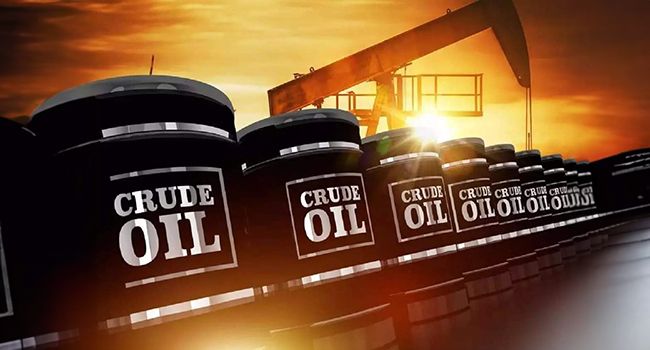
With uncertainty lingering, oil prices extended gains. Brent crude edged closer to the $110 per barrel mark, while US benchmark West Texas Intermediate also climbed.
Equity markets, however, painted a mixed picture:
- Asian indices in Tokyo, Hong Kong, Shanghai, and Sydney declined
- Gains were recorded in Seoul, Singapore, Taipei, and Jakarta
- US markets had earlier hit record highs, with the S&P 500 and Nasdaq continuing their upward run
The divergence reflects a market caught between strong corporate performance and rising geopolitical risk.
Pressure building on Iran
Analysts suggest Iran may be under increasing pressure to strike a deal quickly.
According to IG strategist Tony Sycamore, the country’s ageing oil storage infrastructure is nearing capacity. If production is forced to slow, it could cause long-term damage to reservoirs and significantly impact future revenues.
Still, he cautioned that the US is unlikely to settle for a limited agreement, insisting on a broader deal that addresses both maritime security and Iran’s nuclear ambitions.
All eyes on central banks and earnings
Beyond geopolitics, investors are also bracing for a busy week of economic events.
The Bank of Japan is expected to hold interest rates steady, with the Federal Reserve, European Central Bank, and Bank of England likely to follow suit.
Rising energy costs have reignited concerns about inflation, complicating the policy outlook for central banks globally.
At the same time, major corporations including Apple, Meta Platforms, Microsoft, Ford, and ExxonMobil are set to release earnings, providing further clues about the health of the global economy.
Market snapshot
- Brent crude: up 1.0% at $109.27 per barrel
- WTI crude: up 1.0% at $97.32 per barrel
- Nikkei 225: down 0.5%
- Hang Seng: down 0.3%
- Shanghai Composite: down 0.2%
- FTSE 100: down 0.6%
- Dow Jones: down 0.1%