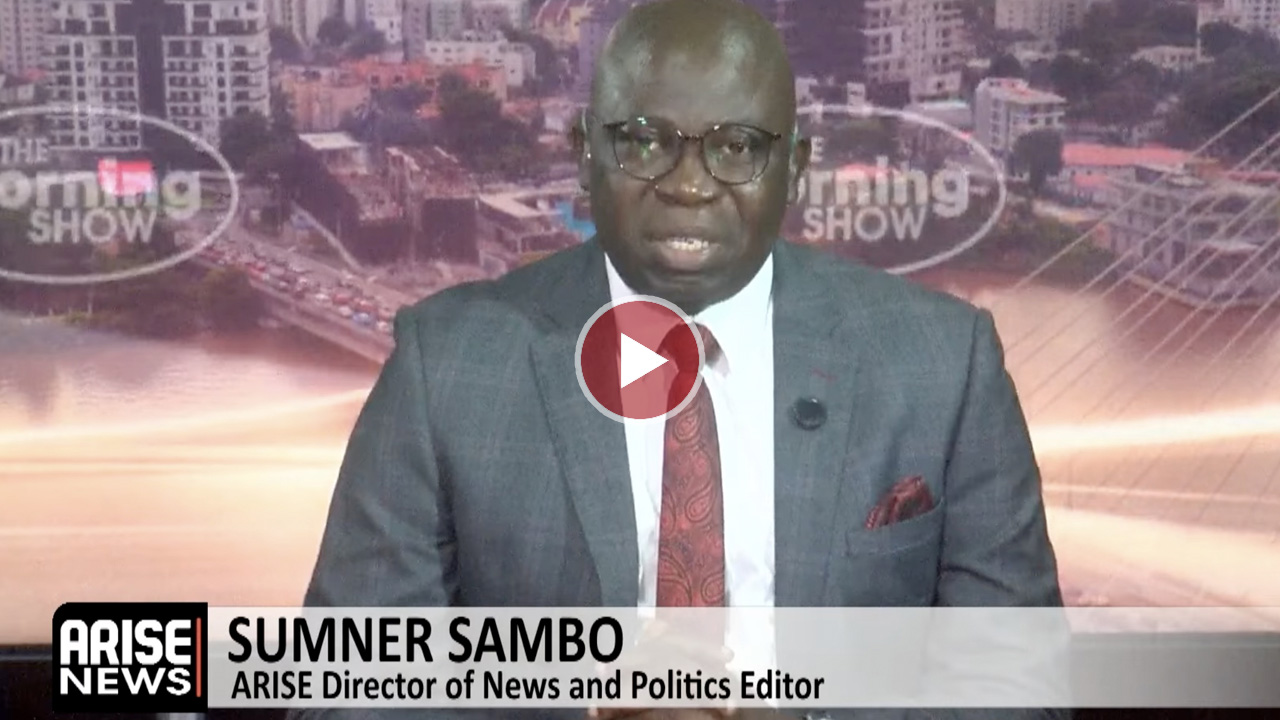
ARISE News Director of News and Politics Editor, Sumner Sambo, has warned that Nigeria’s rising political rhetoric—echoing tensions seen in the 1962–1965 Western Region crisis and the 2015 election period—could threaten national stability if not urgently checked.
Speaking during an interview on ARISE NEWS on Monday, Sambo said recent political statements from both the ruling All Progressives Congress (APC) and opposition leaders at the Ibadan Summit reflected an escalating tone that could undermine national unity if not checked.
He specifically referenced the controversy surrounding the opposition’s Ibadan Declaration and the APC’s response to comments made by Oyo State Governor, Seyi Makinde, as well as remarks attributed to senior figures within the Tinubu administration.
Sambo said:“I’d like to start from the issue of Operation Wetie that is actually causing problems here and there. I mean, I like the way the APC actually countered Governor Makinde, trying to tell him that he’s someone in government and he should be very careful of the sort of words that he puts out there. And the sort of speech that came out from the summit in Ibadan was not expected of him.”
He, however, argued that political rhetoric should be viewed in historical context, noting that similar patterns existed during the buildup to the 2015 elections and even earlier political eras.
“But then, I also want to juxtapose this with what the APC itself did while in opposition towards the 2015 general election.
“I don’t forget sometime in 2012, we had its principal galvanizer, then Major General Muhammadu Buhari, who was the arrowhead of that coalition of the APC that later merged into this political party, making some very strong rhetoric, which really caused an uproar.”
He cited statements from past political actors, including former President Muhammadu Buhari, which he described as examples of extreme political language that contributed to tension in the country.
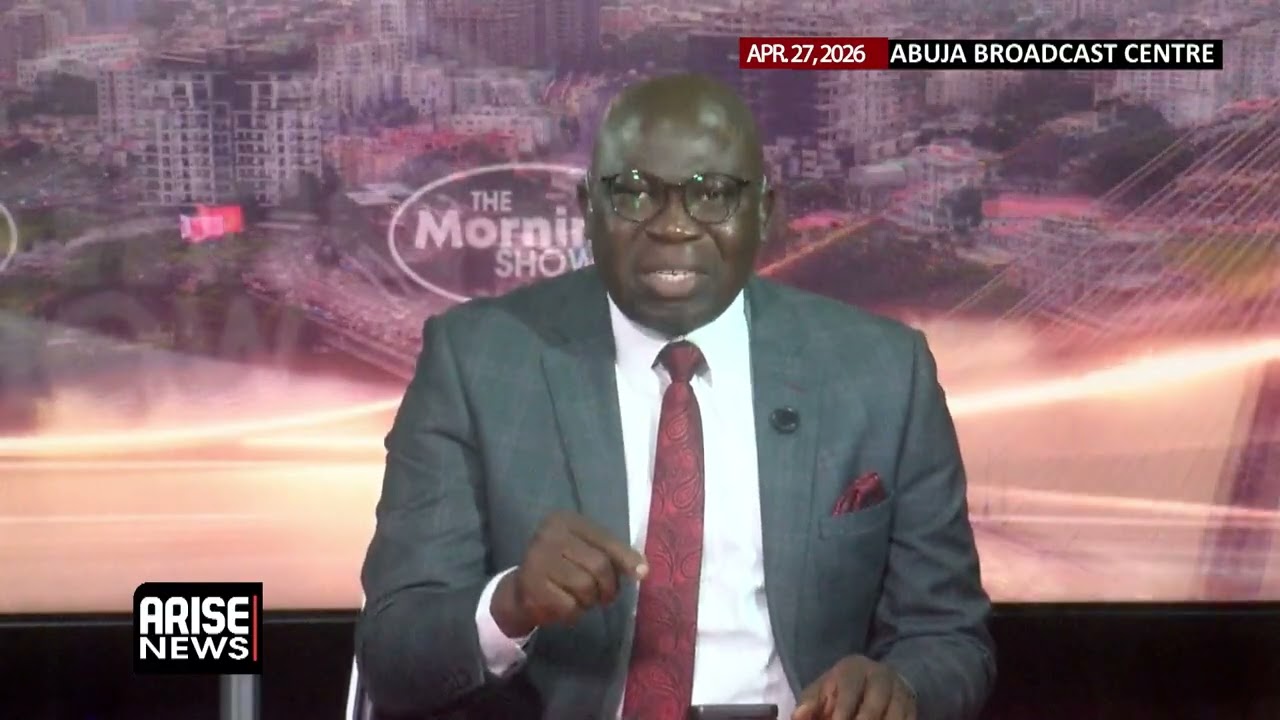
“And this is what he has said. Very, very strong and harsh rhetoric which politicians should not be saying, but which they keep saying to cause trouble within the country… that if what happened in 2011, that is the alleged reading, should again happen in 2015, by the grace of God, the dog and the baboon will all be soaked in blood.”
Sambo also referenced Buhari’s past comments on Boko Haram, describing them as controversial and widely criticised at the time.
“He would go ahead and even say, look, there are three forms of Boko Haram in Nigeria… and that the biggest of all Boko Haram is the government of Nigeria. Now, that caused a whole lot of uproar.”
He further drew parallels with President Bola Tinubu’s recent remarks, arguing that political statements from both current and past leaders show continuity in aggressive political communication.
“Now I’m juxtaposing with what President Tinubu said just last week… he said, the late Muhammadu Buhari is me. He was a partner. If I took over from him, is that not for myself? So, if something is wrong, fine, leave it, correct it, move on.”
According to him, such statements suggest political alignment and continuity that blur the lines of accountability across administrations.
Sambo also criticised comments reportedly made by the Chief of Staff to the President, Femi Gbajabiamila, which he said reflect a troubling tone in political engagement.
“Now recently… Gbajabiamila was very strong… he had this to say: that my charge to you is to stay in that same party, fight them, scatter them, hold on to your party, do not abandon them, we like what you are doing. Hold on to your party, do not abandon it.”
He argued that such rhetoric could easily be interpreted by opposition figures as encouragement for political destabilisation.
“When you hear a senior member of the Tinubu Presidency… making that kind of statement, wouldn’t the opposition reply that kind of rhetoric? Because a senior government official should not be using that kind of word.”
Turning to historical context, Sambo revisited the pre-independence and early post-independence political crises, warning that Nigeria risks repeating past mistakes.
“Now let’s get back to Operation Wetie. What really happened? That was between 1962 and 1965… there were alliances… UPGA and NNA… and because of the outcome of the 1965 election, it was rigged, blatantly rigged. And because of that, there was uproar everywhere. Politicians were being set ablaze… houses were being burnt.”
He warned that such history should serve as a cautionary tale.
“Is this where these politicians want to take us to? And that’s why I’m calling on other statesmen, Nigerian former presidents, to actually take interest in the rhetoric that’s coming out.”
Sambo stressed that both ruling and opposition parties must be restrained in their messaging, warning that unchecked political language could threaten Nigeria’s democracy.
“Security agencies must watch those in government and out of government to be careful in the kind of rhetoric that they push out in trying to win votes… because if not, we may not have a country at the end of the day.”
He added that the current political atmosphere around coalition-building and opposition alignment must remain within democratic norms.
“As to what they decided to do at that Ibadan summit, it’s a democratic setting and people are allowed to meet… but political actors in the country must allow democracy to prevail.”
Sambo also commented on recent political alignments and endorsements, including those involving Rivers State Governor Siminalayi Fubara and President Tinubu, saying such moves reflect confusion and lack of clear political direction among some actors.
“He’s trying to galvanize politics towards President Tinubu because nobody knows or can even count Governor Fubara as one of those politicians whose voice really counts in the polity because he’s really lost out.”
He concluded with a broader warning to political actors, stressing that personal ambition and internal party dynamics must not override national interest.
“We need to really double down on being careful around rhetoric, especially by political leaders… because Operation Wetie was not a child’s play… it can engulf the nation and we won’t have a country called ours.”
Boluwatife Enome