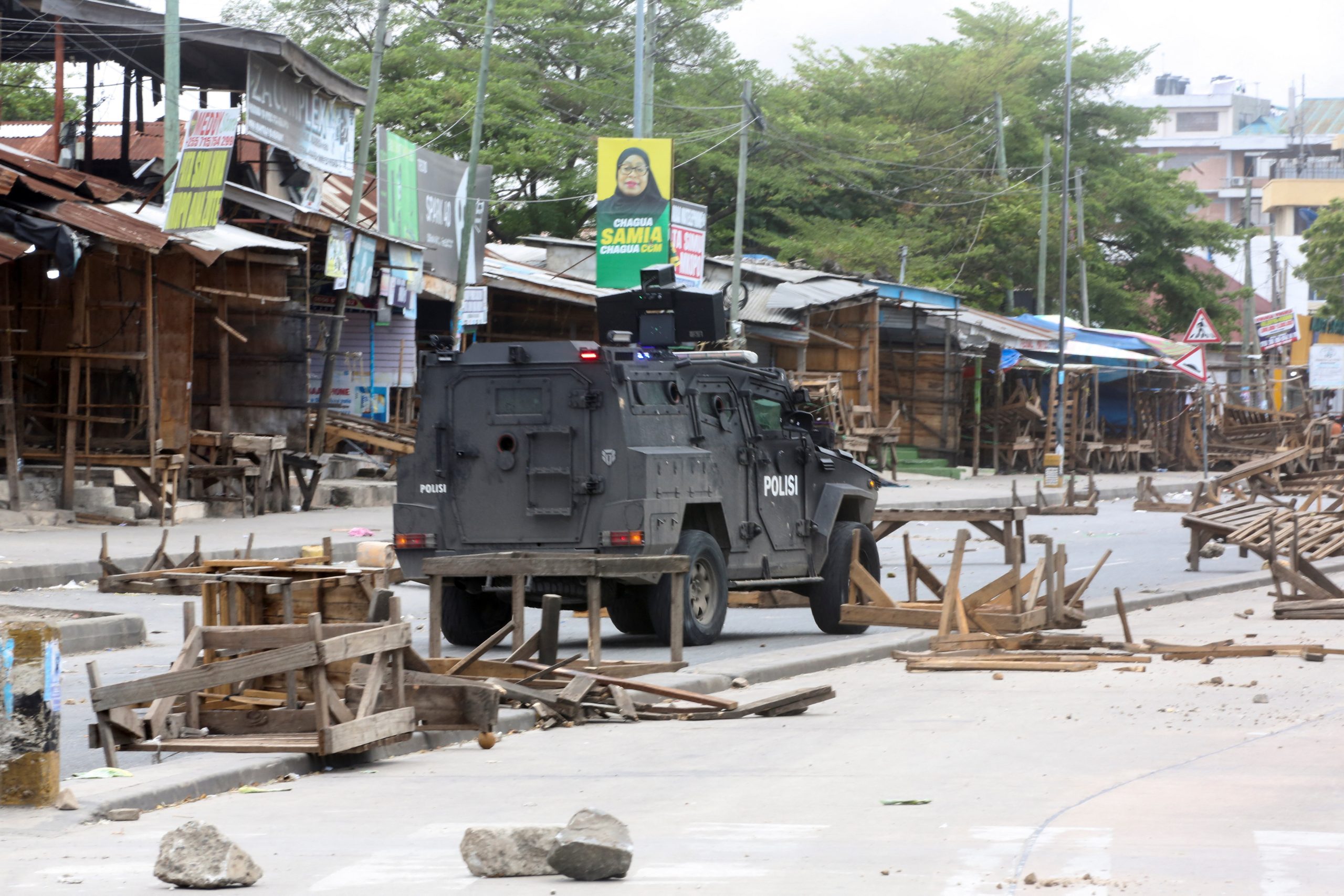
Tanzania’s Commission of Inquiry into last year’s post-election violence says 518 people died during the chaos, which it concludes was planned and fueled by politicians and activists who allegedly paid protesters to disrupt the elections.
The figure, released in a report presented on Thursday, is lower than earlier claims made by activists at the height of the unrest on October 29. The commission, chaired by retired Chief Justice Mohamed Chande Othman, said the death toll could still change if authorities confirm additional unreported burials.
In its findings presented to President Samia Suluhu Hassan, the commission said 490 of the deceased were male, 28 were female, and 21 were children. It further noted that most deaths were “unnatural,” with 121 people dying in hospital while receiving treatment for injuries.
Justice Othman said the events of October 29 could not be classified as peaceful protests.
“What happened on October 29 were not peaceful protests but acts of violence,” he said.
The report states that no formal notice was given to police ahead of the unrest, as required by law, adding that the violence took place on a day declared for general elections, thereby disrupting citizens’ right to participate in the democratic process.
The commission based its findings on interviews with victims, security agencies, medical personnel, and a review of official documents.
Casualties and injuries
The report confirms 518 deaths, with Dar es Salaam recording the highest toll at 182, followed by Mwanza (90) and Arusha (53).
A total of 2,200 people were injured, including 219 with serious injuries, 197 with gunshot wounds, and 171 with minor injuries. Investigators said there was no evidence of torture among the injured.
Post-mortem examinations were conducted on 260 bodies, most of which showed penetrating injuries caused by sharp objects or fractures. Twenty-one bodies had no visible injuries, while six showed burn wounds.
The commission also noted growing psychological impacts among survivors, including mental health challenges among civilians and overstretched medical personnel.
Damage to property
Private property worth approximately TSh 89 billion (US$34.1 million) was destroyed, while public property losses were estimated at TSh 36 billion (US$13.8 million).
Causes of the unrest
The report cites long-standing social and political grievances, including:
A restrictive political environment and calls for constitutional reform
Economic frustrations, including an unfavourable business climate and tax concerns
Declining moral standards and reduced civic patriotism
Preceding disappearances
The commission also noted that 758 people had gone missing over the past two years, with 245 still unaccounted for. It said disappearances were linked to multiple causes, including abductions, criminal activity, trafficking, superstition-related claims, and staged disappearances.
Catalyst of violence
According to the report, evidence suggests that some politicians and activists exploited existing grievances to mobilise citizens into violent action after the elections.
It alleges that social media played a key role in organising discussions and coordinating strategies to disrupt the electoral process. Some participants were reportedly provided with mobile phones to record and share images of injuries and deaths online.
“These images and videos were uploaded to social media in order to provoke further participation in protests,” the report states.
The commission also alleges that slogans such as “No reforms, no elections,” “Samia must go,” and “We are coming out in October” were used to mobilise supporters.
It further claims that some participants were recruited and paid between TSh 10,000 ($3.8) and TSh 50,000 ($19.2) to take part in protests and property destruction.
The commission concluded that the demonstrations were not protected under law, arguing they were designed to incite panic, threaten national security, and destroy property.
It also said some participants had undergone prior training and were mobilised in groups across different locations, including streets and universities.
Broader findings and recommendations
The commission acknowledged that the unrest exposed deeper political and institutional weaknesses and recommended reforms, including:
- Strengthening national reconciliation efforts
- Improving police accountability and oversight systems
- Addressing long-standing political grievances
- Enhancing economic governance and public trust
- Balancing security responses to avoid overwhelming law enforcement during mass unrest
It concluded that early warning signs of political tension had been ignored and urged reforms to prevent a recurrence of similar violence.
The report warned that unresolved political and socio-economic tensions continue to pose risks to stability and economic development.