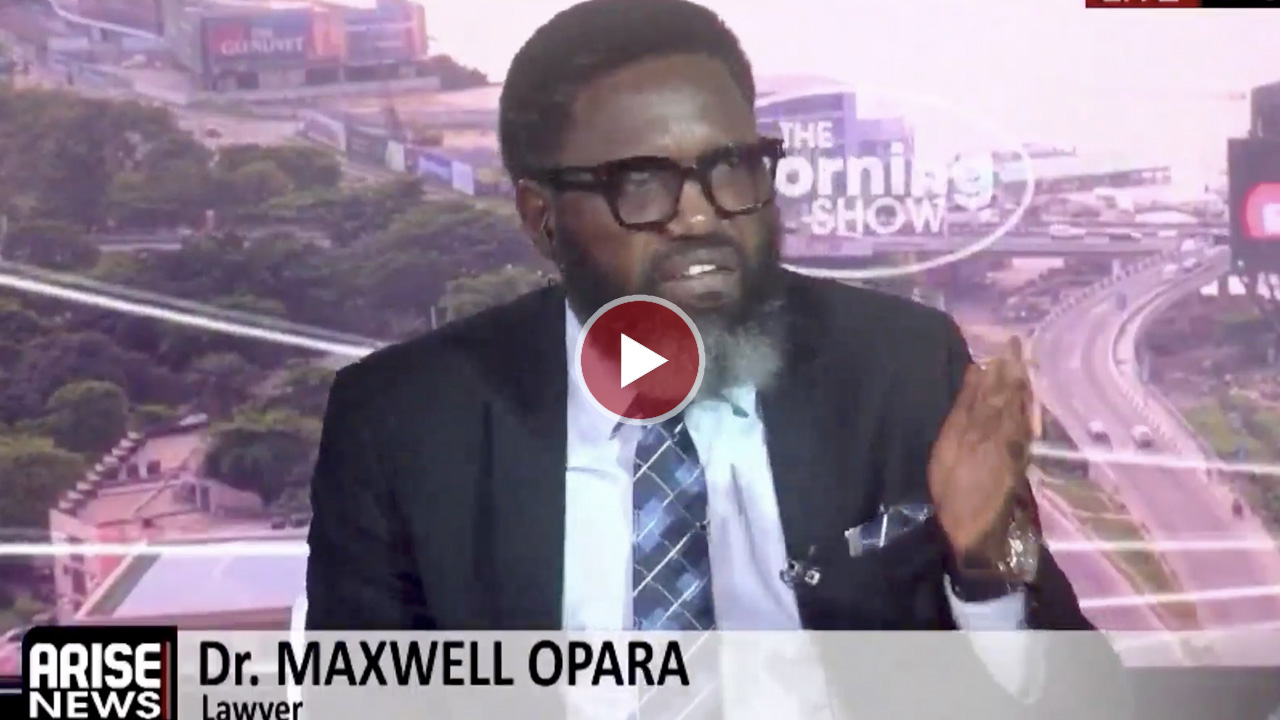
Legal practitioner, Dr. Maxwell Opara, has criticised the federal government’s reintegration programme for former terrorists, warning that the policy risks encouraging terrorism rather than curbing it.
Speaking in an interview on ARISE News on Friday, Opara said the initiative under Operation Safe Corridor sends a dangerous message and could embolden criminal activity across the country.
“This is a means upon which the government are using to encourage people to go into terrorism,” he said.
Opara argued that allowing individuals accused of terrorism to undergo rehabilitation without full prosecution undermines Nigeria’s criminal justice system and weakens deterrence.
“Once a crime is committed, our laws are there. Once we are investigated, we’ll be charged to court. Once we are charged to court, the only role the federal government has to do is to, through the attorney general, to discontinue the matter,” he stated.
He added that convicted offenders should only benefit from presidential pardon after due legal process, stressing that the current approach bypasses established legal procedures.

“Once the person has been faced with trial and convicted, the only option for the person is to grant the person amnesty, that presidential pardon, when the person meets the necessary criteria,” he said.
The lawyer questioned the justification for reintegrating individuals into communities that have been devastated by terrorism, noting that many victims remain displaced.
“And the representative of the chief of army staff was begging the community to accept them back. Now, I ask him a question again. Which community? The community that is no longer in existence,” he said.
He further criticised the programme as harmful to victims, warning that it could deepen trauma and fuel resentment.
“I’m assuring you they are creating more harm than good,” Opara stated.
Addressing claims that some suspects were coerced into terrorism, he rejected coercion as a valid defence for adult offenders.
“And I’m telling you that when they force you into a crime, or they convince you into a crime, or they pay you money to join to the crime, once you are an adult and you commit a crime, that should not be a defense,” he said.
Opara also dismissed reliance on United Nations resolutions supporting rehabilitation, arguing that such frameworks are advisory and must align with Nigeria’s domestic laws and current security realities.
“United Nations resolution is not automatic. This is a resolution, it’s advisory. It is not left for each sovereign state to look at your own peculiar laws, look at your own peculiar circumstances before you now apply it,” he said.
He maintained that implementing reintegration policies while terrorism remains widespread is ill-timed and counterproductive.
“You don’t do the right thing at the wrong time, for goodness sake,” he added.
The lawyer called for greater accountability in the programme, urging anti-corruption authorities to scrutinise its funding and execution.
“This is, to me, this is an epitome of fraud,” he said, concluding by revealing plans to challenge the policy in court.
“By next week I shall be approaching a federal high court to stop this madness.”
Faridah Abdulkadiri