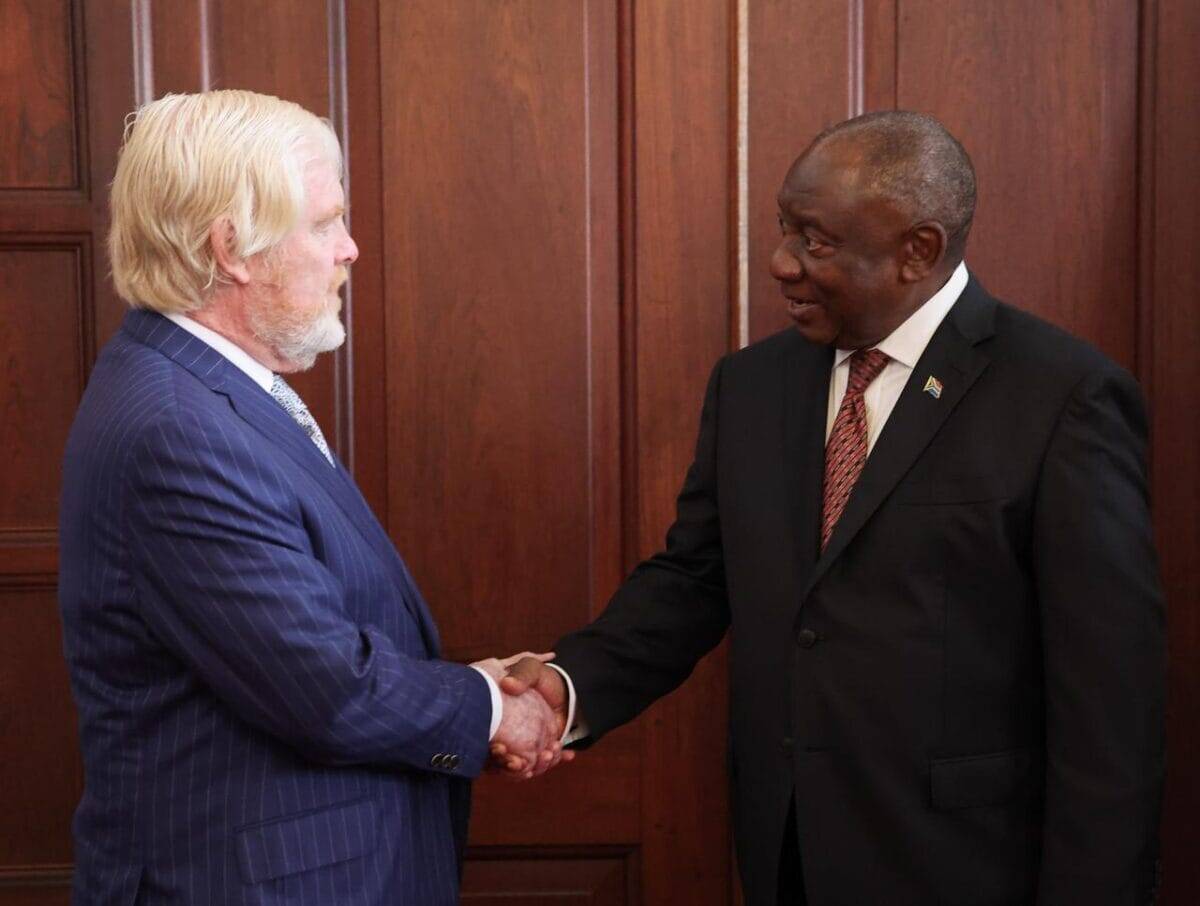
President Cyril Ramaphosa’s recent address to incoming foreign ambassadors at his presidential guesthouse in Pretoria was no ordinary welcome.
It was a carefully crafted rebuke – aimed squarely, though indirectly, at the newly appointed US ambassador to South Africa, Leo Brent Bozell III.
Before even presenting his credentials, Bozell had made controversial demands of South Africa that touched at the core of the black liberation: altering transformation policies such as broad-based black economic empowerment, revising land reform and abandoning historic freedom songs like Kill the Boer.
The latter demand ignored the fact that South Africa’s courts had already ruled such a chant is not problematic.
Ramaphosa’s rebuke was subtle but devastating. He reminded his audience that South Africa’s envoys abroad are instructed to respect sovereignty, promote trade and investment, advance cultural exchange and, above all, exercise diplomatic tact.
He stressed that ambassadors must never interfere in the internal affairs of their host countries and, if concerns arise, they should be raised discreetly through official channels. This, he noted, is the essence of the Vienna Convention on Diplomatic Relations.
The metaphor was striking, as his words landed like a boxer’s uppercut – delivered indirectly, yet with enough force to knock down an opponent. In a country like the US, where boxing analogies resonate, Bozell would have understood the blow.
Ramaphosa is known for his calm demeanour, but when he chooses to raise an issue publicly, it signals deep irritation. The president’s speech was more than a lesson in etiquette; it was a statement of sovereignty.
By outlining what he expects from South Africa’s ambassadors abroad, Ramaphosa implicitly demanded the same respect from foreign envoys in South Africa.
His message was clear: South Africa will not tolerate public criticism of its internal policies from foreign representatives.
Bozell’s blunder highlighted a broader dilemma he faces as US President Donald Trump’s man in Pretoria. As Washington’s envoy, he must balance his mandate to push US interests with the need to maintain constructive relations.
His confrontational tone risked alienating Pretoria and even prompted calls within the ANC-led alliance for his expulsion. For now, he appears to have tempered his approach, acknowledging Ramaphosa’s message and signalling a willingness to slow down.
While South Africa rarely experiences diplomatic fallouts, the US, under Trump, has often adopted a combative stance toward countries that resist American demands.
Ramaphosa’s rebuke was, therefore, not only directed at Bozell, but also at Washington’s broader posture. With his acute dilemma, Bozell must either fulfil his boss’ orders, or risk being sidelined.
Push too hard, and he risks being expelled from South Africa. Yet diplomacy requires restraint. His challenge now is to convince the Oval Office that quiet engagement is more effective than public confrontation.
Ramaphosa’s speech, framed as a lesson in diplomatic conduct, was both a defence of South Africa’s sovereignty and a reminder that respect, not coercion, is the foundation of international relations.
If Bozell did not grasp the message, loud and clear, he never will. But for now, he seems to have realised that diplomacy, not guffaws at breakfast gatherings, is the only way forward.