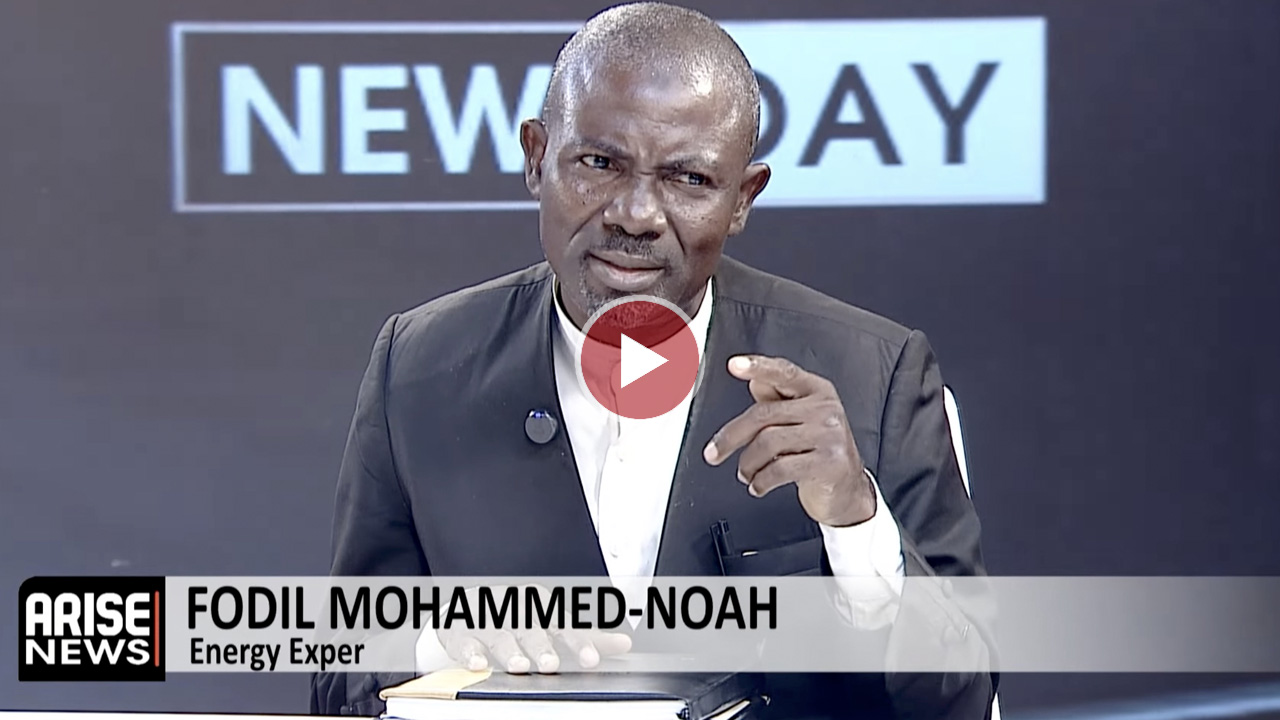
Nigeria’s recurring power outages and grid collapses are not primarily the result of technical failures, but deeper structural and constitutional issues, according to energy expert, Fodil Mohammed-Noah.
Speaking during an interview on ARISE News on Wednesday, Mohammed-Noah said the inability to fix Nigeria’s power sector lies in the failure to address the fundamental principles governing electricity management in the country.
He argued that the expectations placed on the Minister of Power are unrealistic, stressing that no single individual can resolve the crisis without structural reforms.
“We thought the Minister has a miracle to perform… he’s going to fail because the fundamentals are not being addressed,” he said.
According to him, Nigeria’s power problem is not about a lack of funds or expertise, but the failure to follow the constitutional framework governing the sector.
“The problem we are having is fundamental… when you refuse to address the fundamental principle that’s supposed to govern the power sector, you get it wrong,” he explained.
Mohammed-Noah emphasized that electricity in Nigeria is not being treated as a service in the true sense, but rather as a promise, especially under the current tariff structure.

“Electricity all over the world is service, not promise,” he said, noting that consumers are often charged for services not fully delivered.
He also criticized the current tariff system, explaining that although Nigeria operates a service-based tariff model under the Multi-Year Tariff Order (MYTO), it does not function as intended.
“The tariff system we are operating now is Nigerian-made… it does not apply to a lot of things all over the world,” he said.
According to him, the system creates inconsistencies where consumers are billed based on promised supply rather than actual electricity received.
“You were promised 20 hours… but if you are not getting that, you are still paying,” he noted.
A major issue, he said, is the lack of proper implementation of the constitutional provisions that clearly define the roles of the federal and state governments in the power sector.
“The distribution side of the power value chain does not belong to the federal government,” he said.
Mohammed-Noah explained that while the federal government manages transmission, states are responsible for electricity distribution, a structure he says is already provided for in the constitution.
“It is the state that has a major role to play… not the Minister promising end-user electricity,” he added.
He likened the structure to Nigeria’s centralized police system, arguing that decentralization in the power sector would improve efficiency, just as it is being proposed for security.
“The constitution has given you that template… we don’t need to decentralize anything,” he said.
On the role of state governments, Mohammed-Noah stressed that they already have the constitutional authority to manage distribution but have not fully embraced that responsibility.
“The states have it… it is left for them to take charge of that distribution side,” he said.
He also addressed the issue of alternative energy solutions, stating that while off-grid and mini-grid systems are useful, they should only serve as support systems and not replace a functional national grid.
“We need public-provided electricity… all this off-grid should support, not be the main,” he said.
Mohammed-Noah concluded by calling for urgent adherence to constitutional provisions and a restructuring of the power sector to ensure efficiency and accountability.
“Distribution… must be given to the states,” he emphasized, adding that fixing Nigeria’s power crisis begins with following the right structural framework.
Triumph Ojo