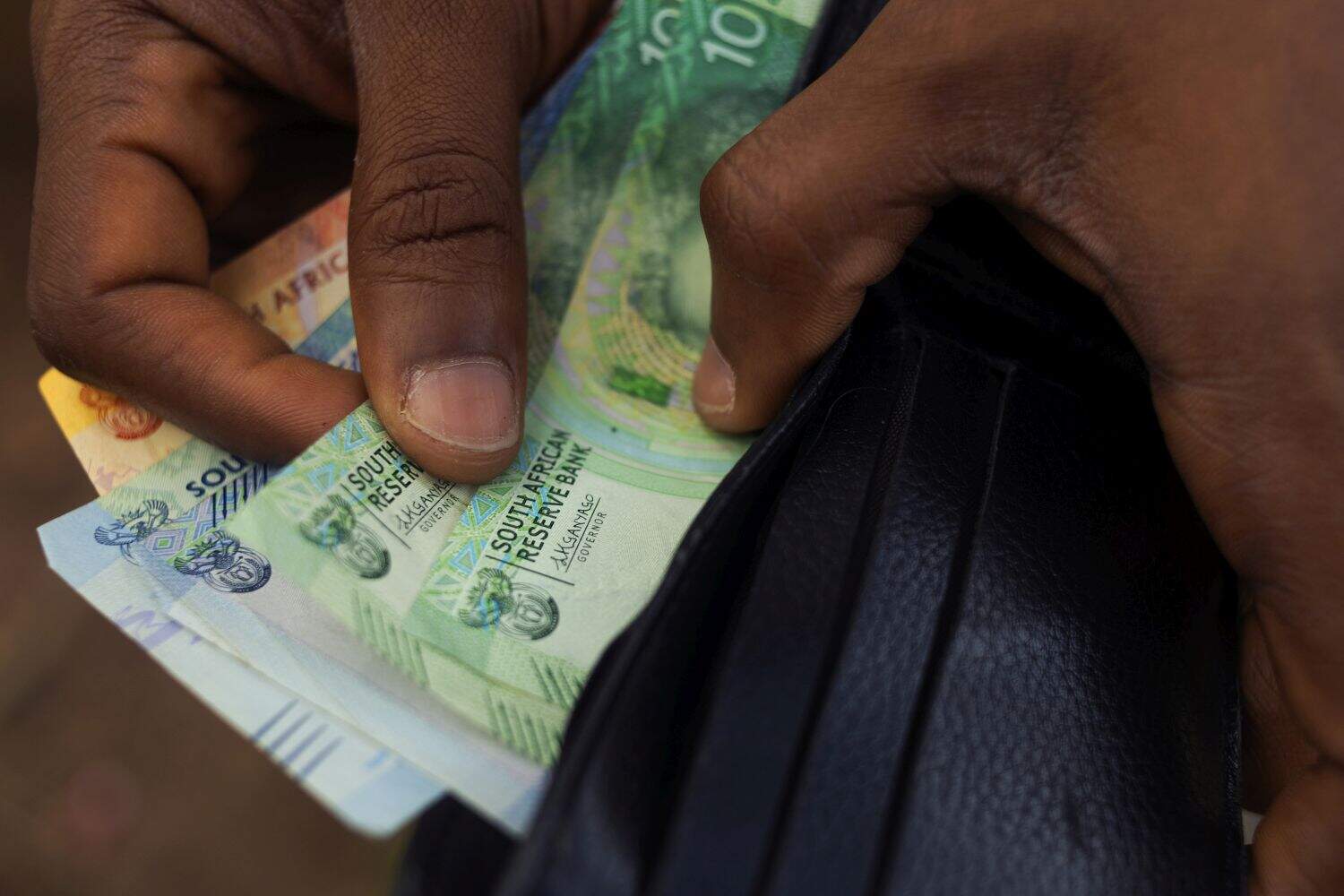
Currency notes in a wallet
Salaries in February increased slightly to R21 550, up just 0.1% from January and 2.2% higher than a year ago. However, the escalating US-Israel-Iran conflict has created uncertainty, with businesses and workers likely to face increasing pressure in the months ahead.
If inflation and economic challenges outpace salary growth, real incomes could shrink as the year progresses.
This is according to PayInc Net Salary Index released on Wednesday. The index tracks the average nominal net salaries of approximately 2.1 million salary earners in South Africa.
“While the full impact of the war is unclear, it is expected to have ripple effects on both global and local economies,” says Elize Kruger, Independent Economist. “Even if the conflict is short-lived, it is likely to place pressure on economic growth, inflation and household finances in the months ahead.”
Middle East conflict to hurt the recovery of salaries
The index noted that 2026 started on an optimistic note, arguing that the gradual improvement in economic activity expected in 2026 would sustain the recovery in salaries that started in 2024.
However, it all changed when the war broke out on 28 February, abruptly disrupting the positive economic scenario envisaged for the country.
“While the extent of the impact of the war is still impossible to predict, given that no one knows how long the conflict will last, it has become increasingly clear that even if it is fairly short in duration, the impact will have ripple effects on global and local economic prospects in the months to come,” read the index.
Inflation in February
The index highlighted that consumer inflation having been in a moderate upward trend since early last year, in real terms, the PayInc Net Salary Index declined by 1.2% in the first two months of the year.
“Still, consumer inflation reached a sweet spot in February, with both the headline and core inflation rates at 3.0%, in line with the South African Reserve Bank’s (Sarb) newly adopted inflation target,” read the index.
Kruger said this will last for only a short duration, as the expected spike in fuel prices in early April will likely derail the moderate inflation outcome previously envisaged.
“Given the extent of these increases, the probability that these could trigger a widespread upward adjustment in prices across the economy is very high, but this is also dependent on how long fuel prices remain at elevated levels.”
Inflation to increase
Kruger warned that a full-blown secondary impact could lift consumer inflation to around 4.4% in 2026, compared to a base-case forecast before the war of about 3.4%.
“This is an undesirable outcome for a central bank that has recently adopted a 3% inflation target (with a tolerance band of 1%) and thus interest rate hikes could be on the cards in a few months’ time,” she said.
“However, the Monetary Policy Committee will likely keep interest rates unchanged when meeting this week, awaiting clarity on the duration of the conflict (and thus of higher energy prices).”
Inflation to hit the working class harder
Kruger added that the anticipated worsening inflation scenario will hit the purchasing power of the working class, likely sustaining negative net salary growth in real terms, for the foreseeable future.
Given the importance of consumer spending as a growth driver in the country’s economy, the broader economy will take a hit as well.
“Uncertainty and volatility are enemies of economic activity and investment growth, as it plays havoc with planning and risk-taking,” she said. “These days’ geopolitical events, trade uncertainties and political reshuffling are the norm, rather than the exception and companies need to be increasingly resilient to withstand multiple challenges.”
U-turn in economic expectations
She noted that the U-turn in economic expectations for 2026 does not bode well for company prosperity and labour market prospects. “The gross operating surplus can be seen as an economy-wide measure of profitability, published as part of South Africa’s national accounts,” said Kruger.
“It is the balancing item in the generation of income account and can be expressed as gross domestic product minus compensation of employees and taxes on production, while adding subsidies on production and imports receivable.”
With the uncertainties about the eventual impact of the war on the local and global economy likely to loom for some time, the country’s economy enters a period where companies will most probably retreat to conservative mode, taking a wait-and-see approach, and postpone major decisions until there’s more clarity.
“This could have a negative impact on employment prospects and earnings expectations in the remainder of 2026,” adds Kruger.