Kenya witnessed a sharp rise in police killings in 2025, driven largely by violent crackdowns on protests, a new human rights watch report has established.
The surge was closely tied to protest activity in the country with June and July being the deadliest months, accounting for more than half of all killings, says the latest report by Missing Voices Coalition.
The pattern observed in 2023 and 2024 where police killings spiked during periods of protest, continued in 2025, “underscoring persistent concerns about excessive force by law enforcement during public demonstrations”.
At the same time, Nairobi remained the deadliest county for extrajudicial killings while the youth and young men continued to bear the brunt of police violence.
This as enforced disappearances dropped drastically in 2025 compared to 2024, the report says.
Most cases of police killings, it says, occurred during periods of public protest and demonstrations, with June and July accounting for 68 deaths, more than half (54 per cent) of all killings in 2025.
“This reflects a continued pattern observed in previous years where police violence spikes during protest periods,” read the report.
At least 131 cases of extrajudicial killings and enforced disappearances were documented during the year, down from 159 in 2024, a 17.6 per cent decline overall.
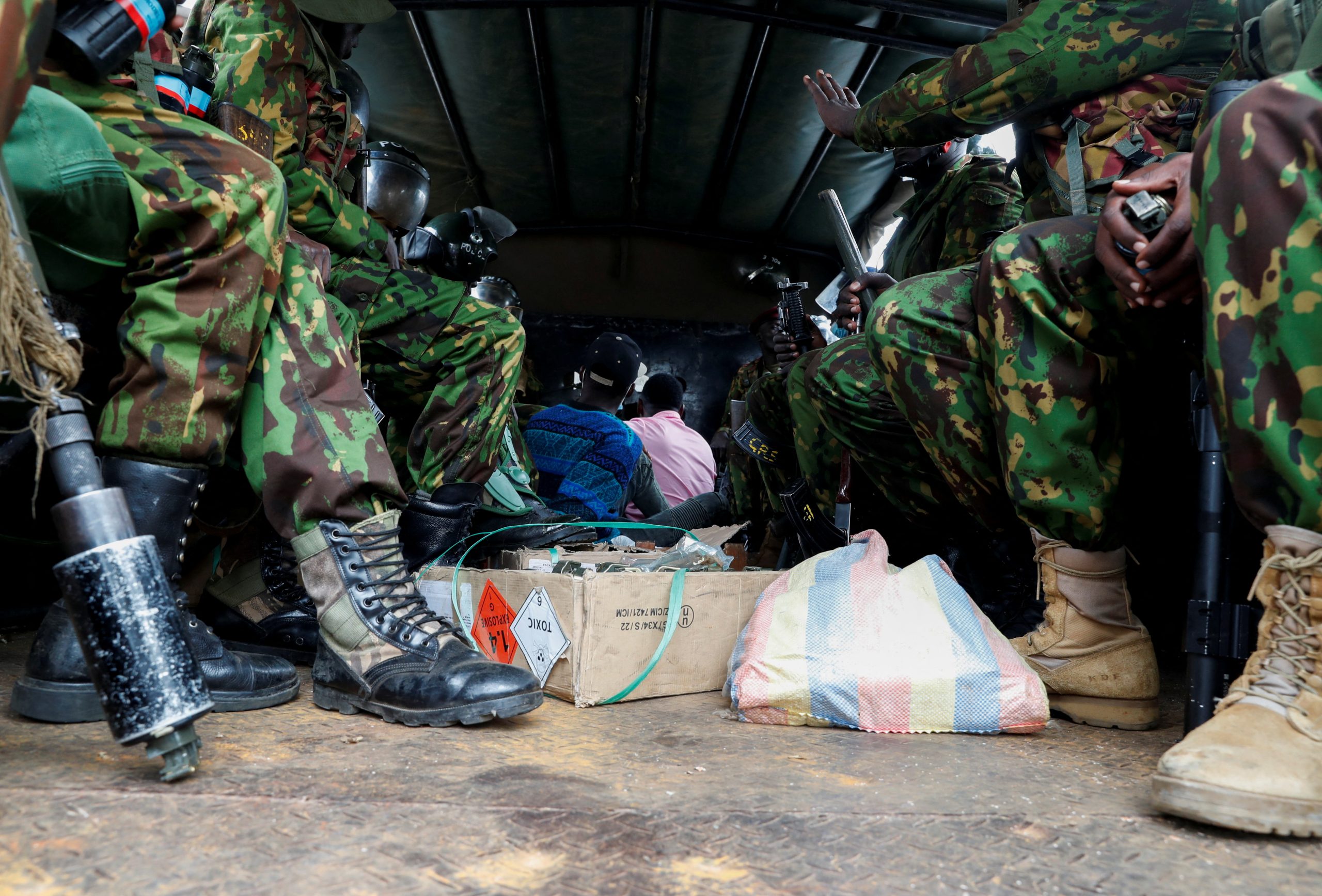
Notably, anti-protest and crowd-control operations overtook anti-crime operations as the leading context in which people were killed, coinciding with widespread unrest including Gen Z-led protests and the annual Saba Saba demonstrations in 2025.
Young people bore the brunt of the violence as the report shows that 69 victims were aged between 19 and 35, which is the highest among all age groups.
Worryingly, men accounted for 90 per cent of those killed, pointing to what the report describes as a persistent gendered pattern in policing.
In comparison to previous years, the number of police killings has been declining with very low margins, while those of enforced disappearances fluctuate, the report established.
For the report, the coalition depended on human rights monitors spread across the country to document cases of police killings and enforced disappearances, and collect witness statements and further evidence. It also cross-checked against witness statements and police reports.
“Witnesses and families are unable to share the stories due to economic constraints and, at times, are unwilling to engage the criminal justice system because cases take inordinate time to reach a court ruling; some cases take almost a decade,” the report says.
Nairobi remained the epicenter of these killings, recording 32 cases and retaining its position as the deadliest county for the fourth consecutive year. Other counties, including Kiambu, Nakuru and Kajiado, reported lower but still significant numbers, pointing to a pattern that extends beyond the capital.
In contrast, enforced disappearances dropped sharply from 55 cases in 2024 to just six in 2025, an 89 percent decrease. While notable, the report cautions that “no law in Kenya criminalizes enforced disappearance,” making it difficult for families to secure justice.
Some of the most striking accounts in the report are drawn from individual cases. In one case, a 22-year-old hawker, Boniface Kariuki, was shot during protests after stepping out to sell masks to demonstrators, an attempt, his mother recalled, to “make an extra shilling” that day, only for his life to be cut short in the chaos.
In another, Issa Mburu, a mason and father of three, was fatally shot while returning home after Saba Saba protests disrupted his workday, leaving behind a pregnant wife and young children now struggling without their sole provider. The report also documents the killing of 17-year-old Ian Sabatia Opango, who had initially stayed home to avoid demonstrations but later stepped out briefly, only to be shot and later found in a morgue labeled “unknown,”.
The Missing Voices 2025 Annual Report, according to Haki Africa Executive Director Yusuf Aboubakar, “exposes a painful truth: extrajudicial executions and enforced disappearances remain an open wound in Kenya’s democracy.”