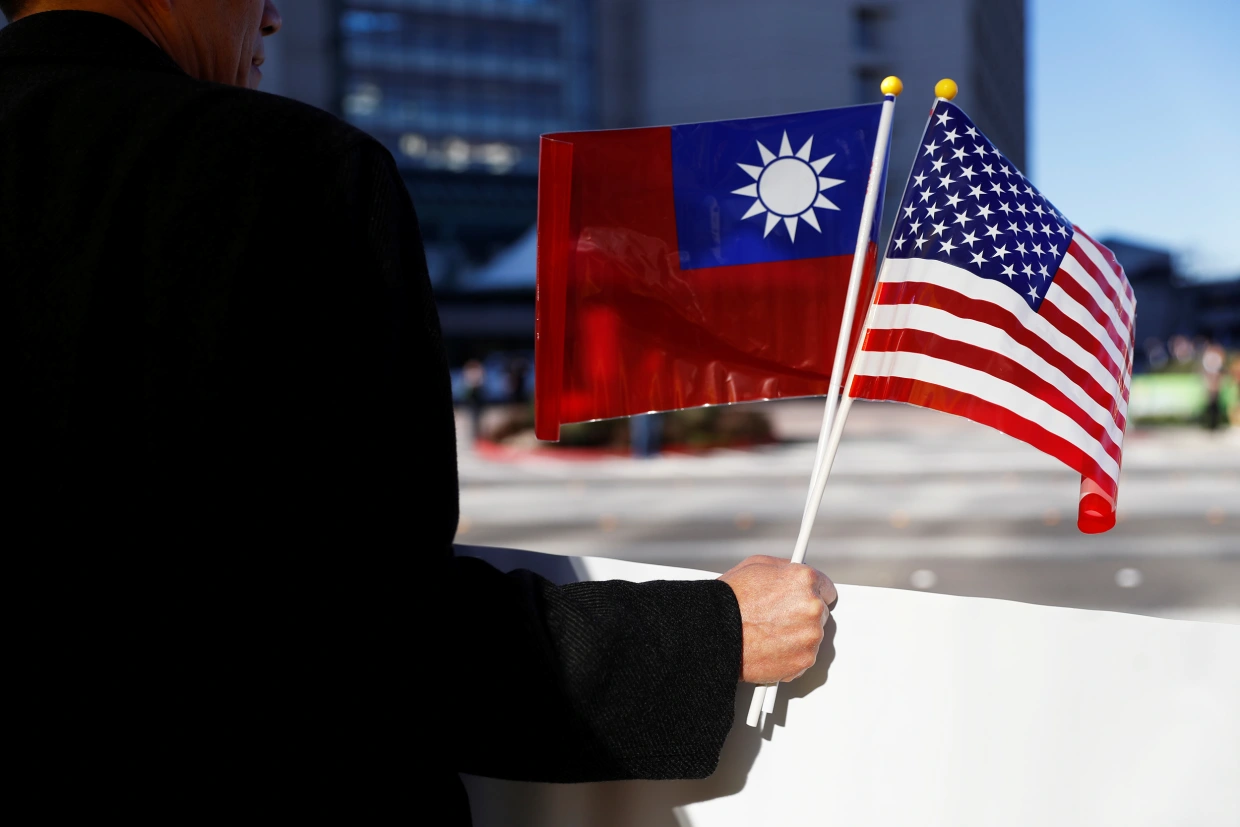
The United States has approved its first military sale to Taiwan since President Donald Trump’s return to office, authorizing $330 million worth of spare parts and components, Taipei’s foreign ministry confirmed Friday.
The sale underscores Washington’s role as Taiwan’s largest arms supplier and a critical deterrent against potential Chinese aggression, though Trump’s past remarks on the island have raised questions about his commitment to its defence.
Beijing claims Taiwan as part of its territory and has repeatedly threatened to use force to assert control. China’s foreign ministry condemned the sale, stating it “firmly opposes” the move, which comes just two weeks after Trump met Chinese President Xi Jinping in South Korea.
Details of the Sale
According to the US Defense Security Cooperation Agency (DSCA), Taiwan requested non-standard components, spare and repair parts, consumables, accessories, and repair-and-return support for F-16s, C-130s, and Indigenous Defense Fighter (IDF) aircraft.
Taiwan’s Ministry of Defence said the acquisition would help maintain combat readiness and enhance defensive resilience against ongoing Chinese military pressure.
China conducts near-daily military aircraft and naval patrols around Taiwan in what analysts describe as “grey-zone” operations—coercive actions that fall short of open warfare.
Strategic Ambiguity and Budget Challenges
The US is legally obligated to provide arms to Taiwan but continues to maintain “strategic ambiguity” regarding whether it would intervene militarily if China attacked.
Taiwanese President Lai Ching-te has pledged to raise defence spending to over 3% of GDP next year and 5% by 2030, while boosting US investment to counter Trump’s 20% tariff on Taiwanese exports. His administration plans a special defence budget of up to NT$1 trillion (US$32 billion), including US weapons purchases.
However, the proposal faces opposition from the Kuomintang (KMT), which controls parliament with the Taiwan People’s Party.
KMT lawmakers have criticized delays in US weapons deliveries—exacerbated by Covid-19 supply disruptions and US support for Ukraine and Israel—and argued that defence spending should not exceed 3% of GDP.
Regional Tensions Rising
The arms sale comes amid escalating regional tensions. Japan’s new hawkish Prime Minister, Sanae Takaichi, recently suggested that armed attacks on Taiwan could justify Japanese troop deployment under collective self-defence, prompting sharp condemnation from Beijing, which warned it “will by no means tolerate” such statements.
This US arms sale—the first since December 2024 under former President Joe Biden—signals continued Washington support for Taiwan amid rising cross-strait and regional tensions.