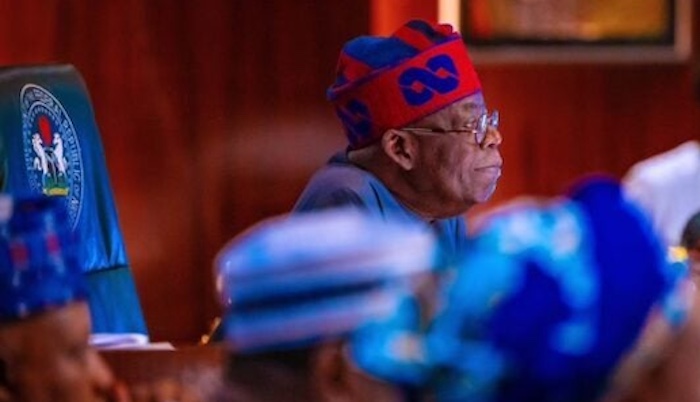
President Bola Tinubu has said his administration is targeting more than doubling the livestock sector’s contribution to Nigeria’s economy, currently valued at more than $32bn annually.
Tinubu, represented by the Secretary to the Government of the Federation, Senator George Akume, made the declaration on Monday in Abuja at the opening of the 9th All Africa Conference on Animal Agriculture.
The President said the livestock industry remained an important source of food, employment and economic opportunities, with Nigeria having more than 58 million cattle, 64 million sheep, 124 million goats and 660 million poultry species.
“Our national strategy aims to more than double the sector’s economic contributions to position Nigeria as a leading hub for livestock production and processing in Africa,” Tinubu said.
He said the establishment of the Federal Ministry of Livestock Development in July 2024 marked a major step towards transforming livestock production from traditional practices into a modern and commercially competitive industry.
“The establishment of the Federal Ministry of Livestock Development marked the beginning of a comprehensive national livestock transformation programme,” he said.
Tinubu said the government was implementing the National Livestock Growth Acceleration Strategy to improve productivity and strengthen the sector’s value chains.
“The strategy focuses on increasing livestock productivity, strengthening value chains, improving animal health services, expanding commercial feed production, enhancing livestock genetics, promoting climate-smart production systems, improving peacebuilding, and positioning Nigeria as a regional hub for livestock investment and exports,” the President said.
He said the government was also promoting ranching and modern livestock production systems while encouraging investment in dairy, meat processing, leather, feed milling and livestock infrastructure.
On dairy production, Tinubu said the government was seeking to reduce Nigeria’s dependence on imported milk and increase domestic production.
“Our ongoing dairy transformation programme seeks to double local milk production through improved genetics, better nutrition, modern breeding systems, and stronger private sector participation,” he said.
The President said the livestock value chain could provide employment opportunities for Nigeria’s growing youth population.
“Millions of jobs can be created for our growing youth population in Africa. The Nigerian government is committed to fully optimising the value chain,” he said.
He added that the government was working to increase the participation of young people and women in livestock businesses through better access to finance, digital technology and private-sector partnerships.
Tinubu also called for stronger cooperation among African countries, saying challenges such as animal diseases, climate change, food insecurity and cross-border livestock movements required joint action.
“The future of Africa’s livestock industry depends on innovation, science, technology, and regional cooperation. No country can achieve sustainable livestock transformation in isolation,” he said.
He said Nigeria would continue to support regional cooperation under the African Continental Free Trade Area, particularly in livestock production and trade.
Tinubu challenged delegates at the conference to develop practical recommendations on animal health, climate-smart production, livestock genetics, regional trade, research and investment.
“Together, we can transform Africa from a continent with enormous livestock potential into a global leader in livestock production,” he said.
Faridah Abdulkadiri