Nigeria and China have taken a major step towards deepening cultural diplomacy and expanding cooperation in the creative economy with the signing of a landmark agreement between the China Movie Channel (CMC) and the Nigerian Television Authority (NTA).
The pact, signed on Friday at the China–Nigeria Film and Literature Symposium held at the China Cultural Centre in Abuja, is expected to unlock new opportunities in film co-production, content exchange, professional training, technology transfer and the global distribution of creative works from both countries.
The agreement comes as Nigeria and China mark 55 years of diplomatic relations, with both countries seeking to strengthen people-to-people ties through culture, arts, literature and entertainment.
The partnership was hailed by stakeholders as a strategic move that could transform the creative industries of both nations by connecting Nollywood, one of the world’s largest film industries, with China’s highly developed film and broadcasting ecosystem.
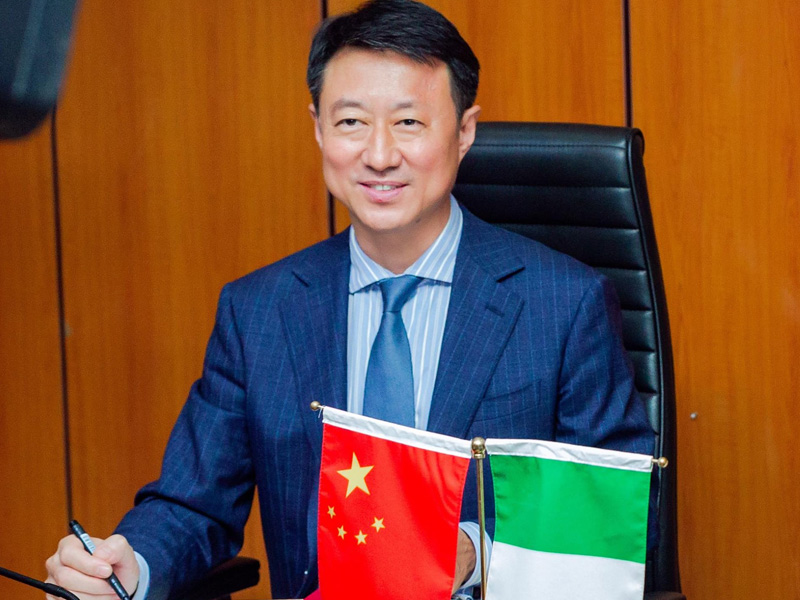
Chinese Ambassador to Nigeria, Yu Dunhai, described literature and cinema as powerful instruments for preserving civilisation, shaping national identity and promoting friendship among nations.
He said the growing appreciation of Nigerian and Chinese creative works in both countries demonstrated the ability of culture to bridge differences and create deeper understanding.
According to him, Nigerian literary giants such as Wole Soyinka, Chinua Achebe and Chimamanda Ngozi Adichie have gained significant readership in China, while Chinese literary works continue to attract Nigerian audiences.
Yu highlighted the scale of both countries’ film industries, noting that China produces more than 700 films annually and has over 93,000 cinema screens, while Nigeria’s Nollywood produces more than 2,000 films yearly, ranking among the world’s largest film industries.
He said the agreement between CMC and NTA would provide a vital platform for both nations to tell their stories, promote mutual understanding and create opportunities for professionals in the film and television sectors.
“The content exchange cooperation agreement between China Movie Channel and NTA will build a crucial platform for the people of both nations to enhance mutual understanding and friendship,” Yu said.
He added that filmmakers, writers and television professionals from both countries would explore ways to use storytelling to reflect contemporary realities and preserve their national identities.
Representing the Federal Ministry of Arts, Culture, Tourism and the Creative Economy, Permanent Secretary Dr. Mukhtar Yawale Muhammad described the initiative as a reflection of the enduring friendship between Nigeria and China.
He said the partnership aligns with Nigeria’s efforts to position the creative industry as a major driver of economic growth, employment generation and national development.
Muhammad commended China’s investments in education, infrastructure, technological advancement and poverty reduction, noting that many Nigerians had benefited from Chinese-supported scholarships, training programmes and cultural exchanges.
“Partnerships such as this are both timely and invaluable as Nigeria continues to unlock the immense potential of the creative and cultural industries,” he said.
He expressed confidence that the CMC-NTA agreement would promote skills development, knowledge exchange and increased international visibility for Nigerian creative talents.
The Director-General of NTA, Salihu Abdulhamid Dembos, described the agreement as the beginning of a new phase in Nigeria-China relations, built around creativity, innovation and shared cultural values.
Dembos said the partnership would create a framework for programme exchange, joint productions, professional development, technology transfer and wider access to Nigerian and Chinese creative content.
“It will also create opportunities for our filmmakers, writers, broadcasters and young creative talents to learn, collaborate and reach new audiences,” he said.
He added that the initiative supports NTA’s transformation into a digitally driven public broadcaster capable of competing in the evolving global media landscape.
The Chairman of the Association of Nigerian Authors (ANA), Abuja Chapter, Arc. Chukwudi Eze, described cultural diplomacy as an important complement to political and economic relations.
He said books, films, poetry, theatre and other creative expressions allow nations to understand one another beyond statistics and official engagements.
“Through books, films, poetry, theatre and the creative arts, nations come to know one another beyond headlines and statistics, fostering mutual understanding, respect and lasting friendship,” Eze said.
He also acknowledged China’s support for literary exchanges, including the sponsorship of ANA members Professors Razinat Mohammed and Emeka Aniagolu for a cultural and literary visit to China.
The symposium brought together diplomats, government officials, broadcasters, filmmakers, writers and cultural stakeholders from both countries to discuss the future of storytelling, film production and literary cooperation.
Participants also watched the Chinese action film Blades of the Guardians as part of activities marking the cultural exchange programme.
The new CMC-NTA agreement is expected to further strengthen Nigeria-China relations by moving beyond traditional diplomacy into a creative partnership capable of generating economic opportunities, expanding cultural influence and projecting both countries’ stories to a wider global audience.
Michael Olugbode