Ukrainian President Volodymyr Zelensky arrived in Paris on Monday to shore up European support at a potentially decisive moment in Ukraine’s war with Russia, as Washington promotes a contentious plan to end the conflict.
Zelensky met with French President Emmanuel Macron at the Élysée Palace, with Kyiv still weighing its response to a U.S. proposal driven by President Donald Trump—a plan that has sparked deep concern among European allies, who fear it could force Ukraine into making concessions long demanded by Moscow.
The stakes have been heightened by a corruption scandal that recently rocked Kyiv’s leadership, prompting the dismissal of Zelensky’s powerful chief of staff and chief negotiator, Andriy Yermak, last week.
More than three and a half years into Russia’s full-scale invasion, Ukraine is also facing intensifying military pressure as Russian forces push forward on the eastern front.
On Sunday, U.S. and Ukrainian negotiators held hours of what both sides described as “productive” discussions in Florida. Speaking aboard Air Force One, Trump said, “There’s a good chance we can make a deal.”
Macron signaled continued French support, writing on X: “The work for peace continues.” The meeting was expected to conclude with a joint press conference in the afternoon.
Zelensky, who also held fresh talks with Finnish President Alexander Stubb, said the U.S. negotiations were “very constructive” but acknowledged there were “tough issues” still to resolve. Decisions on Ukraine’s next steps will be made after the delegation returns and reports back to Kyiv, he added.
EU foreign policy chief Kaja Kallas described the moment as pivotal: “The talks in America were difficult but productive. It could be a decisive week for diplomacy.”
Concerns Over U.S. Peace Proposal
Washington initially drafted a 28-point ceasefire plan without consulting Kyiv’s European allies. The early version was widely criticized as mirroring Russia’s maximalist territorial demands.
The proposal reportedly required Ukraine to withdraw from parts of the Donetsk region and implied U.S. recognition of Russia’s claims over Donetsk, Crimea, and Lugansk.
Following negotiations in Geneva last week—and strong pushback from Ukraine and Europe—the U.S. revised the document, though the details of the updated plan remain undisclosed.
Ukraine’s former top general and current ambassador to London, Valery Zaluzhny, painted a stark picture of the risks of a rushed settlement. Writing in The Telegraph, he warned that “a rushed peace will only lead to a devastating defeat and loss of independence.”
Zaluzhny argued that only firm security guarantees—such as NATO membership—could prevent Russia from continuing its campaign to “abolish Ukraine as an independent state.”
U.S. envoy Steve Witkoff is expected in Moscow for follow-up talks on Tuesday, where he will likely discuss the plan with President Vladimir Putin. U.S. Secretary of State Marco Rubio said the Florida talks were “very productive,” but noted that “more work” was required and that Russia’s participation would be crucial.
War Grinds On Amid Diplomatic Push
Even as diplomatic efforts intensify, the conflict on the ground shows no signs of slowing. Tens of thousands have been killed, and millions displaced since Russia launched its full-scale invasion in 2021.
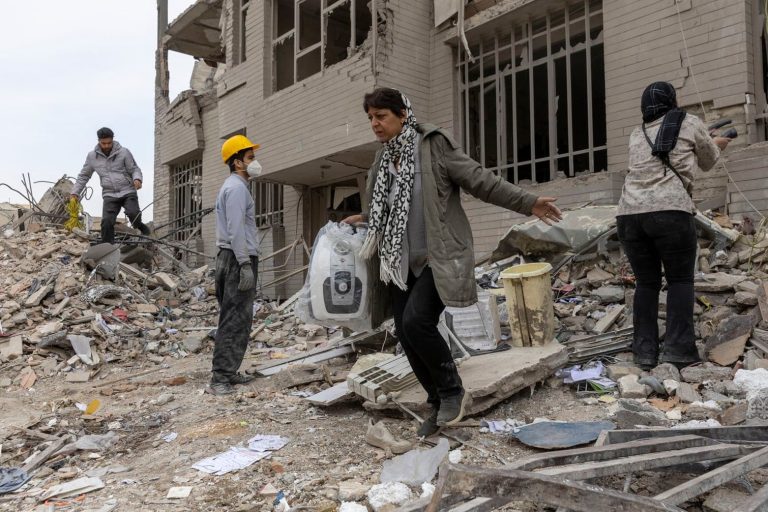
On Monday, a Russian missile strike on the central Ukrainian city of Dnipro killed four people and injured nearly two dozen others, according to the regional governor. Images from the scene showed shattered buildings, wrecked cars, and emergency crews battling fires and debris.
Zelensky is scheduled to travel to Ireland on Tuesday for his first official visit there. Although not a NATO member, Ireland will assume the rotating EU presidency in the second half of 2026, making it an increasingly important diplomatic partner for Kyiv.
About the Author