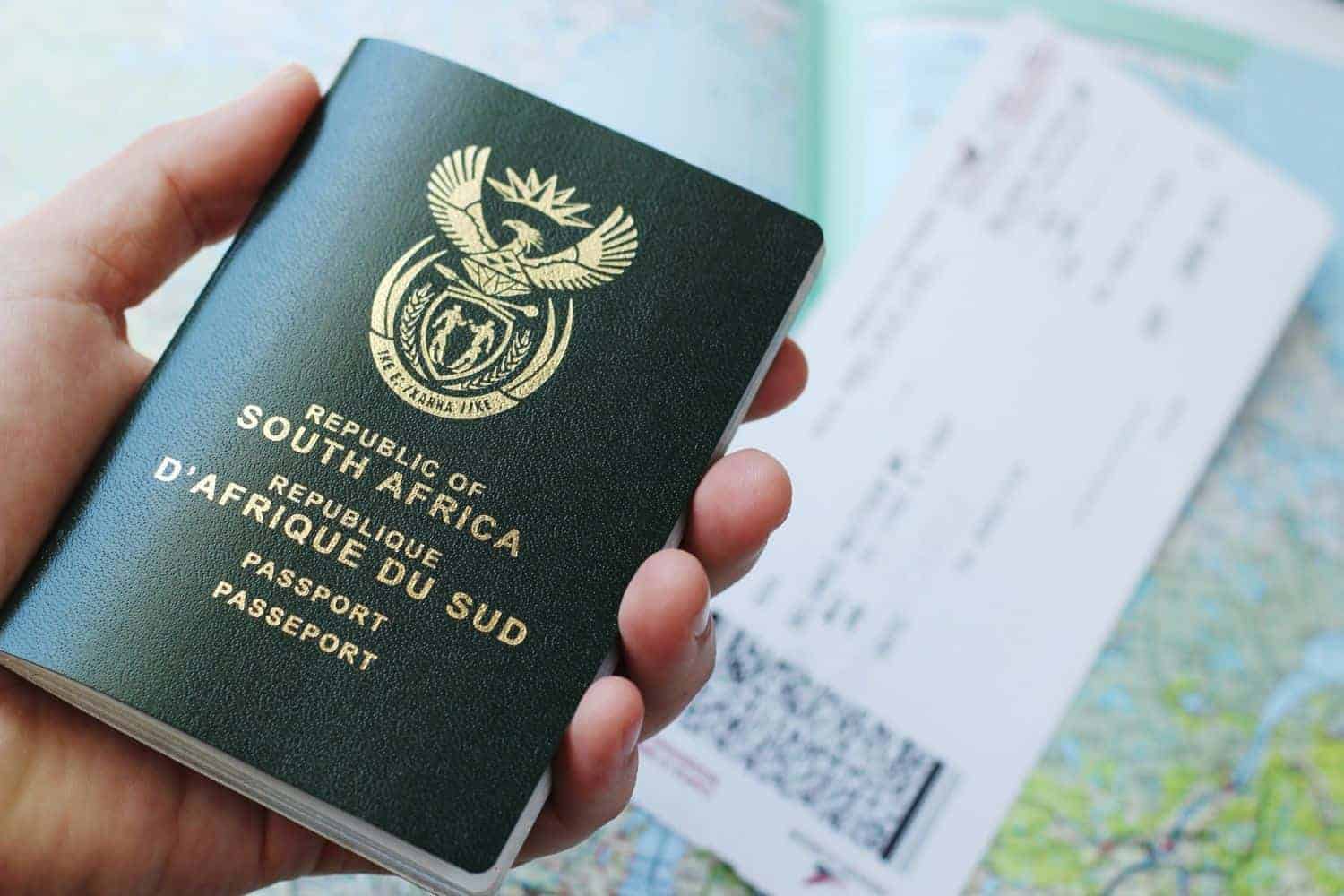
For decades, many South Africans living abroad lived with the burden of having their citizenship stripped away simply for taking up a second nationality. This is not the case anymore.
As of Tuesday, 10 February, Home Affairs Minister Dr Leon Schreiber officially announced that the online citizenship reinstatement portal is live.
The department rolled out the initial phase of the portal in late November 2025.
“This online tool enables South Africans who have unconstitutionally lost their citizenship to conveniently reinstate their citizenship without filling in a single form or standing in any queues,” Schreiber said.
On 6 May 2025, the Constitutional Court ruled that Section 6(1)(a) of the Citizenship Act (Act 88 of 1995) was unconstitutional and invalid from its formation on 6 October 1995.
This section previously stated that South African citizens would automatically lose their citizenship upon acquiring citizenship abroad, unless they had received prior ministerial permission.
This new system slashes the two-month wait at an embassy down to just an hour, said Schreiber.
How does it work?
The new system uses advanced biometric selfies and real-time document scanning.
Users take a selfie and scan their Passport to remotely confirm their status.
“Once a person is confirmed as a citizen through the portal, their record is automatically updated on the Population Register,” said Schreiber.
Individuals can then proceed to apply for a South African Passport or Smart ID without further waiting periods.
“If citizenship cannot be verified immediately, the file is handed to a specialist who investigates the file and manages it to completion.”
Who can’t apply?
Those who voluntarily renounced their South African citizenship before the May 2025 ConCourt ruling are not eligible for reinstatement.
Those who lost their citizenship through conversion before 6 October 1995 also can’t apply.
Will Home Affairs keep up?
Dr Shadi Maganoe from Wits School of Law told The Citizen that although the portal is a welcome, overdue development, its practical success hinges on multiple factors.
Magaone says the real test is whether Home Affairs has the capacity to get through applications on time.
This includes helping applicants whose documentation may be incomplete or legally unclear.
Generally, users often struggle to get help from the government when their websites break down.
“If individuals struggle to access the portal, reset passwords, or obtain assistance, the promise of digital efficiency may not translate into meaningful access in practice,” said Maganoe.
Legal standards mean Home Affairs must also prioritise cybersecurity.
The portal will collect and store highly sensitive personal information, including identity, migration, and citizenship records.
“Any vulnerability to data breaches would not only compromise individuals’ privacy rights but could also undermine public confidence in the system as a whole,” Maganoe said.
The question remains whether Home Affairs can contain a security breach, manage administrative capacity and help applicants.
About the Author