The trial of suspects linked to the 2025 Yelwata killings was adjourned on Tuesday after one of the defendants collapsed shortly after entering the courtroom.
The incident occurred around 10 a.m. when Haruna Abdullahi, the third defendant, slumped to the floor. Prison officials attempted to revive him and returned him to his seat, but he remained unresponsive.
When proceedings resumed hours later, Presiding Judge Justice Joyce Abdulmalik ruled that Abdullahi could not be considered present in court.
Director of Public Prosecutions, Rotimi Oyedepo, informed the court that prison authorities had confirmed the defendant was in stable condition prior to arriving for the hearing.
Calls for Immediate Medical Attention
Counsel for Abdullahi, Ahmed Muhammad, requested an adjournment to allow his client to receive urgent medical care. He noted that Abdullahi had come to court on his own but collapsed unexpectedly.
Another defence lawyer, Ibrahim Angulu, urged the court to prioritise the defendant’s health on humanitarian grounds.
“Human beings are very fragile. If he is pretending, the hospital will determine that. One has to be alive to face trial,” Angulu said.
The prosecution supported the adjournment, which Justice Abdulmalik granted. The matter was adjourned to March 30 for the continuation of proceedings, with instructions for hearing notices to be served on absent defence counsel.
Background of the Case
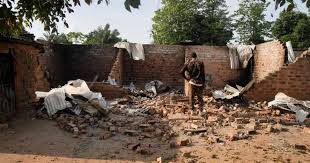
The nine defendants — Ardo Lawal Mohammed Dono, Ardo Muhammadu Saidu, Alhaji Haruna Abdullahi, Yakubu Adamu, Musa Mohammed, Abubakar Adamu, Shaibu Ibrahim, Sale Mohammed, and Bako Jibrin — are facing a 57-count charge bordering on terrorism over the attack that claimed 150 lives in the Yelwata community of Benue State.
They all pleaded not guilty when arraigned on February 2. Earlier, Justice Abdulmalik had ordered that the suspects be remanded at Kuje Correctional Centre pending trial.
The case remains one of the deadliest attacks in the region in recent years, and the proceedings are closely monitored by both local authorities and human rights observers.
About the Author