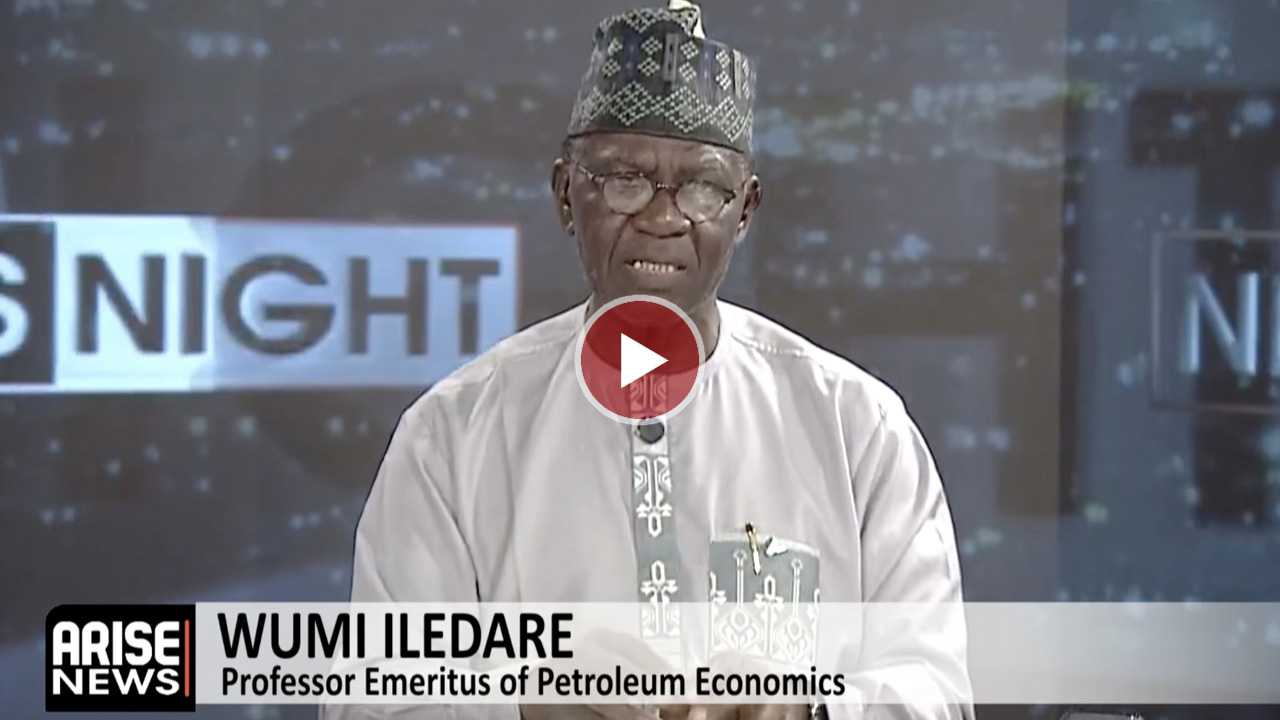
Professor Emeritus of Petroleum Economics, and Principal Facilitator at the FUPRE Energy Business School, Abuja, Professor Wumi Iledare has said that the recent surge in price of petrol in the country cannot be attributes to supply shortages yet.
He also acknowledged that Nigerians are adjusting to rising petrol prices without major protests across the nation.
Prof. Iledare said this in an interview with ARISE News on Monday while discussing petrol price volatility and Nigeria’s downstream future.
“In developed economies, these fluctuations are standard. What we are seeing right now is market participants reacting to economic fundamentals in the short term.bInterestingly, the current price hikes aren’t necessarily driven by a physical lack of supply yet, but by expectations.
“I am actually encouraged by the fact that Nigerians are adapting without the massive protests we’ve seen in the past. It suggests a growing, if painful, understanding of how global markets behave”, he said.
He explained that global shocks raise petrol prices in Nigeria, but coordinated domestic policies can help shield the country from their impact.

“We can certainly insulate the economy, but it requires a three-pronged approach that we have yet to fully synchronize: Exchange Rate Stability. Our currency must be strong enough to withstand global shifts. Crude Oil Pricing Strategy. Domestic Refining Capacity. This is the most critical.
“We must support domestic crude sales to local refiners. Even within our OPEC quota, we have to prioritize our own needs. If we sell crude to local refiners like the Dangote Refinery within a transparent Nigerian demand-and-supply framework, those refiners can price products based on our market reality, not on ‘import-export parity’”, he explained.
He further revealed that ensuring domestic crude reaches local refineries and adopting a Nigeria-focused pricing model would naturally lower pump prices, without relying on traditional subsidies.
“First, I don’t believe Aliko Dangote is asking for a “subsidy” in the traditional sense. He is a businessman who understands market value. The issue is about the Domestic Crude Oil Supply Obligation (DCSO).
“If the government enforces the policy that oil producers must satisfy local refiners first, it reduces the “middleman” costs of shipping and international port charges. Regarding the supply discrepancy, it is a matter of transparency. If the refinery is built to handle 650,000 barrels and is only getting 5,000 from domestic sources, it forces them to import crude, which is priced in dollars and subject to those global shocks we discussed.
“To truly lower the price at the pump, we need a ‘Nigeria-centric’ pricing model for domestic crude. This isn’t a subsidy; it’s a strategic economic alignment. If we provide the crude locally and refine it locally, the ‘at-the-pump’ price will naturally decouple from the volatile international market”, he said.
Favour Odima
About the Author